


If you are reading this, you are probably fuming.
Islamabad does no half measures. Either be a sitting duck and do nothing, or just drop a bombshell. There is nothing in between. This is how seismic the changes are as a result of the now approved Nepra (Presume) Regulations, 2026. Needless to say, a big chunk will be seething, to say the least. That is, a big chunk of people who read columns, and not a big chunk of average Pakistanis.
First things first. This was long seen coming. Even before the ministry had drafted its proposals, keen observers had identified emerging patterns that could not have gone unaddressed forever. Interestingly, the approved regulations are pretty much the same as the draft submitted by the ministry.
The regulator had invited comments, and the comments flooded in alright. A 1,200+ page document filled with pleas, anger, and disgust over the then proposed regulations. Less than 5 percent of that was discos nodding along. If the regulator did actually go through what was surely the heftiest of all public documents ever made public before making the final call, kudos to them.
The one change that is due to attract the most uproar in the coming days, from TV shows to opinion pieces and from golf course clubhouses to Parliament, is that of the pricing mechanism swiftly moving away from net metering to net billing.
What is more interesting is that this applies to all prosumers, new and old, unlike previously thought. The ministry appears to have the legal basis covered on this, but expect litigation soon.
READ MORE: Non-revision of net-metering rules: Govt can’t afford Rs550bn burden on consumers, Senate told
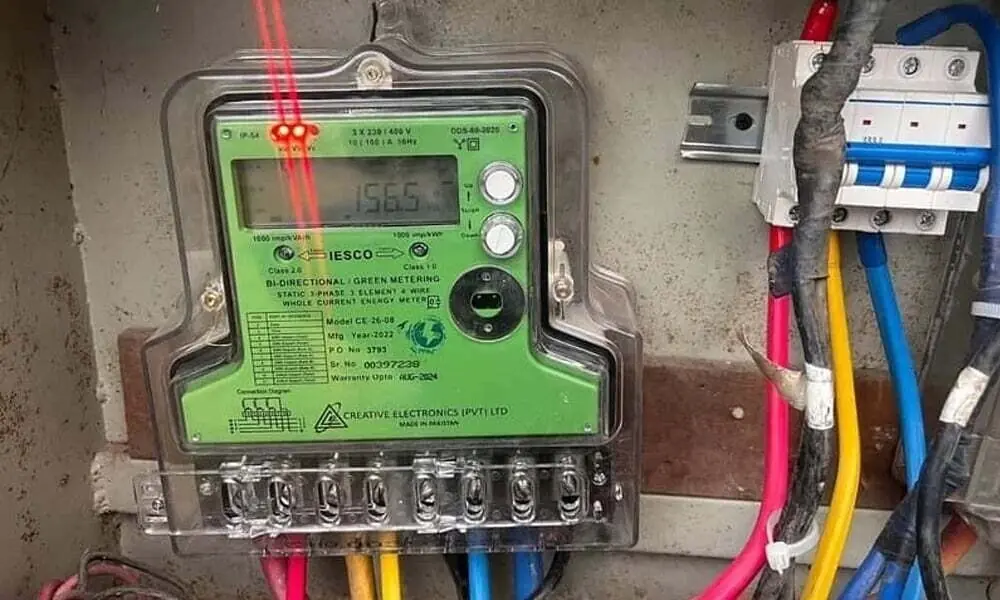
Here is why it is important. All prosumers (read: net-metered rooftop solar system owners) will now be paying for electricity used from the grid, exactly as everyone else is paying. You import 100 units from the grid, you will pay for it. A little over 33 million electricity consumers are already doing that.
A little over 400,000 will also start doing the same from now on. It is only fair that purchases from the grid be treated on an equitable basis, and any units exported to the grid be treated as a separate transaction. Net billing effectively ends the adjustment of units, and consumers are billed separately for electricity purchased and sold.
This is not without precedent either. Pakistan is no longer at a nascent stage in solar adoption. Net metering capacity is believed to have surpassed 7,000 MW by now. The world is flush with examples of countries rolling back incentives gradually.
The likes of Australia, South Africa, and Vietnam all started with a net-metering mechanism of one kind or another, and rolled it back once a critical mass was achieved. Pakistan should not be any different. Current flowing two ways merits two sets of treatment. It is only fair.
And then there is the revision in buyback rates. This only applies to prosumers with new net-metered connections, and the existing ones can keep getting paid the National Average Power Purchase Price till the term expires. All new connections will be compensated at a much reduced National Average Energy Purchase Price, which is the marginal price of electricity generation. For FY26 reference tariffs, the marginal price is set at Rs9 per unit versus the NAPPP of Rs24 per unit.
The argument goes that the NAPPP overstates the true economic value of rooftop solar, as it includes elements such as system use charges, transmission losses, and operator fees. The argument has been presented at great length in the latest Indicative Generation Capacity Expansion Plan (2025–35) by the NTDC, and it holds merit.
Mind you, utilities also have to maintain idle generation capacity once the sun sets, as solar adoption picks pace, both on and off-grid. The rate at which a sudden hike in generation has to be met with demand often leads to costlier plants being run, without disturbing the frequency, which can lead to a whole new set of problems. In that sense too, the case for pricing rooftop distributed generation at marginal price makes more sense.
Another big change is that of the allowed capacity for prosumers, which has been slashed from 1.5 times the sanctioned load to no more than the sanctioned load. The strain on the transmission system, as a result of overloading of transformers and reverse power flow, cannot be overstated enough.
In its comments to the draft, K-Electric went as far as suggesting no more than 25 percent of sanctioned load as allowable export to the grid to ensure network stability, citing South Africa as an example.
IESCO noted that sanctioned load is often approved in excess of the operational requirement, leading to misuse of this criterion for determining allowable distributed capacity, and suggested the last 12 months of actual demand before solar installation as an accurate indicator, in line with best practices.
To tackle the issue of reverse power flow and transformer overloading in an already fragile transmission network, the regulation disallows any connection where transformer load has reached the 80 percent threshold. That said, best practices go beyond oversimplifying it by linking it solely to transformer overload. Connected distributed generation capacity is not regarded as the most accurate indicator of transformer loading or reverse flow likelihood.
Experts argue for adopting feeder-wise hosting capacity maps to identify actual network constraints, for which detailed studies need to be conducted.
The license term has also been reduced from seven to five years. Payback periods in most consumption scenarios have more than doubled to 5–8 years from 2–4 years under the existing regime.
Critics argue that the term should at least last long enough to offer breakeven. But in a rapidly evolving scenario, where storage technologies are the next big disruption, locking in for a longer period carries significant risks.
A broader argument, emanating from political opponents, says the solar consumer must not be penalized for the system’s inefficiencies, and the government should instead focus on reducing losses and improving recoveries. This does not hold much water, because one inefficiency being tolerated does not make room for another.
Rationalizing the net-metering regulations is critical, more from the technical side than just the commercial front.

















Comments
Comments are closed for this article.