



“Alice: Would you tell me, please, which way I ought to go from here? The Cheshire Cat: That depends a good deal on where you want to get to.
Alice: I don’t care much where. The Cheshire Cat: Then it doesn’t much matter which way you go. Alice: …so long as I get somewhere. The Cheshire Cat: Oh, you are sure to do that, if only you walk long enough.” “(Lewis Carroll, Alice in Wonderland)”.
Readers, isn’t a 78-year-long walk not enough to determine, which way we want to go…? Pakistan, cannot afford to be the Alice of the current wonderland of international and domestic politics. We have been wandering far too long.
Going back to yesterday will serve no purpose, because, we were different and our sense of unity was different. We cannot continue to remain a puzzle for our own selves. Dressed in ignorance, we are more a spectacle of confusion than a jester on the world stage.
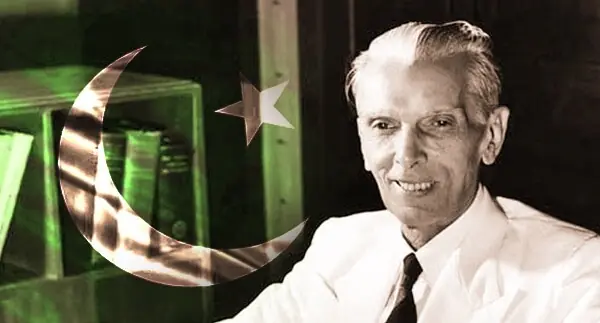
“It is never too late” is an Italian dictum. And more so, in the life of a nation, it is never too late to alter, amend, modify or change course, if the going is not good or is not as per plans. The raison d’etre of our creation as a model state as envisioned by the Quaid Mohammed Ali Jinnah got buried, when his directional speech of 11th August, 1947, was expunged of its ‘real spirit’.
He was too clear headed, and that clarity didn’t suit those who followed him. The speech was truncated beyond its original content and context. We don’t write history. We repeatedly distort it. A case of reference is the tragedy of 1970-71. I was alive then. I can recall what happened. But what I read on the pages of the imaginary history is very different, very different, from what I saw on PTV and what I was reading the newspapers, then.
All we need to do is not to re-visit, but to learn from it and re-pledge to the commitment, we made at independence. The first principle being the adherence in letter and spirit to the laws of justice. Let’s regain our courage, that like all things in the universe, we can change our thoughts, actions – we can, if we transition easily into being different from what we have been in the last 78 tumultuous years.
The nation must commit itself to follow an economic model that is acceptable to the majority; once done, it must be resolutely pursued. Several meaningful programmes were either abandoned or derailed, only to mock the opposition. The political adventures are extremely costly and we have been paying the invoices of misadventures with repeated and unending sacrifices. This must end.
Here, it is significant to contextualize – no government, thankfully, has worked against the interests of the state; however, many governments that were gripped with ego of being better than others shelved off great economic programmes only to prove or make their opponents look, as poor economic managers. Politicians would serve well, if they keep their hands off from economic strategies that are working and will prove their usefulness through economic progress and development.
The art, structure and availability of a judicial system that delivers, justice, at speed and low cost, is essential for all other sectors of the economy and society to operate at their best and at full potential. The snags and delays in the dispensation of justice have hurt us severely, in the past. We must reset.
Bureaucracy plays the most significant role in the progress and development of any country, more than the politician’s role. They are the architects, who plot the vision of political leadership, on the canvas of planning, with identifiable steps and actions to be initiated and pursued.
Bureaucracy is the sheet-anchor of any nation. So, they are for us. So, they should be. So, they should be allowed to do their bidding. In the initial decades following independence, bureaucracy and bureaucrats were a vibrant force, thinking ahead (planning) and delivering visible economic gains through initiatives and actions. The attitudes weren’t governed by elements of delay and procrastination. They wanted to serve people as directed by Jinnah. He had made special remarks of what he saw, bureaucrats as “civil servants” and not those who would lord over the despair of the oppressed and the under privileged. The pillage and plunder, materially and intellectually, by this lot has had a damning effect in the overall growth of the country.
Our bureaucracy still survives upon antiquated systems and processes. In the development of office systems, the world has moved, and is ‘light years’ ahead of us. For a single transaction, we create and produce reams of papers; and each paper added serves no purpose; neither adds to clarity nor gives any fresh perspective. The consequence of this ailment is that we have a full army of civil servants – rudderless, clueless and directionless; they are repeating the processes envisaged in the 1950s.
The unwillingness to alter and re-look with a renewed focus is proven by the shelving of the civil service reforms that were crafted by Dr. Ishrat Hussain. And there is a good (from their standpoint) reason…in an environment of status-quo grows the plant of mediocrity – and this growth in mediocrity is at the same speed as Jack and the Beanstalk! Let’s be bold to re-carve the bureaucracy, not to witch-hunt, but to improve efficiency through the removal of duplication of efforts, all around.
We ought to realise the importance of what the American historian, Henry Brooks Adams, says, “A teacher effects eternity; he can never tell where his influence stops”. Let’s collectively exorcise the “ghost” of both, teachers and students. We need them real. It is true that education doesn’t come by bumping your head against the walls of schools and colleges; but their existence is essential, for education of the masses. Let’s not be scared to face an educated electorate. All of us know this, yet, we do nothing. Let’s rethink. Our collective irresponsibility towards education is a stunning cost that future generations would pay for.
We are invariably late in responding to challenges of change and growth in international trade of goods and services. We have enslaved ourselves to few industries, largely the business community has behaved with herd mentality – if one entrepreneur proves himself good in ‘dairy farming’; those who are into textiles start to dabble, with no experience, no knowledge: this is true of all sectors. For far too long, the country has been hostage to exporters. It is true they face stiff competition due to cost considerations; but what answer do they have for decades long abuse of the concessional export financing and re-financing – almost all cheap funds were directed to the real estate sector. This is not financial deception, this being deceitful. Let’s stop.
The country must return towards making a formidable economy that is based on growth in exports. We must earn our foreign exchange reserves and not borrow them. While we rejoice in the phenomenal growth in home remittances, that indeed support us significantly, it is equally important to bear in mind that remittances alone cannot be the backbone for economic growth. We need long-term investments. Let’s market for those funds.
We live in a massively growing inter-connected world. International relations are vital for political and economic development. Capital moves with speed across borders. The world markets are experiencing a movement from globalisation to localization – MAGA, a case in point. Let’s pledge for MPGA. To undertake this, our foreign policy initiatives must lead to greater economic collaboration. Proxy wars shouldn’t be our game. The MOUs (Memoranda of Understanding) we sign must translate into doable documents. The warehouse of MoUs is bursting at its seams.
We must embrace as a feature of provocative thought the philosophy of reimagining. The need is for developing a transformative and critical approach that should allow for not only seeking paradigm shifts in current strategies but also to undertake dispassionately a complete revalidation of the existing policies, processes and procedures. The rigidity must give way to malleability. From orthodox to radical ways of implementation need to be adopted. Reimagination must be with no confines or borders to thinking critically and with zero ambiguity.
Started with Lewis Carroll quote, hence would end also with his remarks, “the hidden side of Alice’s adventures in the Wonderland represents, the process of learning and self-discovery”. Let’s reset to re-discover, Pakistan.
Our future is bright only if we do not switch off the generators of thinking, reimagining and above all agreeing to “Let’s Re-start”.
Copyright Business Recorder, 2026
The writer is a Senior Banker & Freelance Contributor











Comments