


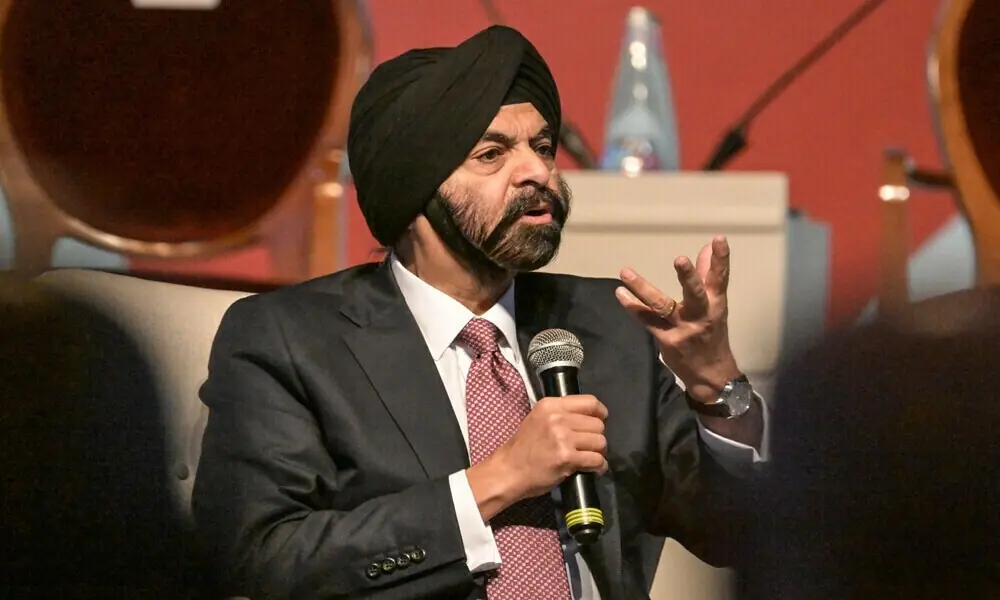

KARACHI: World Bank Group President Ajay Banga Wednesday met Sindh Chief Minister Syed Murad Ali Shah and discussed ongoing World Bank–financed projects in the province, as well as future cooperation in key development sectors.
During the meeting, the chief minister appreciated the World Bank’s continued support towards building a prosperous Sindh and said the institution’s active portfolio in the province currently stands at US$3.86 billion, covering multiple sectors. He noted that the World Bank’s Country Partnership Framework (CPF) is well aligned with Sindh Vision 2030, reflecting shared development priorities.
Syed Murad Ali Shah said significant progress has been made with World Bank support in social protection, water, health, and climate resilience, adding that the provincial government is giving special attention to child development and the eradication of malnutrition. He said clean drinking water and maternal and child healthcare remain top priorities.
Referring to post-flood recovery, the chief minister said housing projects damaged by the devastating floods have been successfully completed, while rapid improvements are now being made in the water supply and sanitation sector. He highlighted the launch of the STARS-WASH Program in rural Sindh with US$300 million support from the World Bank, noting that other international financial institutions have also joined the initiative.
The chief minister stressed that continuous cooperation with the World Bank is essential to ensure the long-term sustainability of such projects. He expressed his intention to replicate similar models in urban areas, including Karachi’s water sector, and said these approaches should be implemented across all districts and local bodies.
Calling wastewater treatment “extremely important and necessary,” Syed Murad Ali Shah said the sector is still in its initial stages in Sindh. He emphasized the need to make TP-4 a model project and proposed the preparation of a comprehensive wastewater management plan along the banks of the Indus River. He also expressed gratitude for World Bank support under SFERP for irrigation and drainage.
The chief minister underscored the need for greater collaboration on climate resilience, particularly in drought-affected areas such as Tharparkar. He briefed the World Bank president on ongoing social protection and health initiatives, including the MAMTA program and the 1000 Days Sindh Integrated Health Program. He said the MAMTA program has expanded from 15 to 22 districts, with the goal of eventually covering the entire province.
He proposed expanding the 1000 Days program by linking it with community health workers and all government health facilities, and suggested broadening the National Health Support Program to enhance screening of children under five through Outpatient Therapeutic Programs (OTP). He also cited Indonesia’s free health screening model as an example worth adopting.
The meeting also reviewed the proposed Sindh SME Development and Job Creation Program (S-SMED), a five-year partnership-based initiative aimed at promoting private sector–led inclusive economic development. The chief minister said the program seeks to create jobs, empower women, and improve the productivity of small and medium enterprises by strengthening access to finance, institutional capacity, and market linkages.
World Bank Group President Ajay Banga appreciated the Sindh government’s reform agenda and its commitment to inclusive and climate-resilient development. He praised Sindh’s focus on water, nutrition, health, and employment, and commended the province’s recovery efforts following the devastating floods.
Ajay Banga stressed the importance of long-term investment in water, sanitation, and climate change, and reaffirmed that the World Bank will continue to support Sindh in achieving its sustainable and inclusive development goals.
“We look forward to further strengthening our partnership with the Sindh government to deliver tangible results for the people of Sindh,” he said.
The chief minister concluded by reiterating that priority projects would be promoted in line with Sindh Vision 2030, adding, “A prosperous and bright Sindh is our vision.”























Comments
Comments are closed for this article.