


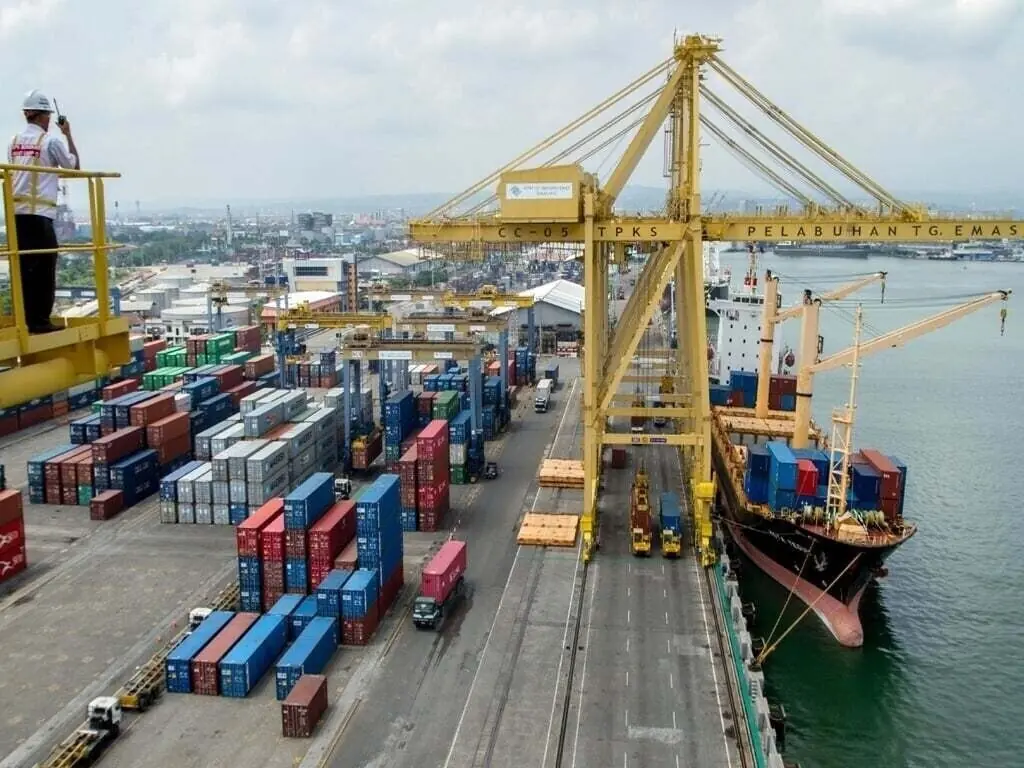

It appears that the global world trade order is on the verge of collapse.
What we are witnessing today is not an abrupt breakdown but the culmination of cracks that have been widening for more than a decade. Long before Gaza, Ukraine or the latest tariff threats, the so-called rules-based trading system had begun to falter under the weight of strategic competition, selective compliance and growing great-powers anxiety.
For countries like Pakistan, this distinction matters. The global order has eroded gradually, even as developing economies continued to plan as if multilateral trade rules would still cushion them against power politics. That assumption now appears increasingly untenable.
The early warning signs were visible. The paralysis of the WTO’s dispute-settlement mechanism, the steady rise of unilateral tariffs, the normalisation of sanctions, and the growing use of non-tariff barriers all pointed to a system under strain. What has changed in recent years is that these cracks have fused into a broader hegemonic contest, where economic tools are openly deployed to secure strategic advantage.
In this environment, trade is no longer governed primarily by rules. It is shaped by rivalry.
The most recent World Economic Forum meeting at Davos illustrated this shift clearly. While the language of cooperation remained intact, the underlying tone was markedly different. There was little appetite for consensus and even less patience for compromise. The United States’ threats of punitive tariffs on Canada over China-linked trade, and its increasingly blunt messaging towards Europe on industrial policy and strategic alignment, underscored how far the old assumptions have eroded.
This behaviour is not an aberration. It reflects a deeper reality: global trade has become entangled with a struggle for economic and technological primacy.
China’s rise has altered the balance in manufacturing, supply chains and technology. The US response has been to abandon its own free-trade orthodoxy, replacing it with industrial subsidies, export controls and selective protectionism. Europe, caught between dependence and autonomy, is recalibrating cautiously. The Middle East remains a constant variable, where instability can quickly transmit economic shocks across continents.
What we are seeing aligns closely with Professor John Mearsheimer’s (a well-known theorist of political science) long-standing argument: “in an anarchic international system, major powers do not compete politely. They seek dominance where they can, hedge where they must, and use every available instrument — including trade — to shape outcomes”.
Trade weaponisation as policy:
Trade policy today serves strategic ends. Tariffs discipline partners. Sanctions reshape markets. Technology restrictions slow rivals. Supply chains are redesigned for resilience, not efficiency.
This transformation did not begin yesterday. It has been building steadily, and the result is a fragmented global economy where access, markets and even finance are increasingly conditional. The liberal promise that trade would act as a neutral, depoliticised force has been overtaken by reality. For economies with limited diversification and weak competitiveness, this environment is unforgiving.
Pakistan enters this phase of global disorder with limited buffers.
It would be inaccurate to argue that Pakistan lacks relevance altogether. Geography, population size and regional dynamics continue to confer importance. However, it is equally clear that Pakistan’s economic leverage has not evolved in step with the changing global order. In a world where trade relationships are shaped by productivity, value addition and strategic utility, Pakistan’s narrow export base and persistent import dependence leave it exposed.
This vulnerability is reflected in the State Bank of Pakistan’s latest monetary policy stance. By maintaining the policy rate at 10.5 percent, the Monetary Policy Committee signalled restraint despite easing headline inflation. While inflation has moderated to 5.6 percent, core inflation remains elevated at 7.4 percent, indicating unresolved structural pressures.
The central bank’s caution is well placed. Pakistan’s inflation dynamics are not merely cyclical. They are driven by energy costs, weak supply responses, fiscal slippages and import dependence. In such circumstances, aggressive monetary easing risks reopening external vulnerabilities rather than generating sustainable growth.
Those vulnerabilities are already visible in the trade numbers.
Trade imbalance and structural limits
During July–December FY2025-26, Pakistan’s trade deficit widened by 34.6 percent to USD 19.2 billion, up from USD 14.3 billion a year earlier, exports declined by nearly 9 percent to USD 15.2 billion, while imports climbed to USD 34.4 billion. This pattern reflects deep-rooted structural constraints.
Pakistan’s exports remain highly inelastic. Currency adjustments and short-term incentives produce limited gains. The export basket is still dominated by low-value textiles and primary goods, with minimal penetration into higher-value or technology-driven segments.
The recent 6.01 percent growth in Large-Scale Manufacturing offers only partial comfort. Much of this recovery is consumption-led, concentrated in automobiles and petroleum-linked sectors. It does not significantly enhance export capacity or foreign-exchange earnings.
In a global economy where trade access is increasingly politicized, such a structure is precarious. Importing over USD 6 billion a month while exports hover near USD 2.3 billion is not sustainable — particularly when capital flows are volatile and geopolitical risks are rising.
The fragile stabilisation narrative
Macroeconomic stabilisation is often presented as a success story. Inflation has eased. Reserves have stabilised. Exchange-rate volatility has reduced. These gains are real, but they remain fragile.
Stability has been achieved largely through rollovers, deferred payments and external support. With USD 25.7 billion in external debt obligations due this fiscal year, Pakistan’s margin for policy error is narrow. Multilateral institutions and friendly countries can provide breathing space, but not a permanent shield. In a world where economic assistance is increasingly transactional, patience for repeated cycles of crisis management is thinning.
Geopolitics and constrained choices:
Pakistan’s external economic position is shaped by a delicate balance involving China, the Gulf states and international financial institutions.
China remains a long-term partner, but financing has become more selective and commercially oriented. Gulf support has played a critical stabilising role, yet it is episodic and largely short-term. The IMF provides discipline and credibility, but at the cost of limited policy flexibility. This configuration constrains strategic autonomy. It reinforces the reality that sustainable economic resilience cannot be outsourced.
From security to productivity
At its core, Pakistan’s challenge is domestic.
The state’s historical emphasis on security and short-term control has come at the expense of productivity and competitiveness. This model may have survived in a more accommodating global environment. It is increasingly misaligned with a world where economic capability determines strategic relevance.
Transitioning towards a productive state is no longer optional. It requires addressing energy costs, reforming loss-making state enterprises, broadening the tax base and easing regulatory barriers that discourage formal industry. Monetary discipline, while necessary, cannot compensate for weak supply-side fundamentals.
Conclusion
The global trade order has hollowed out over time and now merged into an open struggle for economic and strategic dominance. Rules have given way to leverage, and multilateralism to selective compliance. Trade is no longer a neutral platform; it is a contested space shaped by power, alignment and capability.
For Pakistan, this shift narrows the margin for error. The comfort once derived from predictable trade rules and external safety nets can no longer be assumed. Stabilisation achieved through rollovers and external support may buy time, but it does not alter fundamentals. Monetary restraint can prevent immediate slippage, but it cannot substitute for productivity, export relevance or competitiveness.
The choices ahead are therefore starker than before. Pakistan must adjust its economic paradigm to a world where resilience matters more than rhetoric and capacity more than claims of relevance. This requires moving decisively from a security-driven framework to a productivity-centred one where energy pricing, industrial competitiveness, export diversification and institutional credibility are treated as strategic priorities, not technical afterthoughts.
In a global environment shaped by hegemonic rivalry, countries that fail to strengthen their domestic economic base do not merely loose growth — they lose negotiating space. Pakistan’s challenge is no longer about navigating a rules-based order that is fading, but about positioning itself in a power-based system that has already arrived.
The window for adjustment still exists. But it will not remain open indefinitely.
Copyright Business Recorder, 2026







Comments
Comments are closed for this article.