


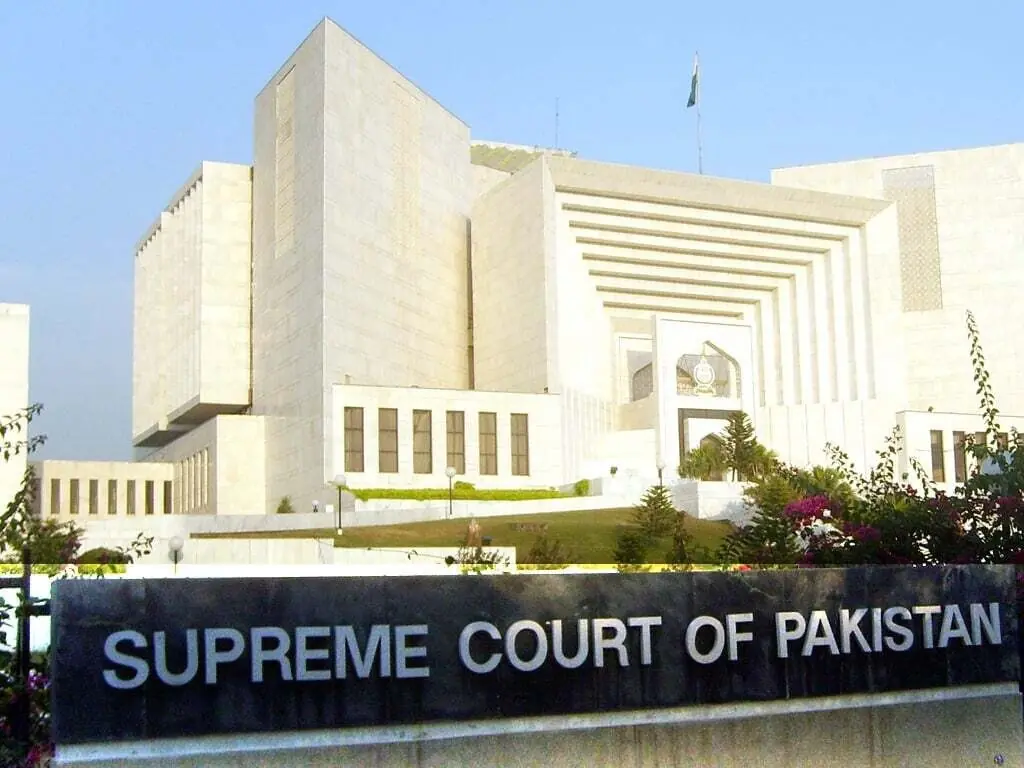
EDITORIAL: It should not take a Supreme Court bench to remind the government that it must act as a model employer. Yet that is exactly what the court has had to do, spelling out that delays, inaction and internal inefficiencies cannot be used to deny promotions, service entitlements or basic employee rights. That such a reminder was necessary says far more about the state of public administration than about the novelty of the principle itself.
The judgement, authored by Justice Ayesha A. Malik, arose from a familiar and deeply entrenched problem.
An employee met the eligibility criteria for promotion, vacancies existed, yet the relevant departmental promotion committee was not convened for years.
In the interim, the individual was repeatedly placed on “current charge” arrangements, performing higher duties without the corresponding rights, status or security. This is not an aberration. It is standard practice across large parts of the public sector.
The Supreme Court’s ruling makes clear that this behaviour is unlawful and unjust. Promotion, the court noted, is not a gratuitous favour. It is tied to merit, performance and the operational needs of the state.
Once eligibility conditions are met, a duty arises to consider the case within a reasonable time. If there are genuine obstacles, they must be documented and explained. Silence, delay and administrative drift are not neutral acts. They are failures of governance.
READ MORE: Promotions, service entitlements: State required to act as model employer: SC
The broader context matters. Pakistan performs poorly on global indicators of civil justice and government effectiveness, including timeliness and predictability in administrative decision-making. These rankings are not abstract international shaming exercises. They reflect everyday realities inside government departments, where files stall, committees are not convened and responsibility is diffused until accountability disappears.
What makes this particularly troubling is that none of these principles is new. The idea that the state should act as a fair, transparent and accountable employer is embedded in service rules, constitutional norms and international commitments Pakistan has itself endorsed. It is also basic managerial logic.
No organisation can expect efficiency or integrity from its workforce if career progression is arbitrary delayed or hostage to discretion.
The damage caused by this culture is cumulative. When promotions are treated as an entitlement to be delayed rather than a process to be managed, motivation erodes. Officers learn that performance matters less than patience or proximity to power. Informal influence fills the gaps left by formal process.
Over time, competence is crowded out by conformity, and institutions lose their capacity to renew themselves.
There is also a systemic cost. A state that cannot manage its own personnel processes predictably cannot credibly enforce discipline or demand results. Litigation becomes the substitute for administration, forcing courts to resolve matters that should have been settled internally years earlier. This burdens the judicial system and turns routine service matters into prolonged legal battles.
The Supreme Court’s emphasis on transparency and documentation is therefore critical. Where delays occur, reasons must be recorded and responsibility fixed. Without this, institutional memory is lost and the same failures repeat across departments and generations of officers.
The widespread reliance on acting or current charge postings reflects an unwillingness to take decisions that may expose past negligence or upset entrenched hierarchies.
None of this should require judicial intervention to correct. Any employer understands that predictable promotion pathways and fair evaluation are essential to organisational health. When the state fails to apply this logic to itself it undermines its own authority and legitimacy.
The court has done its part by clarifying the law and correcting an individual injustice. The burden now lies squarely with the executive. Timely promotion boards, enforceable timelines and internal accountability mechanisms are not reforms. They are minimum requirements.
If the government continues to need judicial reminders to meet basic employer obligations, the consequences will remain self-evident: demoralised employees, weakened institutions and a steady erosion of governance capacity. Acting as a model employer is not an aspiration. It is a duty.
Copyright Business Recorder, 2026

























Comments
Comments are closed for this article.