


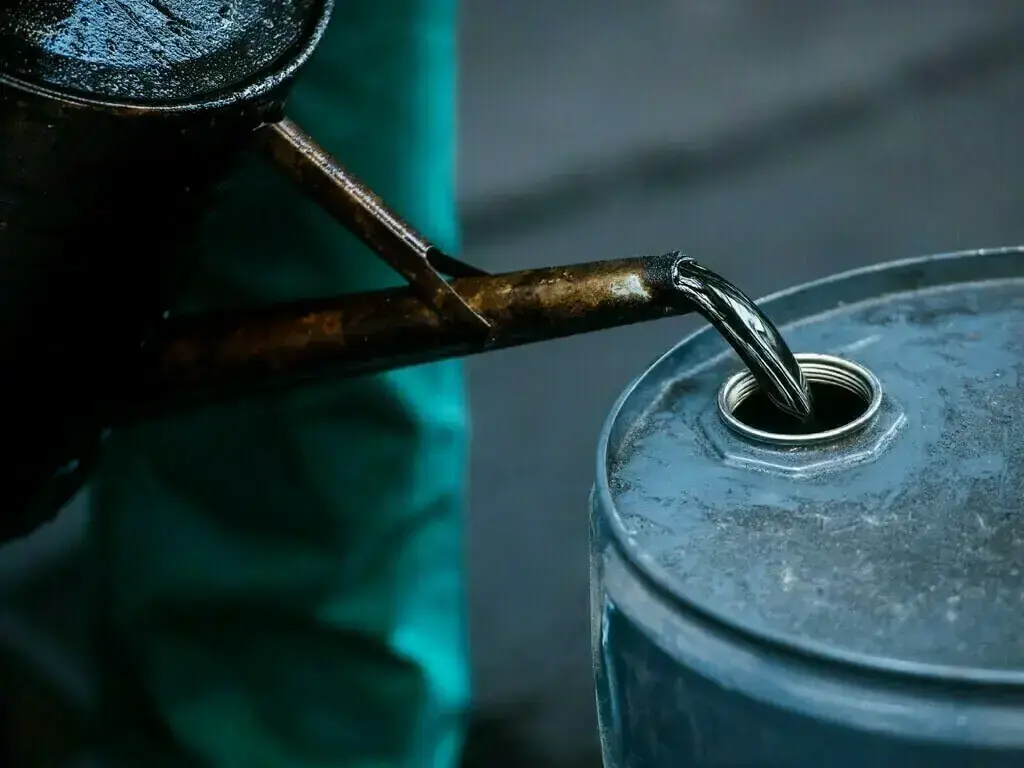
NEW YORK: Oil prices slid about 2 percent to a one-week low on Thursday after US President Donald Trump softened threats toward Greenland and Iran, and on some positive movement that could lead to a solution to end Russia’s war in Ukraine.
Brent futures fell USD1.18, or 1.8percent, to settle at USD64.06 a barrel, while US West Texas Intermediate (WTI) crude fell USD1.26, or 2.1 percent, to settle at a one-week low of USD59.36 a barrel. Trump said he has secured total and permanent US access to Greenland in a deal with NATO, whose head said allies would have to step up their commitment to Arctic security to ward off threats from Russia and China.
European Union leaders, meanwhile, will rethink ties with the US at an emergency summit on Thursday after Trump’s threat of tariffs and even military action to acquire Greenland badly shook confidence in the transatlantic relationship, diplomats said.
“There is a deflation of risk premium related to the Greenland debacle and Iran supply risk has also been reduced,” said Ole Hansen, chief commodity analyst at Saxo Bank.
Trump also said he hoped there would be no further US military action in Iran, but added the US would act if Iran resumes its nuclear program.
Iran, operating under sanctions, is the third-biggest crude producer in the Organization of the Petroleum Exporting Countries (OPEC) behind Saudi Arabia and Iraq. With less tension around Greenland and Iran, oil prices should hold at around USD60 a barrel, according to Tony Sycamore, an analyst with online broker IG.
President Volodymyr Zelenskiy of Ukraine said on Thursday after talks with Trump in Davos that terms of security guarantees for Ukraine had been finalized, but the vital issue of territory in its war with Russia remains unsolved. Trump has pressured Ukraine to secure peace after nearly four years of war, despite few signs Russia wants to stop fighting.
A deal to bring peace to Ukraine and lift sanctions on Russia, the world’s third-biggest crude producer, could reduce oil prices by making more fuel available on global markets. The French navy intercepted a Russian tanker in the Mediterranean suspected of being part of a shadow fleet that enables Russia to export oil despite sanctions.
Russian oil output fell 0.8 percent to 10.28 million barrels per day (bpd) last year, around a tenth of global production, according to data published on Thursday.
In Venezuela, another sanctioned OPEC member, trading houses Vitol and Trafigura were exporting fuel oil under a US-backed deal following capture of Venezuelan President Nicolas Maduro.
A proposed reform of Venezuela’s hydrocarbons law would allow foreign and local companies to operate oilfields on their own through a new contract model, commercialize output and receive sale proceeds even if acting as minority partners of state company PDVSA, drafts seen by Reuters on Thursday showed.
















Comments
Comments are closed for this article.