


Steep taxes, soaring energy costs pushing MNCs out of Pakistan: Aurangzeb
- But insists investor confidence remains intact
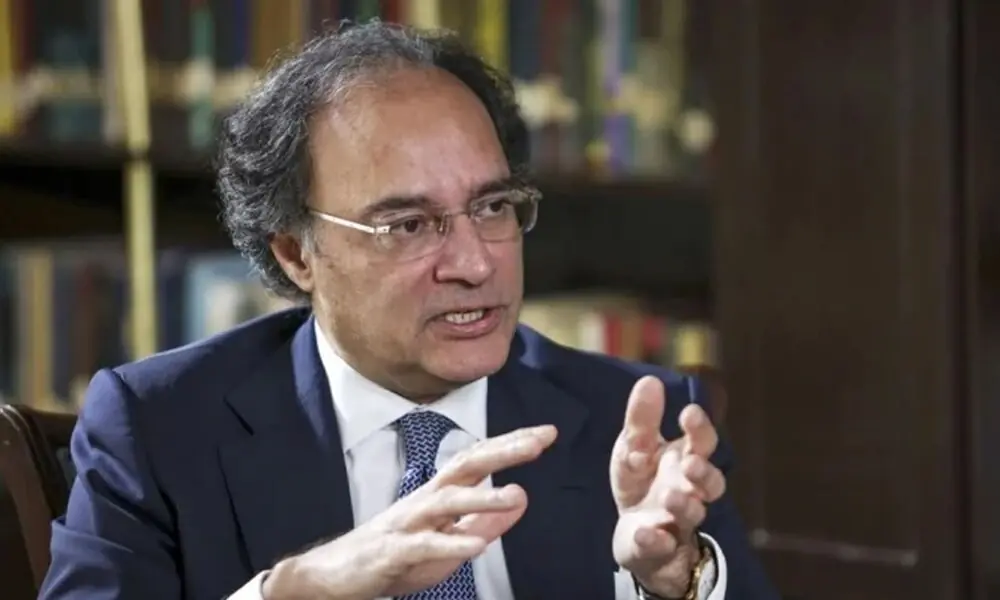

ISLAMABAD: Finance Minister Muhammad Aurangzeb on Wednesday acknowledged that steep taxes and soaring energy costs have pushed some multinational companies out of Pakistan, but insisted investor confidence remains intact as new local and foreign players continue to enter the market.
He stated this while addressing the Pakistan Policy Dialogue, hosted by Policy Research & Advisory Council (PRAC) in collaboration with the Corporate Pakistan Group (CPG) and Nutshell Group as Strategic Partner, with the Ministry of Commerce Trade Development Authority of Pakistan (TDAP) as Founding Partners. The dialogue was supported by Bank Alfalah and BankIslami, as Platinum and Gold Partners, respectively.
READ MORE: Govt urged to avert growing exit of multinationals
Talking about the exodus of multinational companies from the country, the minister said that there are firms that are leaving Pakistan, which is true, and we must acknowledge if the taxation is high, energy cost is high, or financing cost, those have been real issues.
However, the minister continued saying that it takes two to tango, if you are wedged into your business models from the last 50 years, it is not going to work in the modern world.
Citing Nestle and Unilever as examples of MNCs successfully operating in Pakistan, he said, “If Nestle and Unilever can do local sourcing, which keeps their margins high, they are now able to export, which is why they continue operating here.”
He said Pakistan had attracted 20 new foreign investors over the past 18 months, including Google, Aramco, Wafi Energy and Turkish Petroleum.
He said structural reforms were under way across the country, including the ongoing transformation of the Federal Board of Revenue. “Compliance and enforcement are essential to ensure implementation of tax laws,” he added.
The finance minister said Pakistan’s remittances were expected to cross USD41 billion this year, up from USD38 billion in the previous fiscal year, providing crucial support to foreign exchange inflows. He said reforms in tax administration and the energy sector were key parts of the government’s stabilisation agenda.
Inefficiencies in public sector entities were costing the country nearly Rs1 trillion annually, he said. He elaborated that the losses suffered due to SOEs were a huge gap and expressed hope that the amount saved by the national exchequer could be put to a much better use going forward.
He recalled that the government had to close down the Utility Stores Corporation, Pakistan Agricultural Storage and Services Corporation (PASSCO), not because 1,000-5,000 people were employed there, but because of the subsidies that the government was providing to them. More importantly, it was the corruption built into those subsidies that was the real cost to the exchequer, the finance minister maintained.
“By June this year, all government payments are going to go through digital channels,” said Aurangzeb while referring to the government’s digitisation efforts.
The minister said that Regulatory Duty (RD), Customs Duty (CD) and Additional Customs Duty (ACDs) will be phased out in five years. “This is to bring our intermediary and raw material costs down so we can take it towards an export-led discussion.”
The finance minister said that continuous increases in duties are harmful to the economy. Duties must be made reasonable and business costs reduced. He held that this was being done for the first time in the country‘s history.
The finance minister further said that the protection given to industries had led to a decline in competition. “If we are to take this forward and move toward export orientation, we have to start from somewhere,” he said.
The finance minister also spoke of debt servicing, and termed it the “single largest expense item” for the country.
He outlined plans to modernise the debt management office, stressing the need for “having proper investor relations, a front office, a middle office, a back office so we can take it forward professionally”.
“Past year, we saved roughly Rs850 billion in terms of debt servicing,” the finance minister said, expressing hope to achieve similar results this year.
The minister reiterated the government’s commitment to bring crypto into the regulatory environment. He said the trade deficit had widened, but the current account remained within government targets. He added that large-scale manufacturing showed positive performance in the first quarter of the current fiscal year.
He said controlling population growth was essential if Pakistan was to achieve its goal of becoming a USD3 trillion economy by 2047, warning that annual population growth of 2.55 percent was incompatible with sustainable development.
Aurangzeb also revealed progress on external financing, saying Pakistan was actively engaging both domestic and international markets, with developments on Panda Bonds expected in the coming weeks. He confirmed increased engagement with Chinese capital markets and said currency diversification could yield a 2.5 percent financial gain.
He said international rating agencies had expressed confidence in Pakistan’s reform trajectory, while the International Finance Corporation (IFC) has completed a major USD3.5 billion investment, calling projects like RekoDiq strategically important for the country.
However, Federal Minister for Planning, Development and Special Initiatives Ahsan Iqbal said no country could achieve progress without political stability, stressing the need to ensure continuity in government policies related to development projects.
He said sustained economic growth required collective effort, adding that Pakistan still needed to work hard to put its economy on a stronger footing. He also said Pakistan was exporting JF-17 fighter aircraft, calling it a sign of growing technological and industrial capacity.
Iqbal said exports must be treated as a pillar of national security and sovereignty, warning that reliance on imports and consumption had trapped Pakistan in repeated boom-and-bust cycles.
He highlighted the importance of planning, productivity, and export competitiveness in Pakistan’s economic recovery, noting that a durable reset must balance short-term stabilization with long-term development objectives. A future-forward approach is needed rather than exploiting past conflicts for media mileage. Developed countries stand on universal primary enrolment, robust health markers, at least 90percent literacy, political stability, and sectoral development; Pakistan lags on all fronts.”
Federal minister for Climate Change Dr Musadik Malik highlighted the elite capture as the major barrier productivity and growth. Abolishing special subsidies on electricity, gas and taxes for a select class is essential for meaningful economic reforms in Pakistan, said Malik, adding that sustainable economic growth cannot be achieved unless unequal concessions are withdrawn and the economy is placed on a fair and competitive footing.
Malik noted that at present, access to economic prosperity in Pakistan is largely restricted to those with power and influence, which must change for the country to move forward.
Pakistan’s prosperity had become tied to power and access rather than productivity. He criticised preferential policies that provided cheap electricity, gas and tax breaks to select groups, saying the government was borrowing dollars at 12 percent and lending them at zero percent to a handful of powerful individuals.
“Instead of giving USD4 billion to 50 people, that money should have gone to small industries and young entrepreneurs,” Malik said, adding that talented youth wanted to build companies but lacked access to capital. He emphasised the need for equitable resource distribution, particularly for women and fresh graduates, stating, “Until you democratize capital and empower new entrants, nothing will change.”
Advisor the Prime Minister on Privatization Muhammad Ali stressed the essence of privatisation and the government’s need to focus on areas best left to private enterprise, saying, “Four major weaknesses have challenged us: stretched public resources, informal economic activity, idle or speculative capital, and lack of inclusion.”
“Privatisation is not an ideological choice; it is a tool to fix market failures,” he said, adding that strong economies are built on institutions that function efficiently. He called for a fundamental change in mindset to enable a modern economic reset.
Dr Ishrat Hussain former Governor State Bank of Pakistan said that that 5-6 percent growth should be the destination of the country.
However, two sectors including agriculture and industrial were neglected which pullback the country from achieving the desired results. He further said that Pakistan is not operating in vacuum, but is part of international economy; however, the international environment is uncertain. He said that industry is over taxed coupled with over energy prices.
Hussain emphasized the dynamic nature of policy making and the need to shift focus to services exports. “Technology has shifted the paradigm toward services, whose growth rate outpaces goods. Yet, we remain focused on goods.
Copyright Business Recorder, 2026




















Comments
Comments are closed for this article.