


EDITORIAL: Pakistan remains Afghanistan’s most efficient trade corridor
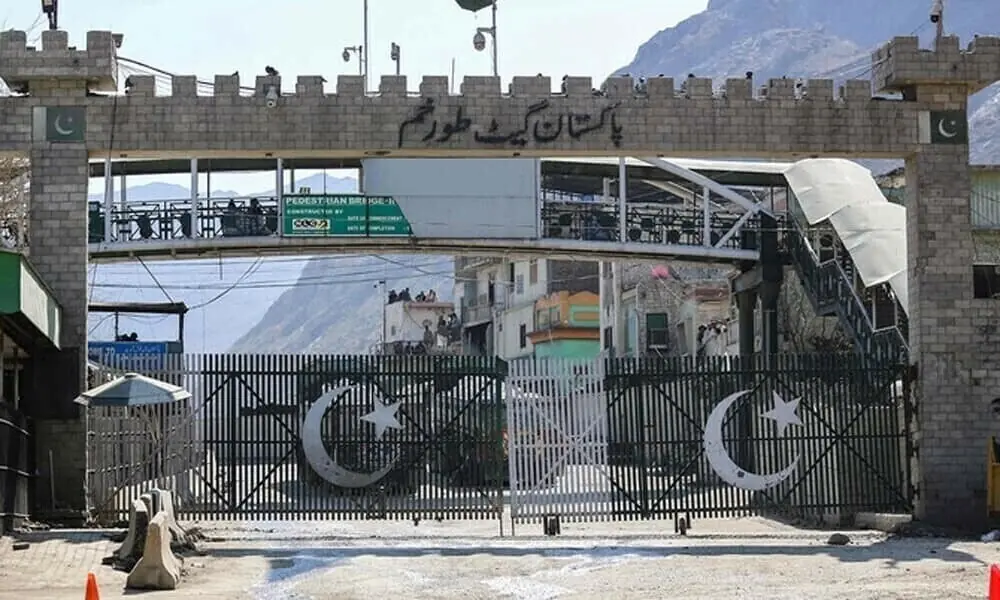
EDITORIAL: Afghanistan’s ability to keep goods moving despite repeated border closures with Pakistan has been presented in Kabul as evidence of economic resilience. Trade volumes held up in 2025 by diverting cargo through Iran’s Chabahar port and overland routes across Central Asia. On paper, that looks like adaptability. In practice, it masks a harsher truth about cost, efficiency and missed opportunity that Afghanistan can ill afford to ignore.
Trade does adapt under pressure. It always does. But adaptation does not come free, and for a landlocked, low-income economy, the price matters as much as the headline numbers. Longer routes mean higher freight costs, multiple trans-shipment points, greater insurance premiums and exposure to political and logistical bottlenecks across several jurisdictions. These costs are absorbed somewhere, either by exporters through lower margins or by consumers through higher prices. For an economy already struggling with poverty, sanctions and constrained growth, that burden compounds quietly but relentlessly.
What is often left unsaid in Kabul’s claims of resilience is that Pakistan remains Afghanistan’s most efficient trade corridor. Geography has not changed. Pakistan still offers the shortest and cheapest access to global markets, backed by established infrastructure, deep port capacity and decades of commercial integration. Alternative routes can supplement this access, and regional diversification makes sense. They cannot replace it without imposing a structural penalty on Afghan trade.
This distinction between resilience and sustainability is crucial. Keeping trade alive during disruption is a coping strategy. Building growth requires scale, predictability and cost efficiency. Afghan exports, dominated by agricultural produce, dried fruit, carpets and minerals, are acutely sensitive to transport costs and delays. Every extra day in transit and every additional handling charge erode competitiveness. What looks like resilience today risks becoming stagnation tomorrow.
The losses are not one-sided. Disrupted Pak-Afghan trade deprives Pakistan of transit revenues, port throughput and regional integration benefits. It weakens supply chains that serve border communities and undermines the logic of economic interdependence that could otherwise act as a stabilising force. Both sides pay for dysfunction, even if the accounting is uneven.
READ MORE: Afghan transit trade: MoC may advise govt to allow one-time cargo movement
At the heart of this problem lies a failure to decouple trade from security. Border closures driven by security disputes push commerce into costlier channels without resolving the underlying causes of instability. They may signal resolve, but they do not substitute for effective enforcement. The result is a cycle where security incidents trigger economic disruption, which, in turn, deepens mistrust and encourages further disengagement.
Here, the responsibility is clear. Relations cannot normalise unless the Afghan authorities act decisively against terrorist groups operating from their territory and carrying out attacks inside Pakistan. Kabul has, at various points, pledged that Afghan soil would not be used for cross-border terrorism. Those assurances have not translated into sustained action. Without credible enforcement, no amount of trade diplomacy will restore confidence or predictability at the border.
The lesson for Kabul should be straightforward. Alternative routes buy time, not prosperity. For Afghanistan, stabilising security arrangements with Pakistan is not a political concession. It is an economic necessity. Streamlined border management, intelligence cooperation and predictable transit rules would reduce costs for Afghan traders, restore competitiveness and unlock growth potential that no rerouting strategy can replicate.
The regional reality is that Iran and Central Asia will remain part of Afghanistan’s trade mix, and rightly so. Diversification has value. But Pakistan will remain indispensable if relations are functional. Geography, infrastructure and market access make that unavoidable.
Trade will survive disruption. Growth will not. For Afghanistan, pulling its act together on security and resuming structured, legitimate trade with Pakistan is an investment in its own economic future. Efficiency, not improvisation, is what will determine whether resilience turns into recovery or fades into managed decline.
Copyright Business Recorder, 2026

























Comments
Comments are closed for this article.