


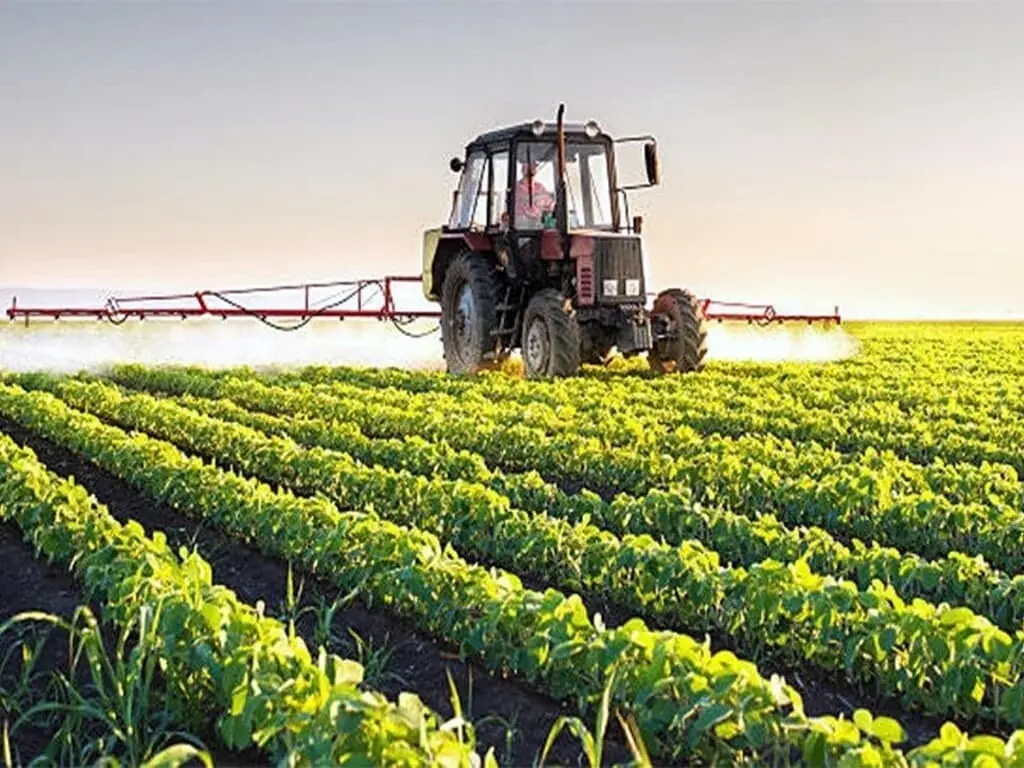
EDITORIAL: Prime Minister Shehbaz Sharif in his drive to revive agricultural exports tasked a newly-established working group consisting mainly of private sector experts to align agricultural output with global requirements in order to boost exports. This objective while salutary has been compromised by disruptions associated with climate change propelled by human caused gas emissions.
In this context, however, it is relevant to note that while Pakistan’s contribution is less than one percent to global greenhouse gas emissions the country remains one of the world’s most vulnerable to climate change as evidenced from the 2022 floods that displaced around 33 million people with many of those affected struggling to recover more than a year later. Farm output, including livestock and fisheries, suffered an estimated loss of USD 3.7 billion.
The 2025 floods affected more than 4.25 million people, displacing 1.8 million and even though early reports suggested that farm output was not negatively impacted the National Disaster Management Authority reported by the end of 2025 that Punjab, the nation’s agricultural heartland, bore the brunt of the floods, with over 21 million people evacuated and nearly 2 million acres of farmland destroyed.
The Pakistan authorities pledged to the International Monetary Fund (IMF) under the ongoing USD 7 billion Extended Fund Facility (EFF) programme that climate change would be dealt with through budgeted subsidies in the current fiscal year.
However, 529 billion rupees out of the total federal budgeted subsidies — 587.3 billion rupees — has been earmarked for the energy sector defined as for mitigation measures marked as directly favourable. In contrast, agriculture was budgeted 22 billion rupees, which was noted as benefiting the sector indirectly.
Details on precisely what constituted the green component of earmarked subsidies were not provided in the budget documents. What is relevant to note is that agriculture is a provincial subject and information on mitigation or adaptation of subsidies to this sector were not identified in any of the four provincial budgets.
Pakistan’s farm sector contributes significantly to the country’s export revenue either through primary commodities (notably rice, cotton and fruits) and value-added goods (textiles and leather).
It is a foregone conclusion that climate change is eroding our food security and, given that agriculture accounts for nearly 40 percent of total employment and contributes 25 percent to the country’s Gross Domestic Product, the Prime Minister’s focus on resolving the crisis must be supported.
The focus of the task force, like during previous administrations, is therefore to be on policies that envisage a rise in the yield per hectare, including dissemination of information and facilitating access of key inputs (fertilizers, pesticides, high yielding seed varieties) mainly to subsistence farmers that comprise the bulk of our farm base.
In addition, the task force is considering introduction of a certification systems for processed agricultural commodities and facilitating market access for value-added products to increase farmers’ earnings.
One would hope that the task force carefully considers the observations made in the October 2024 EFF approval documents; notably, the “government price setting and procurement operations have made the agricultural sector unresponsive to changing consumer preferences, exacerbated price volatility and hoarding, undermined the incentives for innovation, misallocated resources, and placed a burden on fiscal sustainability.
Going forward these interventions should be discontinued. Any purchases of agricultural commodities by SOEs or provincial food departments should be done solely for purposes of a narrowly defined national food security, and not as quasi-fiscal social policies, including to boost farmers’ income or provide untargeted subsidies for staples.”
What must be considered as a first step towards ushering in genuine reforms in the sector is to proactively undertake mitigating measures to end the elite capture. The overpowering influence exerted by the sugar millers with grave consequences not only on the poor farmers and domestic consumers but in some years also impacting on our foreign exchange reserves (as and when an export subsidy is extended) has been evident during nearly all administrations, past and present.
At the same time the wheat threshers continue to exercise inordinate power that enables them to earn windfall profits. And the aarthis continue to operate with impunity to the detriment of the poor and subsistence farmers as well as the domestic consumers. The government needs to undertake structural reforms in the sector to end the pervasive influence of the elite as early as possible.
Copyright Business Recorder, 2026


























Comments
Comments are closed for this article.