


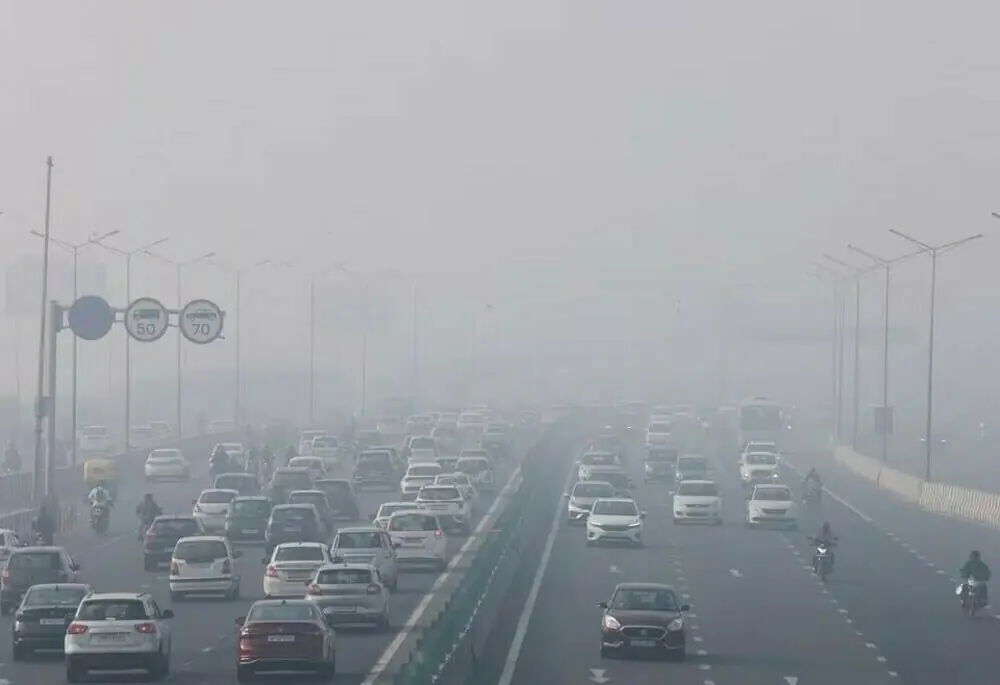

Outdoor air pollution is a prominent environmental health problem that affects not only the low and middle income countries but also high-income countries. Globally, 99 percent of the population breathes air containing high level of pollutants, exceeding the WHO limits.
It is not mere environmental issue rather it is a health emergency. It triggers cardiovascular and respiratory diseases, which increases both morbidity and mortality. In 2021, air pollution caused 8.1 million deaths globally becoming a second leading risk factor for death.
These statistics include children under five years of age as well. This rising burden of disease, which is associated with rising economic burden, calls upon governments to make efforts towards improving air quality so that the burden on public health and the cost associated with it could be reduced.
As part of global commitment to a healthier planet, the countries have pledged to achieve the sustainable development goals (SDGs) by 2030. SDG 3 underscores need for ensuring good health and well-being for people of all ages. Within this goal, the target 3.4 calls for reduction in pre-mature mortality due to non-communicable diseases by one third and target 3.9 specifically asks for a significant reduction in deaths and illnesses by air pollution. Similarly, SDG 11 aims to make cities safe, sustainable and resilient; within it the target 11.6 calls for improvement in urban air quality.
Pakistan is also committed to SDGs but it is still struggling with the worst air quality levels. Lahore is ranked among the most polluted cities in the world (IQ Air’s 2024 Report), which is a living proof of policy failure and pubic inaction.
In the case of Pakistan, there are varying factors of outdoor air pollution with smog emerging as one of the most severe and recurring environmental threats, leading to public health emergency. This year Smog season had arrived unusually early and blanketing the Punjab province in October. The AQI in Lahore this December 2025 exceeds on average more than 300, a level classified as “hazardous”.
The contribution to smog is majorly coming from transport (39 percent) and industry sector (24 percent). In November 2024, Punjab alone had nearly 1.93 million cases of respiratory illnesses, along with a surge in the cases of conjunctivitis and heart diseases.
Yet most of the policy focus is majorly on agriculture (contributing 11 percent to smog). Smog Control Strategy 2024-25 is launched by Agriculture Department, Government of Punjab, also has its particular focus on rationalizing the crop residue burning in the province.
The particulate matters PM2.5 in smog penetrate deep into the lungs and blood stream which triggers and worsen asthma, chronic obstructive pulmonary disease, lung cancer, heart diseases and even stroke.
According to the WHO, heart diseases ranked first among the top ten causes of death by disease in Pakistan with air pollution counts as a significant risk factor. This is quite alarming because chronic exposure doesn’t just shorten life expectancy but it also reduces productivity, strains hospitals, and increases the national healthcare burden.
Reactive measures are usually short lived with limited environmental benefits. Measures like smog guns, artificial rains and emergency lockdowns look fancy and impressive but they are actually really costly and temporary in nature.
For the sake of real change, preventive management must be there rigorously so that smog could be stopped in the first place. Preventive and source-focused measures like vehicle emissions control, industrial scrubbers, cleaner brick kilns, public transport, urban greening are required. Avoiding crop residue burning is one of the most sustainable and long-lived prevention.
Among the reactive measures, Pakistan has adopted the use of smog guns this year and imported 15 smog guns from China. These guns are launched under the slogan of Climate Resilient Punjab. They can temporarily improve air quality but after about 25–30 minutes the pollution levels often return to their previous state, worsening by around 13 percent as the water traps and locks in more fine particles.
From a cost–benefit perspective, smog guns offer limited adoptability, narrow coverage, and only short-term benefits, while each unit costs over Rs 40 million. Operating a single cannon continuously can consume about 360,000 liters of water per day, and running 15 units would result in massive water use, which is an environmental burden for a nation already facing severe water stress.
Instead of relying on such costly reactive measures, adopting source-control strategies would yield far greater benefits than costs, primarily by reducing mortality and morbidity rates and ultimately lowering the overall disease burden.
Sustainable solutions include but not limited to maintaining the vehicles’ fuel standards and controlling their emissions, deploying scrubbers, bag filters in the industrial units, replacing the traditional kilns with zigzag kilns and vertical shaft kilns, mass transit and electrification of vehicles, road paving and dust suppression at construction sites, nature-based solutions like more plants and greenery especially in urban areas, banning crop-residue burning and educating farmers to adopt more environmental friendly measures like zero tillage, using super seeders, stubble burying etc.
Pakistan is fighting for cleaner air but it should not be only about the technology and visuals rather it should be about accountability, awareness and sustainable solutions. Everyone has right to breathe cleaner air but it should come along with responsibility on every citizen, policymaker and stakeholder.
Investing in sustainable transport, cleaner industries, and greener cities will yield far greater benefits than any temporary solution. If we fail to act responsibly today, the haze will only thicken tomorrow — over our skies, our health, and our future generations.
Copyright Business Recorder, 2025
The writer is a Lecturer at the Pakistan Institute of Development Economics (PIDE). She can be reached at: [email protected]
















Comments
Comments are closed for this article.