


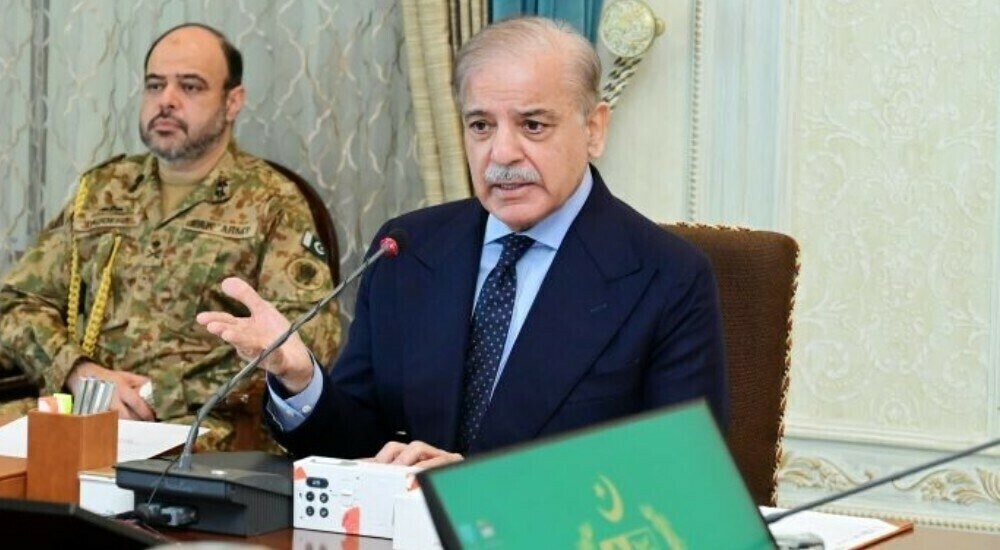

ISLAMABAD: Prime Minister Shehbaz Sharif on Wednesday ramped up his efforts to tackle corruption and inefficiency within Pakistan’s customs system, directing the authorities to implement tighter monitoring of customs duty collection on border trade, including bilateral and transit trade products.
Chaired by the prime minister, a meeting reviewed proposals from a government sub-working group tasked with reforming the customs and trade sectors.
Sharif acknowledged the long-standing challenges within Pakistan’s customs framework, which he said have hindered industrial growth and diminished the country’s competitiveness in global markets.
Ideal trade, transit hub: Dar highlights significance of Pakistan’s geo-strategic location
“The outdated system is bleeding the nation dry,” he said, expressing frustration over inefficiencies he claimed have allowed corruption to thrive.
He warned that without modernisation and stronger enforcement, Pakistan is losing billions in revenue annually, with customs officers often accused of collusion with smugglers and tax evaders.
He added that unless meaningful reforms are introduced, industries will continue to face burdensome tariffs and unpredictable bureaucratic obstacles.
“The customs system must be overhauled if we are to revitalise industrial production and boost exports,” he stressed. “We can no longer afford to ignore the billions of rupees lost to an outdated system that benefits only a few while stifling the economy.”
Sharif’s remarks followed a dismal evaluation from the sub-working group, which highlighted the inefficiencies plaguing the customs system, undermining the state’s revenue and imposing unnecessary burdens on local businesses.
“We can no longer afford to ignore these failures if we are serious about increasing industrial production and competing in global markets,” Sharif said.
The prime minister also pointed to the underutilization of the Export Development Fund, criticising its lack of focus on vital areas such as research, training, and capacity-building. He argued that addressing these shortcomings would significantly enhance Pakistan’s industrial base.
He further stressed the importance of data-driven reforms, urging that recommendations for customs and trade changes be based on solid evidence rather than assumptions or outdated practices. “The government must act decisively to reduce production costs and create a more favourable environment for both local industries and foreign investors,” he added.
The sub-working group’s report, presented during the meeting, underscored that sustainable economic growth – particularly through export-driven strategies – requires not only customs and taxation reforms but also a comprehensive overhaul of infrastructure and an increase in government investment.
Sharif also expressed strong support for the newly approved national tariff policy, describing it as a “revolutionary step” aimed at boosting domestic industrial output and enhancing the country’s global competitiveness.
The meeting was attended by key ministers, including Finance Minister Mohammad Aurangzeb, Information Minister Ataullah Tarar, Power Minister Awais Leghari, and Economic Affairs Minister Ahad Cheema, alongside representatives from the business and industrial sectors.
Copyright Business Recorder, 2025

























Comments
Comments are closed for this article.