


Weekly Cotton Review: APTMA patron-in-chief spells out challenges facing textile industry
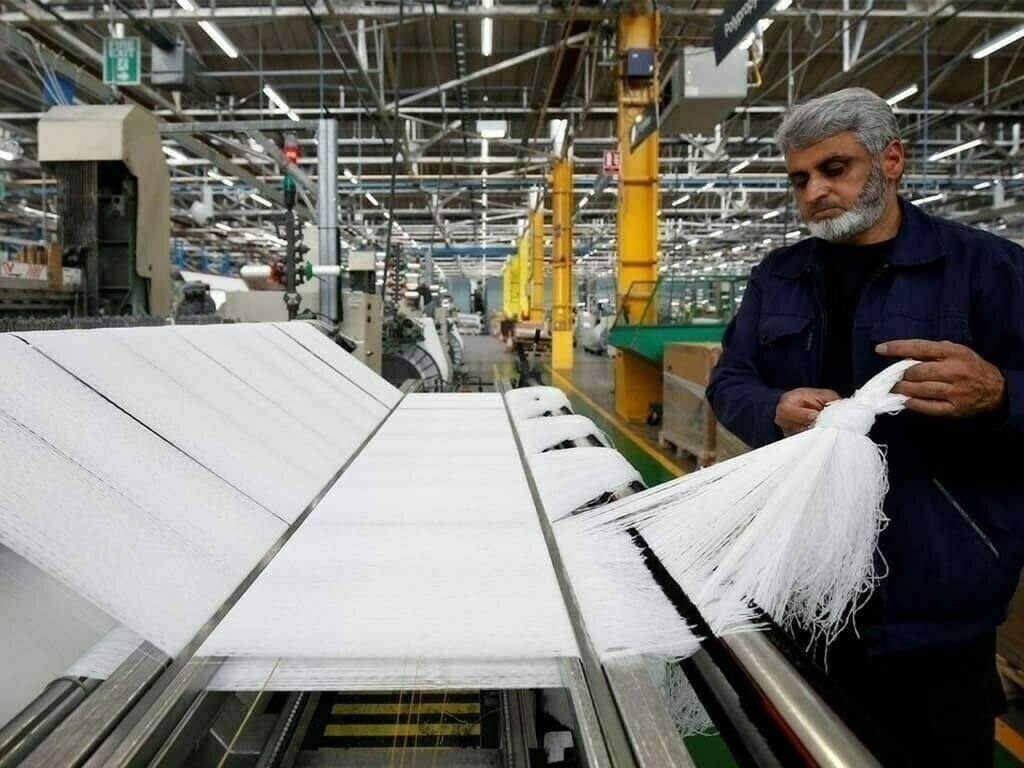

KARACHI: A rising trend is being observed in quality cotton prices, with the spot rate recording an increase of two hundred rupees per maund. In this regard, Gohar Ejaz, the patron-in-chief of the All Pakistan Textile Mills Association (APTMA), has revealed an extremely alarming situation, stating that due to the rapid decline in yarn and fabric exports from the country, one hundred and fifty textile mills across the nation have closed down over the past two years.
On the other hand, MNS University in Multan has prepared a cotton crop strategy for 2026 to 2027 while planning for the future. Additionally, circles associated with the textile industry have demanded the removal of the mandatory fumigation requirement for American cotton at ports.
The All Pakistan Textile Mills Association has clearly announced that the power package offered by the government is not acceptable to them. In another significant development, the draft of a five-year policy for textile apparel has been completed. Meanwhile, the All Pakistan Textile Mills Association has formally written a letter to Deputy Prime Minister Ishaq Dar against the Ministry of Food Security.
Cotton prices showed relative improvement in the local cotton market during the past week. Textile mills are showing interest in quality cotton, which has contributed to the relatively better cotton prices. Quality cotton prices increased by 300 to 500 rupees, while demand for light and average quality cotton remained relatively low. The price of quality cotton per maund stood at 15,500 to 15,800 rupees, whereas light and average quality cotton was priced at 14,750 to 15,100 rupees. Accordingly, there were fluctuations in Phutti prices, which ranged from 6,000 to 8,200 rupees per 40 kilograms.
Meanwhile, Balochi cotton was priced at 15,800 to 16,100 rupees per maund, with Phutti ranging from 7,800 to 9,200 rupees. Primark cotton was priced at 16,800 to 17,100 rupees.
Cotton production in the country continues to decline. This year, total production is expected to be approximately 55 lac bales, excluding unregistered cotton. However, if serious measures are not taken to increase cotton production, it will decline further in the coming years as farmers are turning away from cotton cultivation because they are getting relatively better prices for other crops. A very large sugar mill is being established in Obaro (Sindh) which will lead to greater emphasis on sugarcane cultivation instead of cotton in upper Sindh as well.
The country is experiencing a concerning decline in exports, with the textile sector facing particularly serious challenges. In a recent interview, Gohar Ejaz, Patron-in-Chief of APTMA, revealed alarming statistics indicating that 150 textile mills have closed across the country over the past two years due to a sharp decline in yarn and fabric exports.
Ejaz attributed the crisis to several key factors hampering industrial operations, stating that a 6 percent interest rate, electricity costs of 6 cents per unit, and unnecessary taxes are making it impossible for the country’s industries to remain competitive. He emphasized that the current interest rate and high energy costs have rendered Pakistani industries unable to compete with regional countries.
The APTMA chief further explained that yarn and fabric exports are currently not viable, which is forcing mills to shut down operations. The high cost structure has effectively priced Pakistani textile products out of competitive international markets.
In the domestic cotton market, prices in Sindh and Punjab provinces are ranging from 14,750 to 15,800 rupees per maund, depending on quality. Phutti prices are trading between 6,000 and 8,200 rupees per 40 kilograms.
Meanwhile, in Balochistan province, cotton prices are slightly higher, ranging from 15,300 to 16,000 rupees per maund, while Phutti is being traded at 7,800 to 9,200 rupees per 40 kilograms.
The prices of Khal, Banola and oil remain stable in the market.
The Spot Rate Committee of the Karachi Cotton Association increased the spot rate by Rs 200 per maund and closed it at Rs 15,200 rupees per maund.
Naseem Usman, Chairman of the Karachi Cotton Brokers Forum, reported that international cotton prices showed mixed trends. New York cotton futures prices ranged between 62.50 and 67.50 American cents during this period.
In a significant development, the Secretary of Agriculture participated in a meeting regarding the Cotton Crop Strategy for 2026-27 under the chairmanship of the Government of Punjab at MNS University, Multan. The meeting focused on developing a comprehensive plan for both early and seasonal cotton sowing, promoting cluster farming models by involving APTMA and ginners, and ensuring the availability of certified and high-quality seeds to achieve superior yields.
The targets set for 2026-27 include achieving 40 maunds per acre for early sowing and 20 maunds per acre for seasonal sowing. The planned area for early cotton cultivation is one million acres, with an expected production of 2.5 million bales from early sowing alone.
Key enabling factors identified for achieving these targets include zoning based on CRS reports and variety specifications, completion of early sowing by March 2026 with production plans finalized by January 15, 2026, and nutrition plans linked to specific varieties and geometry. The establishment of PCPA-APTMA cluster villages for implementation and the arrangement of demonstration plots for informed advisory services and farmer training were also emphasized.
All major stakeholders from both the public and private sectors actively participated in the meeting and reaffirmed their commitment to revitalizing Punjab’s cotton sector through collaboration, innovation, and sustainability.
Meanwhile, local textile mills have imported large quantities of cotton from Brazil this year due to Brazilian cotton being cheaper compared to American cotton. In response to this situation, American institutions have demanded that Pakistani authorities remove the requirement for fumigation of American cotton at ports to increase their exports to Pakistan.
Naseem Usman, Chairman of the Karachi Cotton Brokers Forum, reported that international cotton prices showed mixed trends. New York cotton futures prices ranged between 62.50 and 67.50 American cents during this period.
In a significant development, the Secretary of Agriculture participated in a meeting regarding the Cotton Crop Strategy for 2026-27 under the chairmanship of the Government of Punjab at MNS University, Multan. The meeting focused on developing a comprehensive plan for both early and seasonal cotton sowing, promoting cluster farming models by involving APTMA and ginners, and ensuring the availability of certified and high-quality seeds to achieve superior yields.
The targets set for 2026-27 include achieving 40 maunds per acre for early sowing and 20 maunds per acre for seasonal sowing. The planned area for early cotton cultivation is one million acres, with an expected production of 2.5 million bales from early sowing alone.
Key enabling factors identified for achieving these targets include zoning based on CRS reports and variety specifications, completion of early sowing by March 2026 with production plans finalized by January 15, 2026, and nutrition plans linked to specific varieties and geometry. The establishment of PCPA-APTMA cluster villages for implementation and the arrangement of demonstration plots for informed advisory services and farmer training were also emphasized.
All major stakeholders from both the public and private sectors actively participated in the meeting and reaffirmed their commitment to revitalizing Punjab’s cotton sector through collaboration, innovation, and sustainability.
Meanwhile, local textile mills have imported large quantities of cotton from Brazil this year due to Brazilian cotton being cheaper compared to American cotton. In response to this situation, American institutions have demanded that Pakistani authorities remove the requirement for fumigation of American cotton at ports to increase their exports to Pakistan.
All major stakeholders from the public and private sectors actively participated and reaffirmed their commitment to reviving Punjab’s cotton sector through cooperation, innovation, and sustainability.
Meanwhile, local textile mills have imported large quantities of cotton from Brazil this year due to Brazilian cotton being cheaper compared to American cotton. In this situation, American agencies have demanded that Pakistani authorities eliminate the fumigation requirement for American cotton at ports to increase their exports.
According to Cotton Ginners Forum Chairman Ehsan-ul-Haq, for several decades imported cotton in Pakistan has been fumigated in the exporting country and then subjected to an additional 48 hours of fumigation at Karachi port to ensure the elimination of potential germs, insects, and pests. However, the federal ministry recently granted permission as a facility to conduct fumigation in only one country so that cotton could reach textile mills in less time.
Ehsan-ul-Haq revealed that two major American cotton exporting agencies, the National Cotton Council and Cotton Council International, have requested the federal ministry through APTMA to completely eliminate the fumigation requirement for American cotton to increase their exports. He warned that Pakistan should avoid accepting the American demand as it could expose the country to the risk of American pests and diseases. In the past, the American bollworm, pink bollworm, and wheat red beetle entered Pakistan due to the absence of fumigation of cotton and wheat imported from America.
Ehsan-ul-Haq further stated that the Pakistani cotton industry is already suffering from a severe crisis due to heavy taxes, expensive electricity and gas, and high interest rates, resulting in numerous ginning factories, oil mills, and textile units becoming non-operational.
The All Pakistan Textile Mills Association (APTMA) declared the government’s three-year incremental electricity package, priced at 22.98 rupees per kilowatt for industrial and agricultural sectors, unacceptable on Wednesday. Based on discussions during the hearing held on November 11, 2025, they reiterated that the incremental consumption package proposed by the federal government is completely unacceptable for the industrial sector in its current form. This position is clearly evident from the unanimous and firm opposition of representative bodies of all major industrial sectors of Pakistan.
Furthermore, sources informed Business Recorder that the Ministry of Commerce has reportedly finalized the draft five-year Textile and Apparel Policy for 2025-2030 for submission to the Cabinet’s Economic Coordination Committee. However, the ministry has decided to discuss the final draft in an inter-ministerial meeting with other relevant ministries to incorporate their concerns and suggestions into the summary.
The Ministry of Commerce’s policy aims to achieve an export target of 29.381 billion US dollars, which aligns with the export targets proposed by the National Export Development Board under the Uraan Pakistan initiative and promotes “Made in Pakistan” initiatives.
The All Pakistan Textile Mills Association (APTMA) has written a letter to Deputy Prime Minister Ishaq Dar against the Ministry of Food Security, strongly protesting the exclusion of important Cabinet Committee decisions from the comments. APTMA wrote to Deputy Prime Minister Ishaq Dar against the Ministry of Food Security, strongly protesting the failure to include important Cabinet Committee decisions in the comments.
Copyright Business Recorder, 2025





















Comments
Comments are closed for this article.