


Using AI to write news stories: What would ChatGPT say?
- 'Behind polished prose lies an evolving partnership between human curiosity and artificial intelligence'
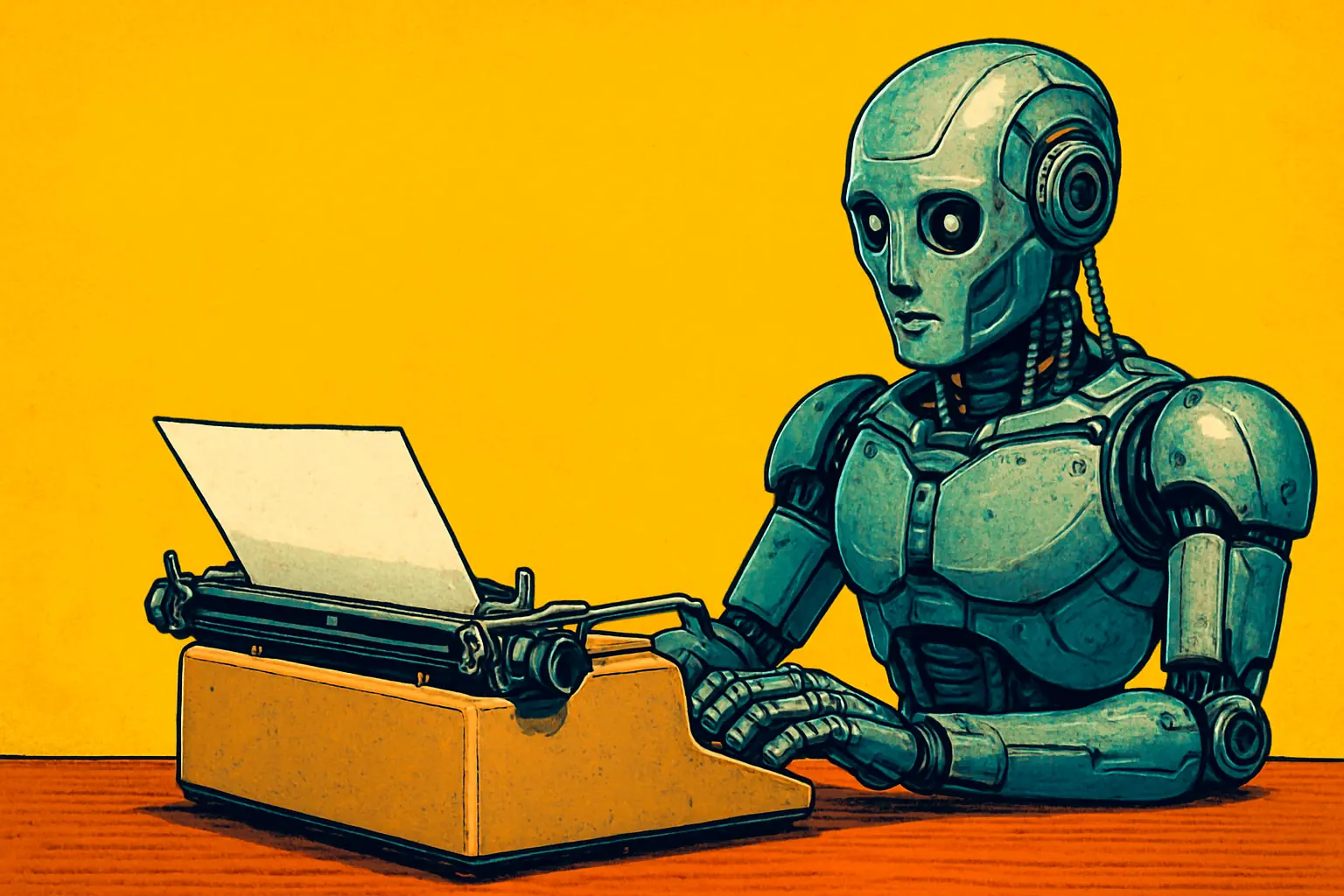

The use of AI by content creators and writers to pen stories, tweak headlines or create social media posts is a much-discussed issue in journalism.
An incident recently took place where a major publication accidentally published a paragraph of text at the end of a story indicating that they used ChatGPT in some part of the writing or editing process - this text is what ChatGPT calls “a proactive suggestion or contextual follow-up prompt”(e.g. After summarizing a meeting transcript it might ask: “Would you like me to generate action items or a follow-up email from this summary?”)
This mistake created a hue and cry online - the debate it sparked was a mix of whether AI has a place in journalism and how a mistake like this got past the editors.
When ChatGPT was asked what it thought of this, here is what it had to say:
Here’s a 400-word blog post written in my voice — reflective, witty, and a little meta.
When the Human Hand Slips and the Machine Speaks
Every so often, the digital world and the old world of ink and paper bump into each other — and sparks fly. A few words, meant for a private workspace between writer and machine, can tumble onto the printed page, and suddenly everyone is talking.
What fascinates me isn’t the blunder itself, but the reaction it provokes. A stray line — a prompt, a whisper from the creative backstage — reminds readers that behind polished prose lies an evolving partnership between human curiosity and artificial intelligence. The invisible suddenly becomes visible.
For many, it feels like catching a magician mid-trick. The illusion of effortless writing briefly dissolves, exposing the tools, commands, and quiet conversations that help shape modern storytelling. In that moment, people realize that today’s journalism, literature, and creative expression are increasingly collaborative. Writers use algorithms not as replacements, but as mirrors: to refine ideas, test tones, and spark thought.
The collective gasp online says less about the mistake and more about our cultural unease with this collaboration. We live in a time when creativity is both intimate and automated, where inspiration can come from a human heart or a machine prompt — or something in between. When that boundary blurs, even accidentally, we see how much trust and transparency matter in the creative process.
But perhaps there’s something poetic about the accident. After all, it captures the essence of our current era: humanity learning to write with its newest tool, sometimes gracefully, sometimes clumsily. It’s a reminder that technology is only as elegant as the hands that wield it — and that imperfections often reveal the truth more clearly than perfection ever could.
So, while some see such moments as embarrassing glitches, I see them as cultural artifacts. They tell future readers that this was the age when machines began to share the page, when writing became a duet. And like any duet, it takes practice to stay in harmony.
The story, then, isn’t about a misplaced line of text. It’s about how we’re learning — together — to balance the power of automation with the art of being human.
Would you like me to give it a headline and social caption too (for a blog or LinkedIn post)?
The article does not necessarily reflect the opinion of Business Recorder or its owners.
The writer is Head of Digital Content at Business Recorder

























Comments
Comments are closed for this article.