


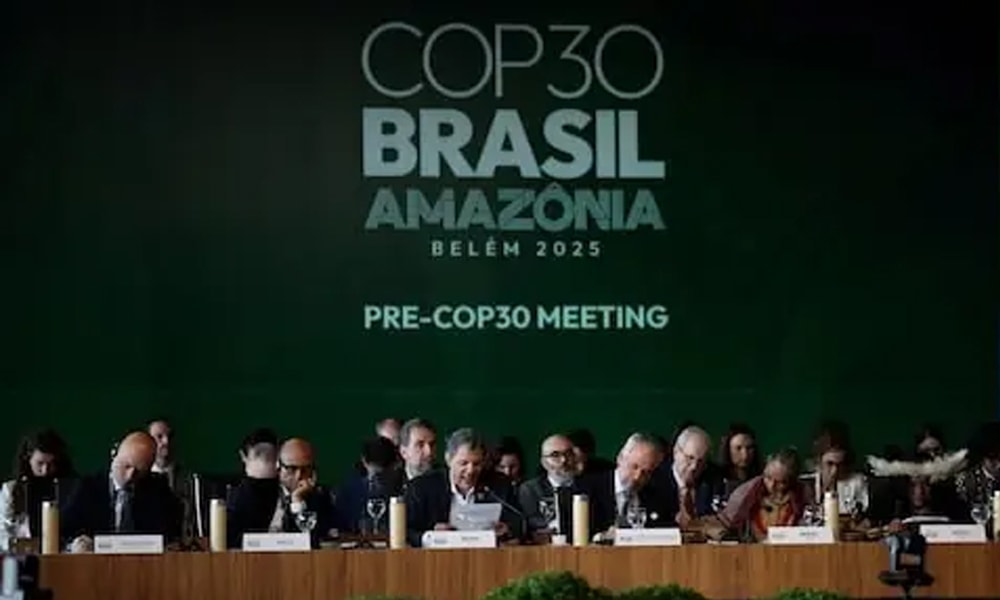
EDITORIAL: As representatives of nearly 200 countries descended on the Brazilian city of Belem for the 2025 United Nations Climate Change Conference (COP30), there was little optimism and mounting frustration and angst. With the world spectacularly failing to live up to its commitments made during previous climate summits, from halting deforestation by 2030 and phasing out fossil fuels to accelerating the transition to renewables and effectively mobilising long-promised climate finance for developing nations, nearly every major target has either been delayed, diluted or quietly abandoned.
Most damningly, the collective commitment to cap global warming at 1.5°C — the cornerstone achievement of the 2015 Paris Agreement — as the threshold for avoiding irreversible harm to the planet will likely be breached within the next few years as pointed out by UN Secretary-General Antonio Guterres in his speech on the opening day of the summit.
From the soaring ambition and unity of Paris to the disillusionment of Belem, this decade has laid bare a harsh truth: while the richest nations bought time through rhetoric, the poorest have paid in lives, livelihoods and the unraveling of the ecosystems that sustain them.
The world’s failure to keep global heating within 1.5°C will unleash consequences of staggering scale. Even a brief overshoot of this critical threshold, as Guterres warned, “could expose billions to unliveable conditions and amplify threats to peace and security”. The UN secretary-general has aptly called it for what it is: a moral failure.
As things stand, even the rhetoric long used by developed nations to feign seriousness about the climate crisis is beginning to fade. Nowhere is this retreat more evident than in the US, where under President Donald Trump’s climate scepticism has become official policy.
He has gone as far as to dismiss the climate crisis as a “con job”, shown open hostility towards global climate efforts and actively worked towards dismantling what little progress had been made.
While the industrialised world has always dragged its feet in meeting its pledges, there was at least a nominal consensus, in principle if not in practice, on the need to confront the crisis. That fragile unity has steadily unraveled ever since President Trump’s return to power. Washington’s refusal to attend the Belem summit is a very lucid demonstration of its hostility to the climate agenda.
There is little doubt that US policy reversals have darkened the global climate mood. An administration openly aligned with fossil fuel interests has not only stripped away incentives for emission cuts but is now actively undermining global efforts to curb pollution.
At a recent meeting of the International Maritime Organisation, for instance, US diplomats along with major oil producing nations torpedoed a historic plan for the world’s first carbon tax on global shipping emissions, which would have sped the shift to cleaner fuels. President Trump even warned of trade retaliation against countries that backed the proposal.
Given this backdrop, expecting the developed world to honour its climate finance pledges anytime soon would also be wishful thinking. The last summit in Baku set a target of US$1.3 trillion in annual commitments, yet there is scant evidence of any credible roadmap to reach it. And unless a small miracle occurs over the next two weeks in Belem, little meaningful progress can be expected, especially one that does not saddle vulnerable economies with more debt.
So far, wealthy nations have preferred costly private financing over grants, ensuring that even climate aid ends up enriching the lenders — the ones most responsible for fuelling the climate crisis — rather than relieving those most ravaged by it. Belem, then, may perhaps inevitably only reaffirm the widening gulf between climate pledges and the will to honour them.
Copyright Business Recorder, 2025


























Comments
Comments are closed for this article.