


Seniority or eligibility for promotion: Amendment affecting rights cannot be applied retrospectively: SC
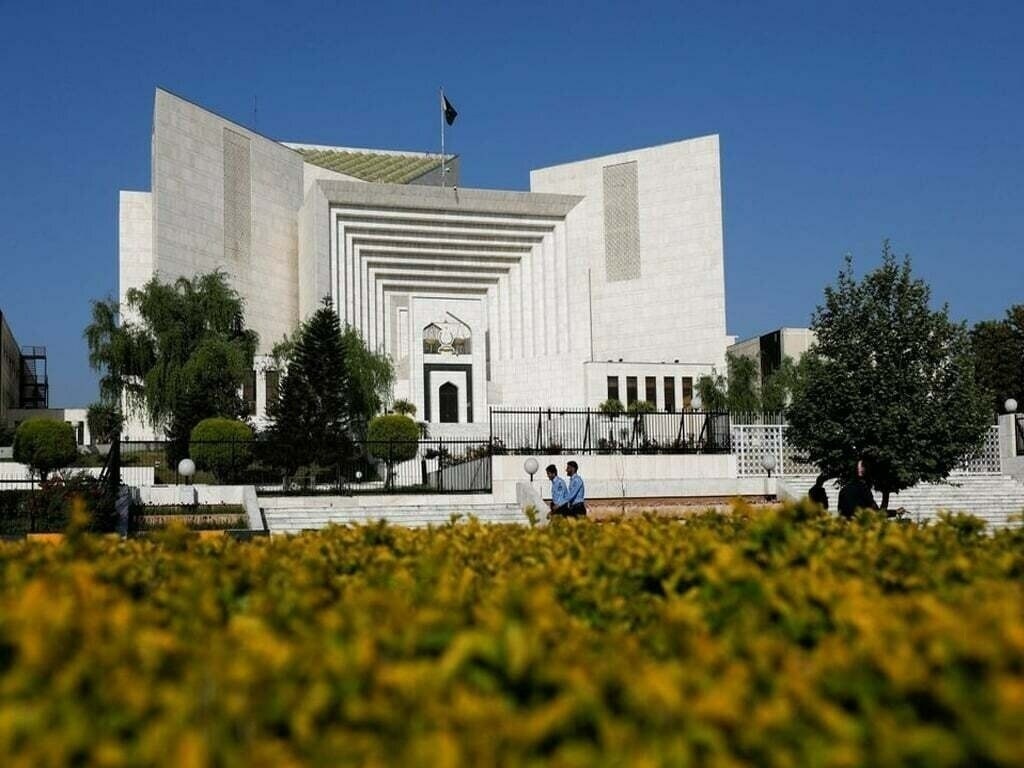

ISLAMABAD: The Supreme Court stated that an amendment, which adversely affects the accrued substantive rights, such as seniority or eligibility for promotion, cannot be applied retrospectively to the employees appointed before the amendment.
The judgment, authored by Justice Mussarat Hilali, observed that the fundamental principle governing the application of amended rules is that such an amendment operates prospectively unless a contrary intimation is manifestly evident from the statute.
It said, “Where an amendment adversely affects the accrued substantive rights, such as those pertaining to seniority or eligibility for promotion, it cannot be applied retrospectively to the employees appointed before to the amendment.” “Retrospective application is permissible only if the parent statute, which confers the rule-making power, contains an express provision to that effect.”
The judgment said that in the absence of such explicit legislative sanction, applying amended rules retrospectively to the detriment of civil servants, who had already accrued a right to be considered for promotion, is legally untenable.
It constitutes a violation of the principle of legitimate expectation and renders departmental action arbitrary. Furthermore, the question of whether the amended rules are to be applied prospectively or retrospectively is beyond the scope of DPC’s mandate. The Departmental Promotion Committee also does not have the authority to delay the meeting while waiting for the amendment of the rules.
The brief facts are that the respondents were appointed as Sub-Engineers (BPS-12) in the Communication & Works Department in 1986 and were subsequently upgraded to BPS-16. At the relevant time, their working papers for promotion to the post of Assistant Engineer (BPS-17) were prepared.
However, the meeting of the Departmental Promotion Committee (DPC) was deferred by the department, and the reasons given were that new promotion rules were under consideration. Eventually, revised rules were notified on 20 January 2023, under which the respondents were no longer eligible for the promotion.
Their departmental appeals remained undecided, prompting the filing of service appeals before the Khyber Pakhtunkhwa Service Tribunal, Peshawar (Tribunal), which, upon hearing both sides and examining the record, accepted the appeals. The department challenged the Tribunal order before the apex court.
The Additional Advocate General (AAG) for the department argued that no vested right to promotion exists unless a formal promotion order is issued, and that the Tribunal erred in interfering with administrative discretion. It was further contended that the revised rules were applicable at the time of the decision and thus rightly followed by the department.
The court noted that, according to the record of the case, the respondents had satisfied the eligibility criteria for promotion pursuant to the rules enforced at the time of their initial appointment. Consequently, their cases were fully ripe for consideration by the DPC.
The judgment noted that the subsequent delay in convening the meeting of the DPC was an administrative failure attributable solely to the department and cannot be imputed to the respondents. The respondents, sub-engineers in the Communication & Works Department, were entitled to promotion to the post of Assistant Engineer (BPS-17) in accordance with the rules applicable at the time they became eligible.
The judgment said that an employee, who fulfills the prescribed eligibility conditions, acquires a legitimate expectation to be considered for promotion in accordance with the prevailing rules.
Copyright Business Recorder, 2025




















Comments
Comments are closed for this article.