



The government has launched yet another incentive package for electricity users — this time aimed at incremental consumption. This is not the first such attempt.
A winter incentive package had ended earlier in 2025, while during the PTI government, a similar initiative was introduced to encourage incremental usage through marginal pricing. The idea is not new, but it has always deserved consideration given the way national grid pricing works.
The first positive aspect is that this package carries no subsidy. Incremental consumption will be priced at the marginal rate, where the fixed cost component is already covered. In theory, any incremental usage should therefore lead to a reduction in average tariffs for all consumers.
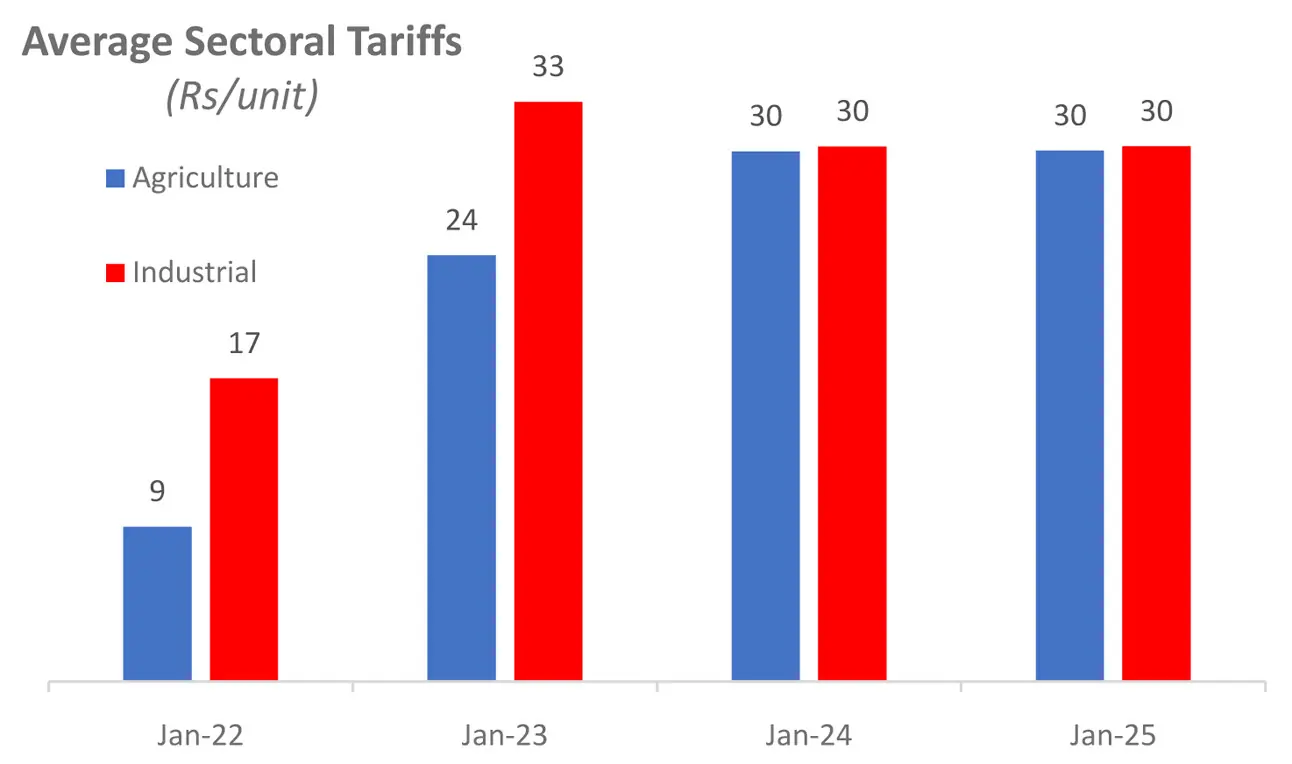
Unlike previous schemes, this one is not targeted at domestic consumers — and rightly so. It focuses instead on industrial and agricultural consumption, where the potential for meaningful incremental demand exists.
Another distinguishing feature is its three-year duration — easily the longest stretch for any pricing measure in the power sector, barring the perennial debt servicing surcharge.
Details are still awaited, but based on the Energy Minister’s remarks, this package differs in a key way: it rewards any incremental consumption rather than being limited to previous thresholds, such as 25 percent additional usage. That could make a significant difference to its overall impact.
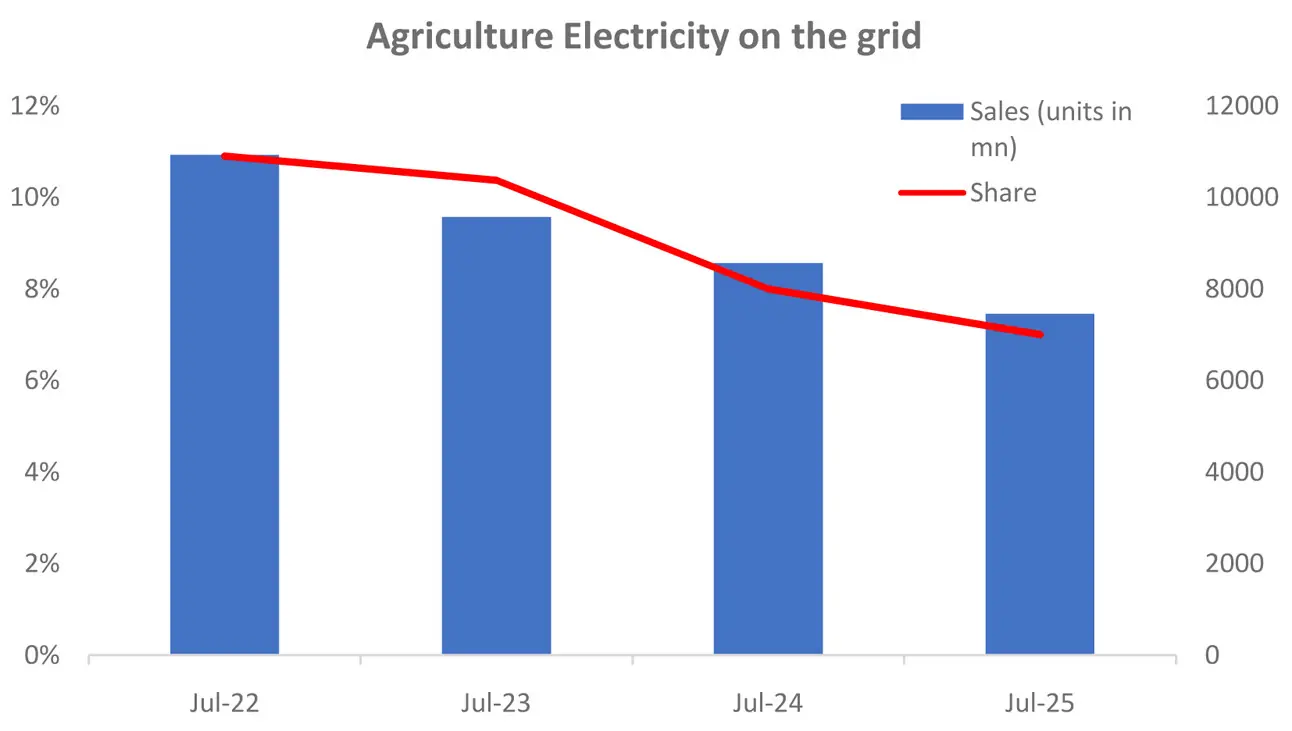
Both industrial and agricultural electricity consumption have shown interesting trends in recent years. In agriculture, grid-based consumption has dropped sharply following the government’s decision two years ago to phase out subsidies and the concurrent surge in solar adoption as panel prices plummeted. The two trends converged perfectly, making the farmers’ shift to solar one of the more compelling case studies in recent history.
The industrial sector followed a similar trajectory. As power tariffs kept rising, many industries shifted to captive generation, while small and medium units increasingly turned to solar. That pattern, however, is now reversing.
With the government making RLNG-based captive generation unviable, many industrial users are returning to the grid. In 4QFY25 alone, 280 industrial users rejoined, driving a remarkable 46 percent year-on-year surge in industrial consumption. This momentum is likely to continue for another quarter or two as more industries reconnect.
What remains to be seen is how the government treats industries returning to the grid because of the forced end to captive generation. Will they also qualify for the discounted marginal tariffs? If so, it could create considerable controversy.
Previous incremental consumption schemes have produced lukewarm results. Will this one fare any better? It is important to note that Pakistan’s industrial activity remains subdued and is unlikely to take off merely on account of a marginal relief measure. Similarly, agricultural consumers are not expected to slow down their shift toward solar — the incentives for off-grid generation still outweigh the marginal price benefits on-grid.
All said, this is a move worth taking — and one can only hope it yields the intended results.





















Comments
Comments are closed for this article.