


Dollar set for best week in a year as yen struggles
- The Japanese currency was last a touch stronger at 152.49 per dollar
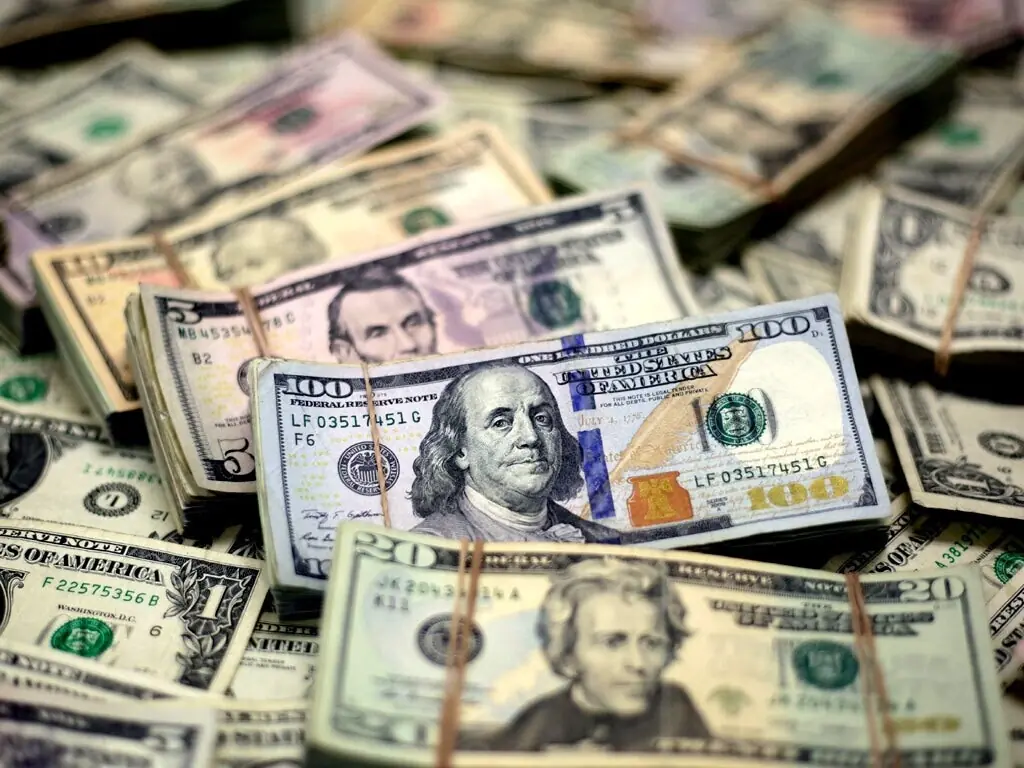

SINGAPORE: The dollar held steady on Thursday, on track for its best week in nearly a year, buoyed by a weak yen that has struggled on the back of a change of guard in Japan’s ruling party.
Markets this week have grappled with political turmoil in Japan and France alongside an ongoing US government shutdown, all of which have done little to stoke confidence in investors, who have sought safety in assets such as gold.
The yen has been whiplashed after conservative Sanae Takaichi was picked as head of Japan’s Liberal Democratic Party, putting her on course to become the country’s first female prime minister and stoking bets of a revival in big spending and loose monetary policy.
The Japanese currency was last a touch stronger at 152.49 per dollar, after having slid to an eight-month low of 153 per dollar overnight.
It has fallen more than 3% for the week thus far, set for its worst performance since September 2024.
“The increase in dollar/yen has been quite relentless, and it seems like nothing can stop it from rallying,” said Carol Kong, a currency strategist at Commonwealth Bank of Australia.
“In the near term, the confirmation of Takaichi as PM and the upcoming October BOJ meeting might be the next catalyst for further weakness in the Japanese yen, especially if Takaichi reinforces her dovish views on fiscal and monetary policy, and the BOJ signals that it may not raise interest rates in the near term.”
The euro has similarly been restrained by France’s deepening political crisis following the shock resignation of Prime Minister Sebastien Lecornu and his government, though French President Emmanuel Macron is set to appoint a new prime minister in the next 48 hours, his office said on Wednesday.
The single currency last traded 0.09% higher at $1.1639, reversing three straight days of losses, though it remains nearly 0.9% down for the week thus far.
The moves in the yen and the euro have in turn provided support for the dollar, which is up more than 1% for the week thus far and has kept other currencies subdued.
Sterling rose 0.07% to $1.3413, after having touched a roughly two-week low in the previous session, while the Australian dollar was last up 0.11% at $0.6594.
The New Zealand dollar edged 0.1% higher to $0.5792, after tumbling in the previous session as the Reserve Bank of New Zealand slashed interest rates by an aggressive 50 basis points.
Policymakers signalled concerns about the frail state of the economy and kept the door open for further easing.
Against a basket of currencies, the dollar was little changed at 98.77.
Federal Reserve officials agreed at their recent policy meeting that risks to the US job market had increased enough to warrant a rate cut, but remained wary of high inflation amid a debate about how much borrowing costs were weighing on the economy, minutes of their September meeting showed on Wednesday.
“The Fed meeting minutes, as expected, really signalled caution by policymakers about future interest rate cuts,” Kong said.
“I think markets are still comfortable with pricing two more rate cuts by year-end. That’s also our base case, and we didn’t really see markets change their mind off the back of the minutes.
We will have to wait and see new data, but that’s not coming out until the government reopens.“
A prolonged US government shutdown could leave the Fed flying blind at its October meeting as upcoming economic data is delayed. Still, investors continue to price in roughly 44 bps worth of easing by December this year.




















Comments
Comments are closed for this article.