


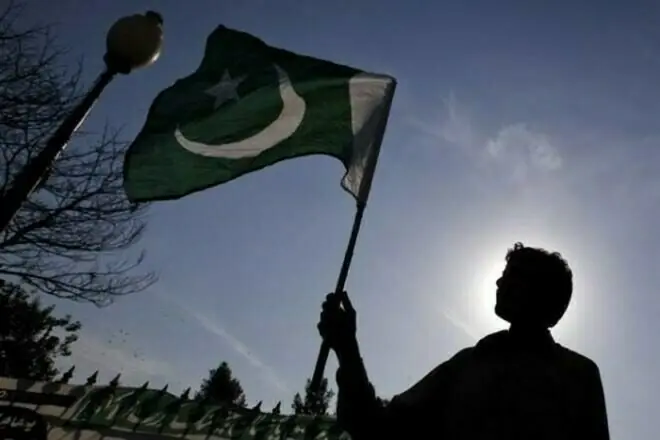

In August 1947, as the map of the subcontinent was redrawn, a dream was realised, creating a homeland for millions who longed for freedom. But that freedom came at an unfathomable price. The creation of Pakistan was not just a geopolitical event, it was a human tragedy unparalleled in modern history.
The land that now flies the crescent and star was soaked in the blood of innocents even before its birth.
Millions abandoned ancestral homes to cross hastily drawn borders, and hundreds of thousands never made it to their promised land. Infants were slain with spears, women were dragged from caravans, assaulted, and stripped of dignity. Entire families were butchered, while countless young girls, rather than fall to the savagery of mobs, leapt into wells to protect their honour.
This was not a migration; it was an exodus marked by countless unspeakable sacrifices. Those who staggered across to the newborn state carried not only their belongings but also the silent graves of loved ones. Yet despite the carnage, people pressed on, those who survived staggered across the new border with little more than faith in their hearts, faith that this homeland, carved from sacrifices, would be a sanctuary.
They carried no wealth but their courage, no possessions but their dreams. They believed Pakistan would be a land of justice, dignity, and opportunity, a nation where they could live free of fear and flourish by their own effort and merit.
Seventy-eight years on, that hope stands wounded. The country that emerged from rivers of blood now drowns in a different tide: one of corruption, inertia, and broken governance.
Our governments have shuffled from one crisis to another without a unifying vision. Bureaucracy has calcified into a self-serving machine, and the average citizen, battered by inflation, unemployment, and systemic decay, is left gasping for relief.
This was not the Pakistan for which trains arrived filled with corpses in 1947. This was not the Pakistan for which millions abandoned ancestral homes and entire villages vanished. Our forebears did not bleed so that their children would inherit corruption, mismanagement, and despair.
What Pakistan urgently needs is not another slogan shouted from podiums, not another ceremonial policy document that gathers dust in government drawers. What Pakistan needs is clarity of purpose, a national vision as sharp and unyielding as the resolve of those who crossed the border in 1947. This vision must be strategic, specific, and shared openly with the people.
The roadmap must include clear objectives and measurable results. Education must no longer be treated as an afterthought. From village classrooms to universities, we must move beyond rote memorisation and produce critical thinkers, innovators, and leaders.
Nations are built not on raw resources but on human capital, and Pakistan has allowed its greatest resource, its youth, to languish in neglect.
Similarly, the IT sector, the engine of modern economic growth, cannot be developed with token incentives or half-hearted measures. It requires real infrastructure, tax reforms, and an education-to-employment pipeline that equips young Pakistanis with skills to compete globally.
Agriculture, industry, and public administration must all be overhauled to remove inefficiency, ensure accountability, and deliver tangible improvements.
These are not lofty ideals; they are practical necessities. A nation cannot run on rhetoric alone. We need SMART objectives — Specific, Measurable, Achievable, Relevant, and Time-bound — not as a bureaucratic catchphrase, but as a national discipline.
The people have the right to see “how” their country will change, “when” it will change, and “who” will be held responsible if it does not.
This is no time for self-deception. A nation cannot be steered with rhetoric. It must be guided with “Strategy” — SMART objectives that are Specific, Measurable, Achievable, Relevant, and Time-bound. The people of Pakistan deserve to see not just what the state intends to do, but exactly how and when it will do it. The blood of Partition demands no less. The martyrs of 1947 did not give their lives so that political elites could enrich themselves while the masses sink deeper into poverty. They did not abandon ancestral homes and livelihoods so that future generations would be forced to beg for foreign aid. They dreamed of a Pakistan strong enough to defend its people, just enough to uplift them, and visionary enough to lead them to prosperity.
The time for excuses is over. We owe it to those who died in the fields of Punjab, on the roads of KPK, in the deserts of Sindh, in the mountains of Balochistan and in the burning streets of Bengal to build a Pakistan worthy of their sacrifice. Their courage calls out to us across the decades: “Do not squander what we gave our lives for”.
This is not a call for despair, it is a call for renewal. Pakistan can still rise. The same resilience that carried refugees across blood-soaked borders in 1947 can carry us now through economic hardship and political decay. But it requires leadership that does not deceive itself, a government that does not confuse activity with progress, and a nation that refuses to settle for mediocrity.
We must demand a better vision, a vision rooted in education, technology, justice, and opportunity. A vision that is honest, transparent, and bold enough to inspire faith once again.
Pakistan was born of blood and sacrifice. To honour that birth, we must give it not just our prayers, but our discipline, our courage, and our unwavering commitment to build a nation as great as the dream that created it. We owe them more than monuments, speeches, and annual tributes. We owe them a Pakistan worthy of their sacrifice — a Pakistan guided by vision, discipline, and the courage to act.
Dr. Ajaz Ali is a British-Pakistani academic and education reform advocate who leads Higher Education at a Birmingham-based institution. Holding an MBA and PhD, he is recognised for promoting meaningful education for success in an AI-powered world. He tweets at @DrAjazUK

























Comments
Comments are closed for this article.