


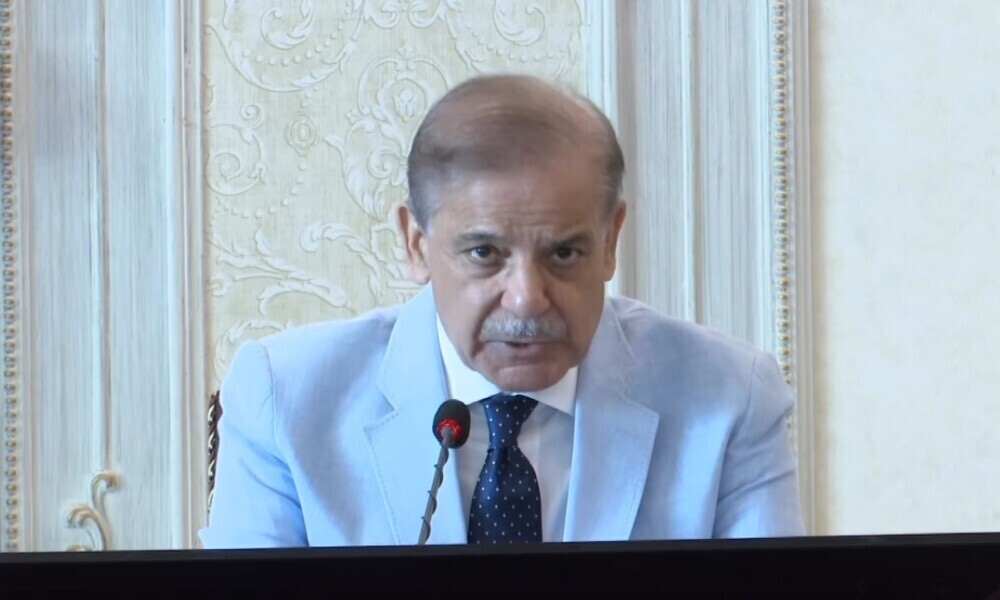

ISLAMABAD: Prime Minister Shehbaz Sharif on Friday called for the immediate formulation of a National Climate Resilience Action Plan, warning that Pakistan faces mounting threats from increasingly extreme weather events linked to climate change.
Chairing a high-level meeting in Islamabad, the prime minister directed the Ministry of Climate Change and Environmental Coordination to prepare and submit a comprehensive plan of action for the 2026 monsoon season. The ministry has been directed to finalize the plan within two weeks.
The directive comes in the wake of weeks of heavy rainfall and severe flooding that have displaced millions across the country.
Describing the rehabilitation of flood-affected communities as a “top government priority,” the prime minister directed the authorities to focus special attention on the southern riverine regions, where the risk of further flooding remains high.
He assured provincial governments of the federal government’s full support, pledging continued coordination on rescue, relief, and reconstruction efforts.
Officials from the National Disaster Management Authority (NDMA) briefed the prime minister on the current situation, reporting that floodwaters from the Ravi, Sutlej, and Chenab rivers were now moving through central and southern Punjab, with Panjnad expected to be the next area affected.
They said that while authorities had initially braced for water flows as high as 1.2 million cusecs, the current forecast projects a lower but still significant flow of around 600,000 cusecs.
In Multan, emergency services, local authorities, and army units remain fully mobilised to manage the situation, with efforts focused on preventing breaches of embankments, officials added.
The NDMA reported that approximately 80 per cent of damaged power infrastructure in Gilgit-Baltistan and central Punjab has been restored. Key roads and bridges have also been reopened to facilitate relief operations.
The meeting was informed that the scale of the disaster has prompted one of the largest coordinated responses in recent years. Over two million people have been evacuated from flood-prone areas, and more than 4,100 individuals stranded in isolated locations have been rescued.
The officials said that federal government has so far dispatched over 6,300 tonnes of aid, and more than 2,400 medical camps have been established in affected districts.
Prime Minister Sharif called for real-time monitoring of evacuation and relief efforts to ensure aid reaches the most vulnerable populations.
He announced the formation of a special committee to facilitate financial assistance for flood victims who are not currently registered with the National Database and Registration Authority (NADRA).
He also praised the joint efforts of NDMA, Provincial Disaster Management Authorities (PDMAs), the military, and civil agencies, describing the response as “coordinated and determined.”
The meeting was further informed that compensation is being disbursed to the families of the deceased, the injured, and those who suffered property losses, with NADRA prioritising the most severely affected cases.
Chief secretaries from all four provinces, as well as from Gilgit-Baltistan and Azad Jammu and Kashmir, also briefed the meeting via video link on the situation in their respective regions.
The prime minister concluded by reaffirming his government’s commitment to supporting affected communities until full rehabilitation is achieved. He directed all federal ministries and departments to maintain their support to provincial administrations throughout the recovery process.
The meeting was attended by senior federal ministers, the chairmen of NDMA and NADRA, and other high-ranking officials.
Copyright Business Recorder, 2025




















Comments
Comments are closed for this article.