


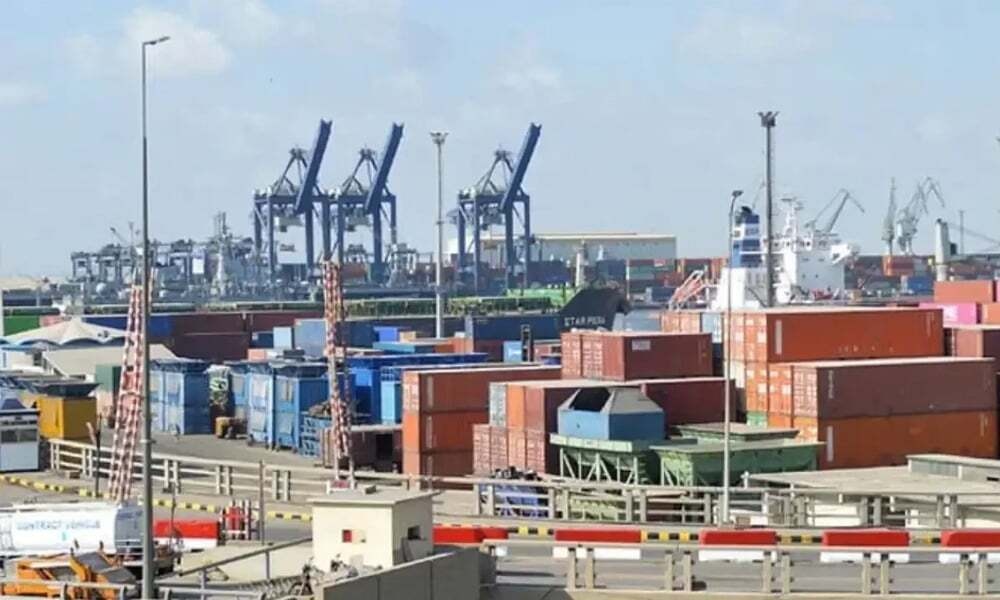

KARACHI: AD Ports Group has signed a dredging agreement between Karachi Gateway Terminal Limited (KGTL) and Netherlands-based marine contractor Van Oord, in a move aimed at transforming Karachi port into a stronger regional trade hub.
The project, led by AD Ports’ international ports arm, Noatum Ports, will deepen berths and navigational channels at KGTL, enabling the container terminal to handle post-panamax ships of more than 13,000 TEUs. Once completed in early 2026, container handling capacity at the facility is expected to rise from 750,000 TEUs to 1 million TEUs.
At Karachi Gateway Terminal Multipurpose Limited, a parallel joint venture handling bulk and general cargo, dredging is set to double bulk vessel capacity. The terminal, which currently accommodates Handymax vessels of around 60,000 tonnes, will be upgraded to receive post-panamax vessels of up to 120,000 tonnes. The expansion is expected to cut freight costs and enhance throughput at Pakistan’s busiest port.
UAE’s AD Ports Group eyes industrial zone near Karachi, expands presence in Pakistan
The initiative is part of AD Ports Group’s broader entry into Pakistan, which began in 2023 when the Abu Dhabi-based operator secured long-term concessions for managing container and bulk berths at Karachi Port. The Group has committed nearly AED 1.1 billion to modernizing infrastructure and digital systems to boost trade and support economic diversification.
“The dredging project initiated by KGTL will enable us to accommodate larger and deeper draft vessels at both our container and bulk terminals,” said Khurram Aziz Khan, CEO of KGTL and Karachi Gateway Terminal Multipurpose Limited. “This advancement will directly benefit our customers, optimizing foreign exchange use on freight and reducing overall logistics costs. It will also reinforce Pakistan’s role as a regional trade hub.”
Calling the project a strategic investment, Mohammed Al Tamimi, CEO of Noatum Ports, said: “This dredging project is more than a significant infrastructure upgrade. It is a forward-looking investment in the economic resilience and global connectivity of Pakistan.”
The project also highlights Pakistan’s increasing reliance on Gulf investors for critical transport infrastructure upgrades amid fiscal constraints. While overall foreign direct investment has slowed in recent years, the maritime sector has continued to attract interest due to Pakistan’s strategic location at the crossroads of South Asia, the Middle East, and Central Asia.
Copyright Business Recorder, 2025
























Comments
Comments are closed for this article.