


Flash floods expose how women in Pakistan bear the brunt of climate chaos and state failure
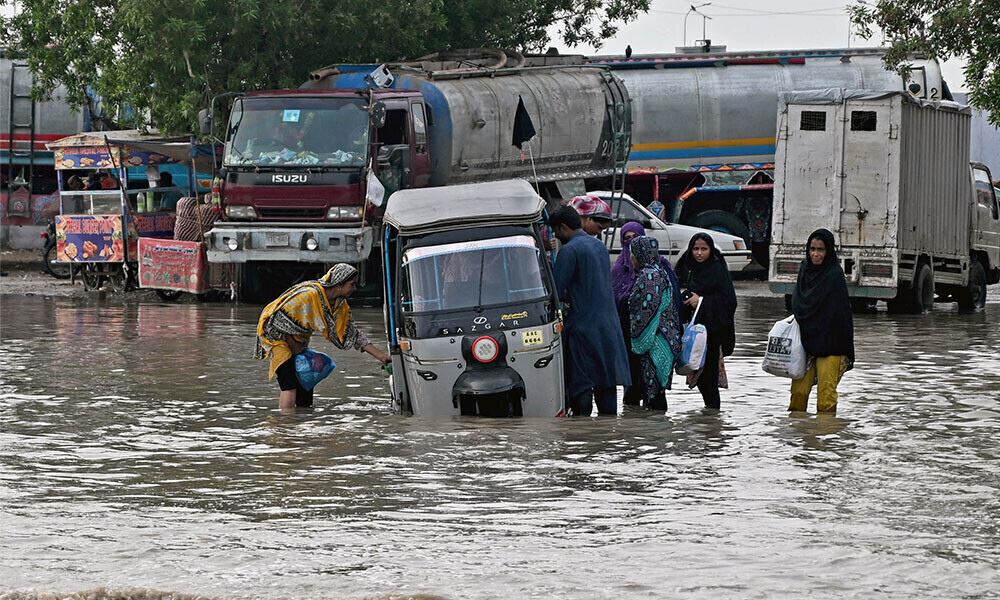

On August 19, Karachi - Pakistan’s largest city of 25 million - drowned once again. Just days after the country’s 78th Independence Day, waist-deep rainwater brought life to a standstill.
Roads turned into rivers, cars and bikes broke down, public transport vanished, and families were left stranded.
For men, it was hours of frustration on clogged streets.
For women, it was a nightmare.
In a society where working women are already frowned upon, being stranded in flooded streets without transport or safe passage isn’t just an inconvenience - it’s a risk to their dignity, safety and survival.
At least 12 dead in rain-related incidents in Karachi
Imagine women stuck in knee - or waist-deep water, phones dead, electricity gone, no transport, and no one to call for help.
This isn’t a scene from a dystopian film - it’s Karachi under rain, a city where the administration routinely disappears when its citizens need it most.
The state’s negligence is not new. Every monsoon exposes the same collapse of governance. But what often gets overlooked is the gendered impact.
Women from low - and middle-income households, reliant on public buses or rickshaws, are abandoned. In a patriarchal system that already polices their movements, climate disasters only deepen their vulnerability.
And let’s be clear: this is not just a “rural women’s issue”. Urban women - students, nurses, teachers, office workers - are equally at the mercy of climate change and civic mismanagement.
When the city floods, they lose more than mobility; they lose security.
The August 19 floods should serve as a brutal reminder: Climate change does not strike in isolation. It collides with weak governance and entrenched patriarchy, and women are forced to carry the heaviest burden.
Until Pakistan confronts this reality, every downpour will remain less about rain - and more about state failure.
The article does not necessarily reflect the opinion of Business Recorder or its owners.


























Comments
Comments are closed for this article.