


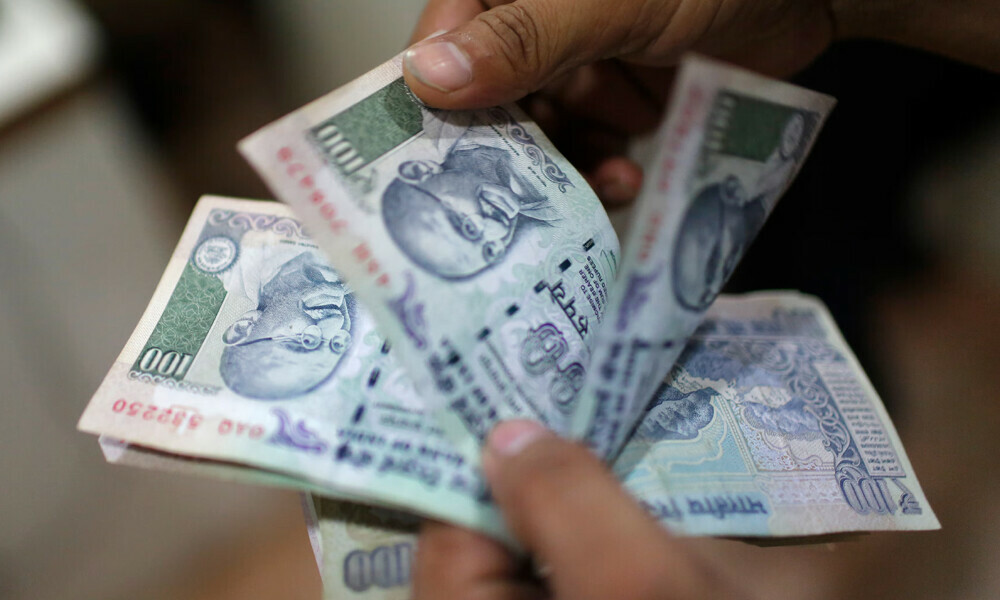

MUMBAI: India’s central bank held key interest rates steady on Wednesday as expected, saying the economy remains steady, even though economists expect steep U.S. tariffs on Indian exports and subdued inflation to open room for limited further easing.
India faces the imposition of a 25% tariff on its shipments to the U.S. from Friday, and President Donald Trump has warned of “very substantial” additional levies because of New Delhi’s oil imports from Russia.
Global trade challenges continue to linger but prospects for the Indian economy remain “bright”, Reserve Bank of India (RBI) Governor Sanjay Malhotra said in statement.
The six-member rate-setting panel voted unanimously to hold the key repo rate at 5.50% and decided to continue with a “neutral” policy stance.
While headline inflation is much lower than expected, it is largely due to volatile food prices and is set to rise towards the end of the year, Malhotra said.
A large majority of economists, 44 of 57, had forecast a pause in a July 18–24 Reuters poll, following a surprise 50 basis point cut in June.
The central bank has cut the policy repo rate by 100 bps so far in 2025 as price pressures eased.
A majority of economists see room for limited further easing, but some say that low inflation and trade uncertainties could prompt another 50 bps of rate cuts.
India’s FX reserves drop $9bn to about $689 billion, reflecting tariff-driven rupee defence
“The ongoing transmission of past monetary easing and the evolving global backdrop appear to have placed the RBI firmly in wait-and-watch mode,” said Sujan Hajra, chief economist at Anand Rathi Group in Mumbai.
“This points to room for an additional 50 bps reduction,” Hazra said.
Bond yields rose after the policy announcement, with traders saying the policy statement lacked any obvious dovishness, leaving the market divided on the direction of interest rates.
India’s benchmark 10-year bond yield rose 4 bps to 6.3701%, while the rupee was little changed at 87.7350. The benchmark equity indexes were down around 0.2% each.
The RBI’s rate cutting cycle is at an end, said Capital Economics in a note.
Prior to this policy meeting, a Reuters poll of economists had forecast one more 25 bps rate cut in the current cycle.
Global headwinds
The central bank left its economic growth forecast unchanged at 6.5%, even though economists have said the higher U.S. tariffs could shave off up to 40 basis points from that level, while stunting business investment.
Just weeks ago, Indian officials had hoped to strike a deal that would cap tariffs at 15%.
Indian government officials have said negotiations over a trade deal with the U.S. are continuing but hit back against Washington’s criticism of its oil purchases from Russia.
Unexpected weakness in U.S. jobs data has led to increased calls for a rate cut from the U.S. Federal Reserve, with markets pricing in an 88% odds of a rate cut in September.
“The headwinds emanating from prolonged geopolitical tensions, persisting global uncertainties, and volatility in global financial markets pose risks to the growth outlook,” the Monetary Policy Committee’s formal resolution said.
Inflation slowed to a six-year low of 2.10% in June and is expected to fall to record lows when July data is released next week, before picking up again later in the year.
The inflation outlook has become “more benign”, Malhotra said, cutting the central bank’s inflation forecast for the current financial year to 3.1% from 3.7% earlier.
Core inflation remains steady and is likely to remain modestly above 4%, Malhotra said.
“We think downside risks to growth would be increasingly evident with new global resets and could still open up space for easing in remainder of the year, even though the governor seems to have raised the bar higher for further easing,” said Madhavi Arora, chief economist at Emkay Global Financial Services said, pointing to Malhotra’s remarks on core inflation.
The central bank will maintain adequate liquidity, Malhotra assured markets, adding that this has improved transmission of past rate cuts into the broader economy.
Separately, the RBI will continue to use the overnight inter-bank call money rate as the operative target for monetary policy after a review of its liquidity framework, he said.




















Comments
Comments are closed for this article.