


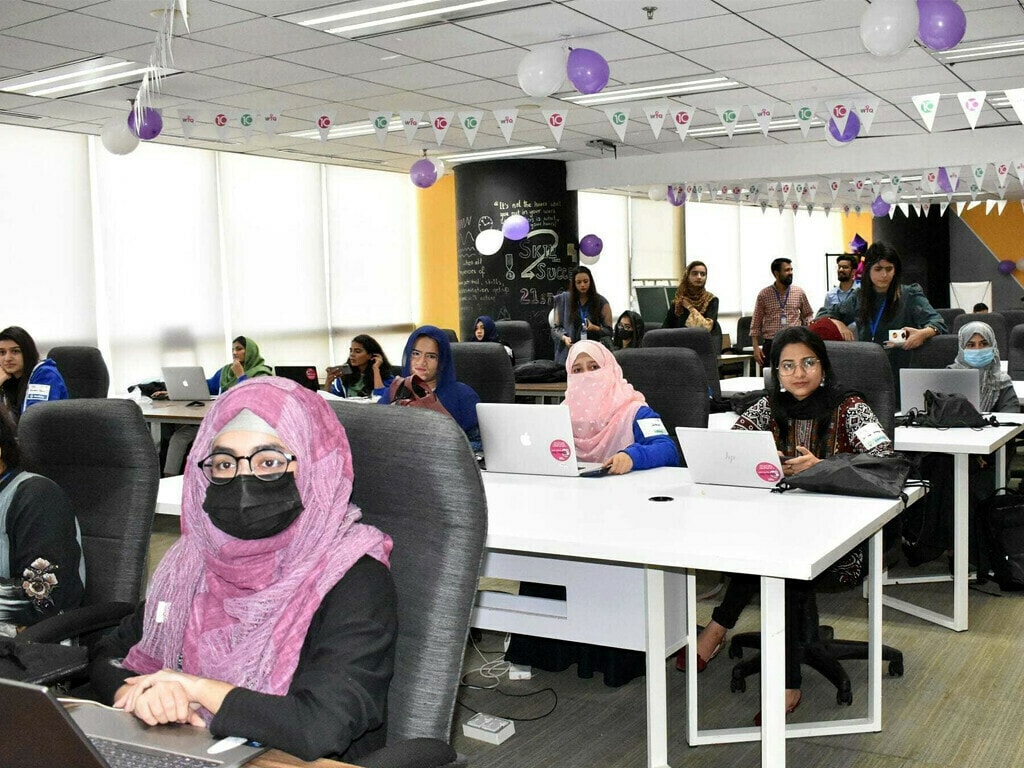

Pakistan’s showing in the Global Gender Gap Report 2025 is a stark reminder of how deeply rooted its gender disparities remain. Scoring 0.567 (56.7 percent), Pakistan ranks last out of 148 countries, slipping further from 145th in 2024.
The weakest link is economic participation: women’s labour force participation stands at just 30.4 percent parity, and their presence in senior roles is barely 6.1 percent. Education fares somewhat better, but literacy parity remains at only 70.2 percent, and enrolment gaps persist in primary and secondary education.
Health and survival are stronger, reflecting near parity in life expectancy and sex ratio at birth, yet political empowerment remains dismal, with no female ministers and only 20.5 percent parliamentary representation.**
The widening gender gap is already weighing on Pakistan’s economy. Women make up less than a quarter of the labour force, and even those employed are often in low-wage or informal jobs, shrinking overall productivity and keeping household incomes low.Sectors facing skills shortages—such as technology, healthcare, and finance—struggle to grow when half the population is underrepresented, while persistent gender gaps in education weaken the pipeline of skilled workers.
Combined, these factors slow job creation, deter high-value investment, and keep Pakistan locked in a cycle of low growth and inequality.
Regionally, Pakistan falls well behind Southern Asia’s average score of 0.646, nearly eight percentage points lower, and also trails income peers by around ten points. India, ranked 129th with a score of 0.643, performs better on most indicators, while Bangladesh, ranked 24th with 0.775, has achieved near-full educational parity and stands out globally for women’s political leadership.
The lesson is clear: gender equality is not a luxury; it’s an enabler of growth and stability. Countries like Bangladesh and Rwanda show how political empowerment acts as a catalyst for broader change—creating role models, shaping inclusive policies, and unlocking social potential.
The Philippines demonstrates how near-universal education parity feeds a pipeline of women into higher-skilled employment, while Vietnam shows how labour reforms, childcare support, and equal pay policies boost female workforce participation and reduce income gaps. These countries didn’t just pass laws—they shifted social norms, improved safety, and mobility for women, and invested in leadership pathways.
For Pakistan, the path forward is clear but challenging. It must invest heavily in female literacy and secondary education, reform labour laws to create safer and more flexible workplaces, enforce equal pay policies, and actively promote women to decision-making positions across government and industry.
Cultural and institutional shifts are equally crucial: from changing perceptions about women’s roles to improving transport safety and providing childcare infrastructure. Without such measures, Pakistan risks staying anchored at the bottom of global gender rankings, with the economic and social costs of exclusion far outweighing the challenges of reform.
But as other developing countries have shown, determined reforms, backed by political will and societal buy-in, can close gender gaps faster than incremental change ever could.




















Comments
Comments are closed for this article.