


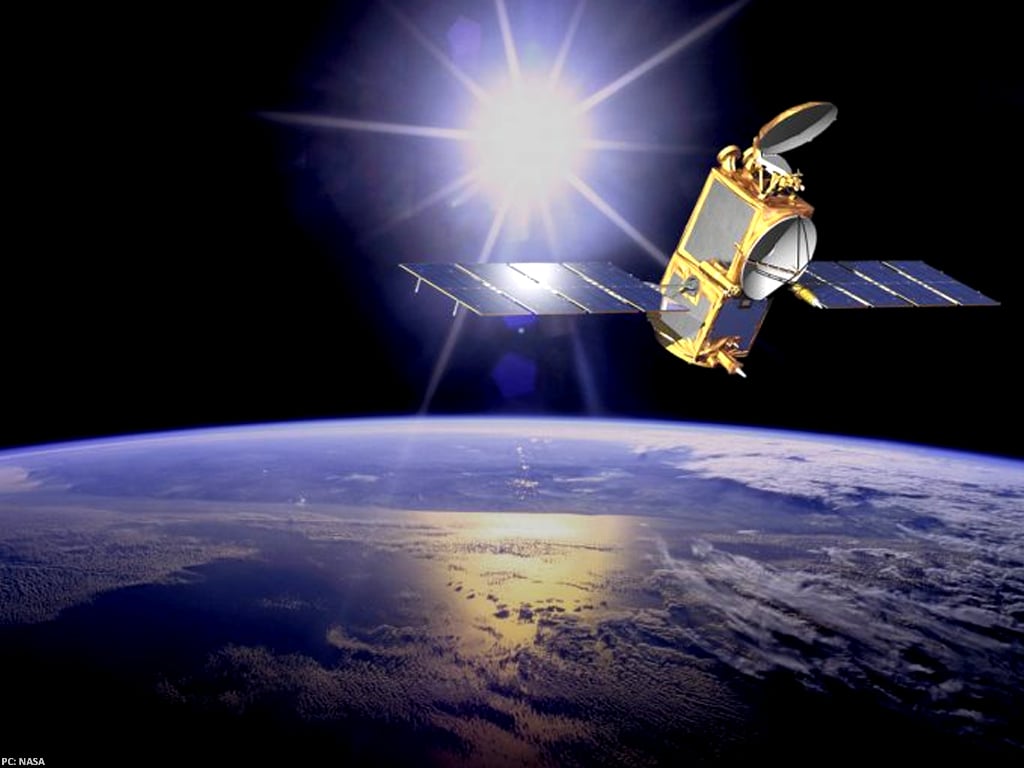
ISLAMABAD: The Space and Upper Atmosphere Research Commission (SUPARCO) announced on Sunday that it will be launching a new remote-sensing satellite from China’s Xichang Satellite Launch Center on July 31, aimed at bolstering the country’s capabilities in resource monitoring and disaster management.
The launching, according SUPARCO, will mark a significant advancement in Pakistan’s space programme, enhancing Earth observation and supporting diverse national applications.
SUPARCO highlighted that the satellite would aid precision agriculture, infrastructure monitoring, urban planning, and regional development.
First made-in-Pakistan satellite to be launched on 17th
It said that the satellite will also strengthen disaster management systems by providing timely alerts for floods, landslides, and earthquakes.
Additionally, it will monitor environmental changes such as glacier recession and deforestation, while mapping transportation networks and identifying geo-hazard risks.
In a statement, SUPARCO said, “The launch of this remote sensing satellite, alongside its integration with Pakistan’s existing fleet - including PRSS-1 (launched July 2018) and EO-1 (launched January 2025) - will enhance the nation’s space-based infrastructure in line with the National Space Policy and SUPARCO’s Vision 2047, aiming to position Pakistan as a regional leader in space technology and innovation.”
The satellite’s advanced data acquisition capabilities under varied environmental conditions make it an important tool for environmental monitoring and resource management.
Pakistan has made notable progress in its space research efforts in recent months.
Earlier this year, China launched Pakistan’s indigenously developed Electro-Optical satellite EO-1 from the Jiuquan Satellite Launch Center, aimed at disaster prediction and resource management.
In November last year, SUPARCO revealed plans to send its lunar rover as part of China’s Chang’E 8 mission slated for 2028.
Moreover, in May 2024, Pakistan launched its first lunar satellite aboard China’s Chang’E-6 probe, targeting the moon’s far side - a feat China pioneered.
Copyright Business Recorder, 2025


















Comments
Comments are closed for this article.