




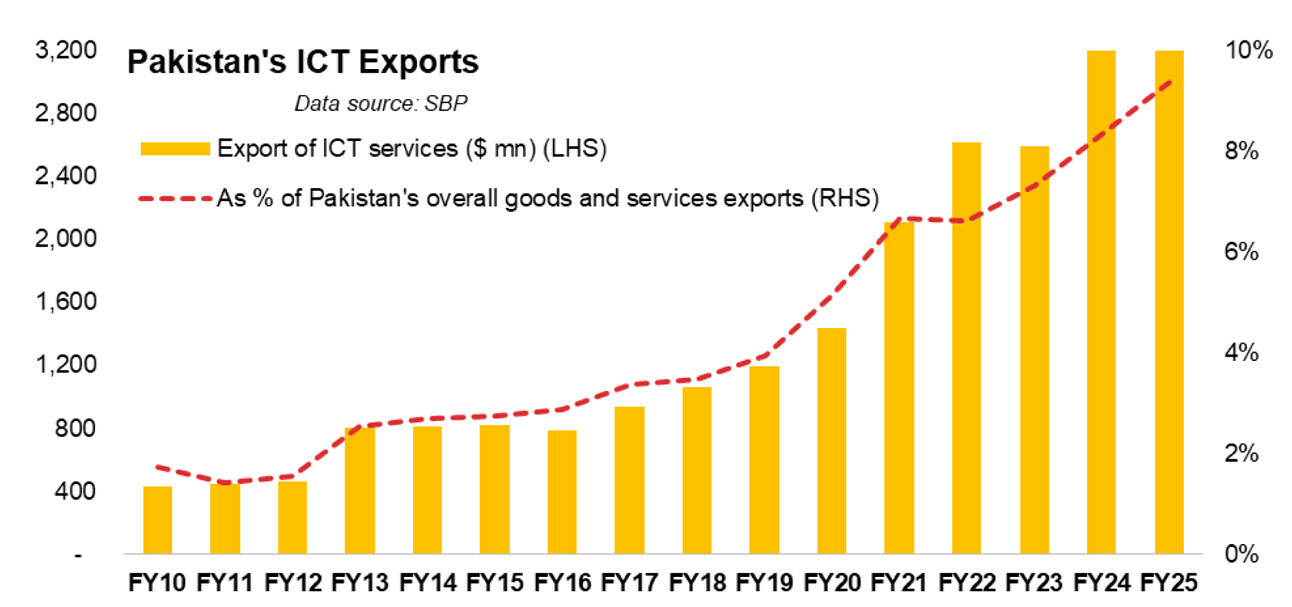
Pakistan’s IT and ICT exports touched a historic high in FY25, clocking in at $3.8 billion. That’s an 18 percent jump over last year, though shy of the government’s $4 billion target and slower than the 24 percent growth seen in FY24.
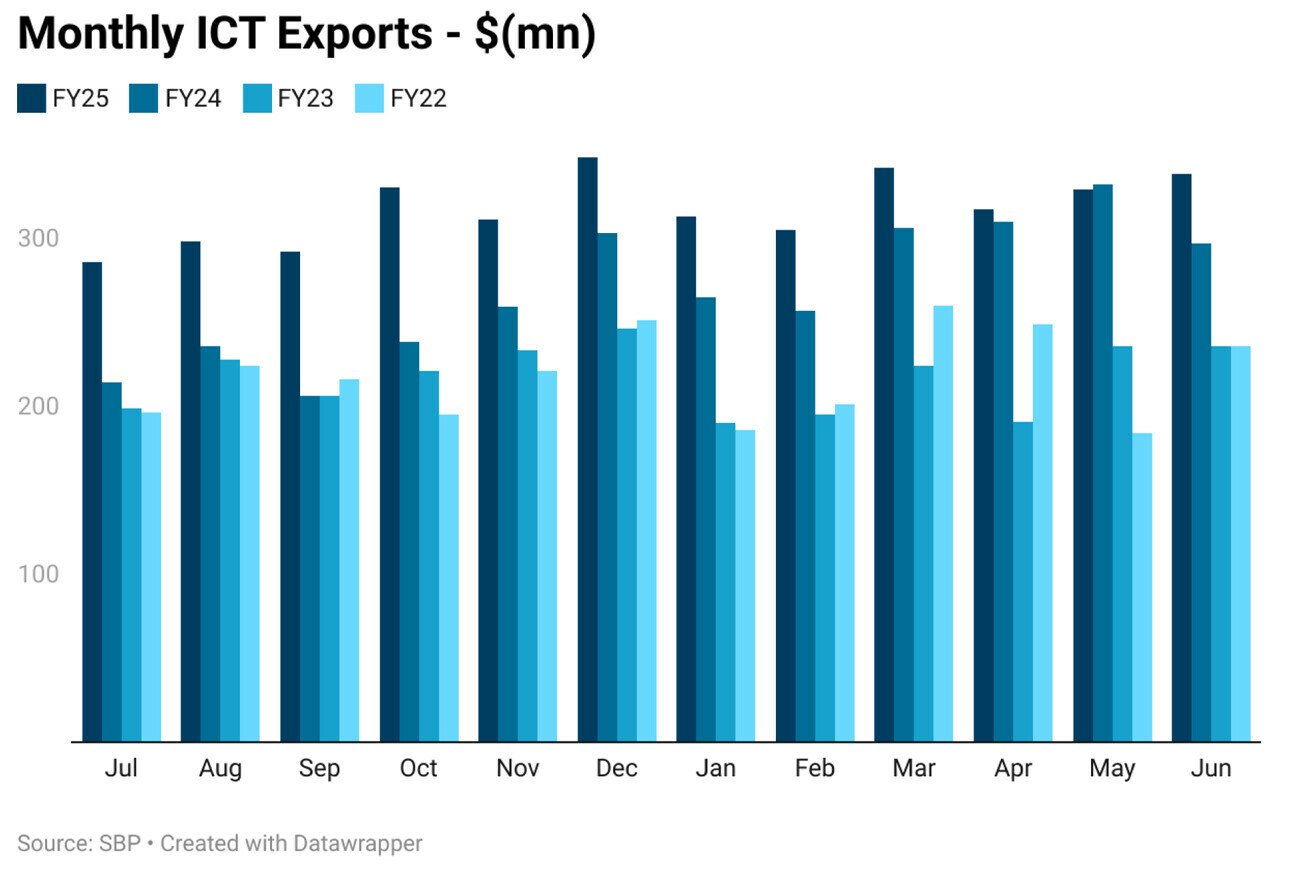
June alone brought in $338 million, up 14 percent year-on-year and 3 percent month-on-month, taking monthly exports above the 12-month average of $314 million. Net IT exports (after imports) also reached $306 million for the month, up 20 percent year-on-year.
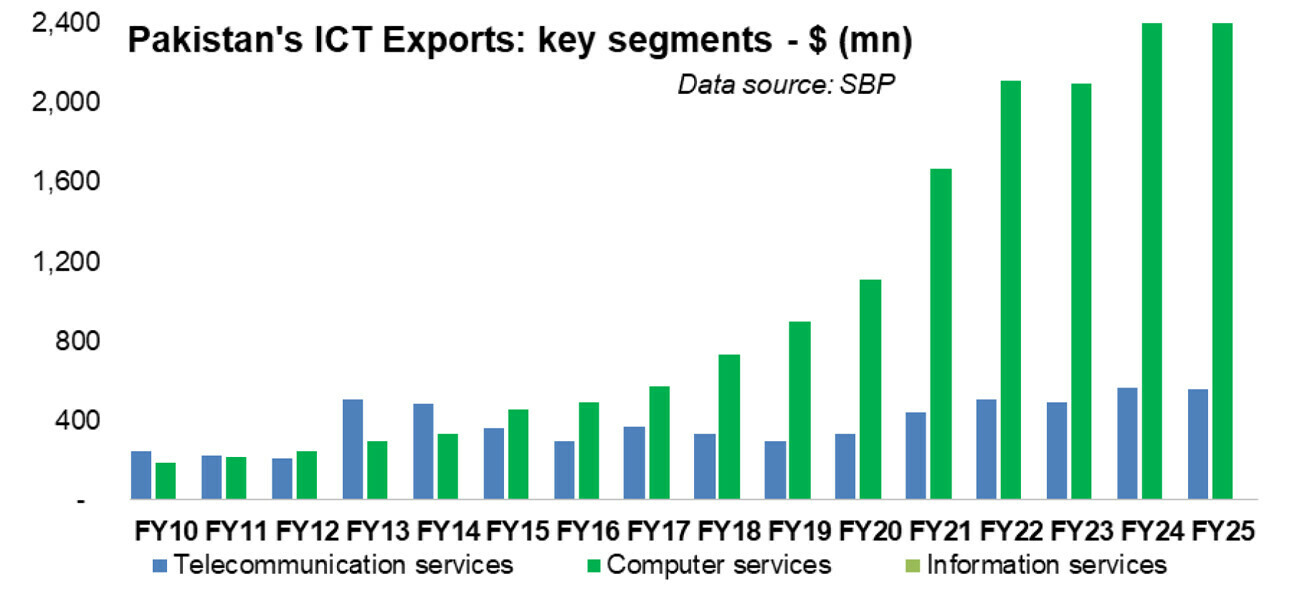
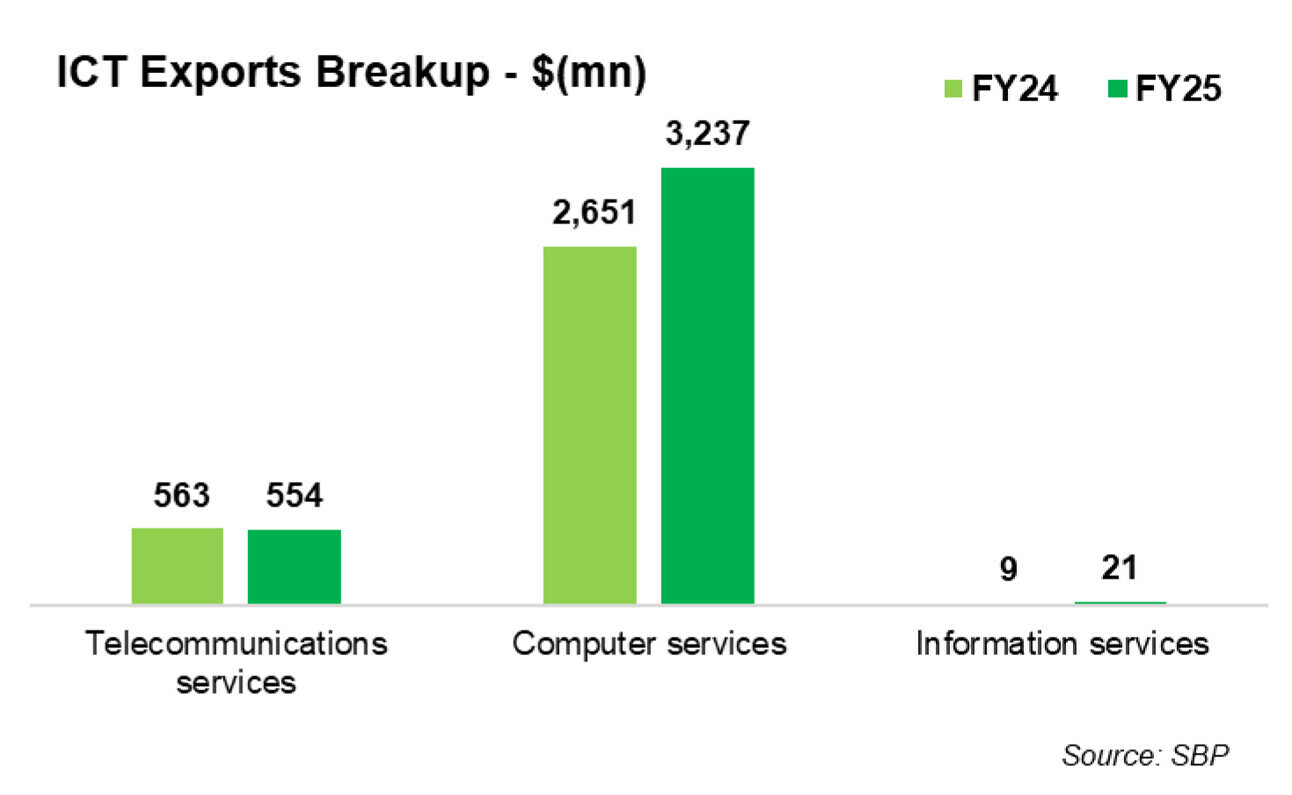
The story remains anchored in computer services, which pulled in $3.24 billion, up from $2.65 billion last year, while telecom exports stalled at $554 million. Information services, though small, more than doubled to $21 million, hinting at a slow but growing diversification within the export basket.
Yet, even with the record-breaking performance, the missed target underscores persistent structural bottlenecks. Pakistan’s IT sector still grapples with talent shortages, rising wage pressures, and patchy connectivity, while global tech spending slowed as firms cut back on budgets.
Tax and payment reforms have also lagged, limiting exporters’ ability to fully ride global demand. The slower growth rate in FY25 compared to FY24 can also be attributed to a base effect since FY24 had already seen an unusually high jump of 24 percent year-on year.
Policy support has, however, cushioned the sector. The State Bank allowed exporters to retain 50 percent of their foreign earnings (up from 35 percent) and even invest abroad, encouraging them to repatriate a larger share of profits.
Pakistani IT firms have also been busy expanding their global footprint, tapping into the GCC market, and highlighting at international events like London Tech Week 2025 and the Pak-US Tech Investment Conference.
A decade ago, IT exports accounted for barely 2–3 percent of Pakistan’s goods and services exports; today, they are close to 10 percent.
The government’s ambition is to hit $10 billion by FY29 under the “Uraan Pakistan” plan, which implies an annual growth rate of 27 percent. Whether that materializes will depend on how fast Pakistan can fix infrastructure gaps, build a skilled talent pipeline, and simplify its regulatory framework.





















Comments
Comments are closed for this article.