


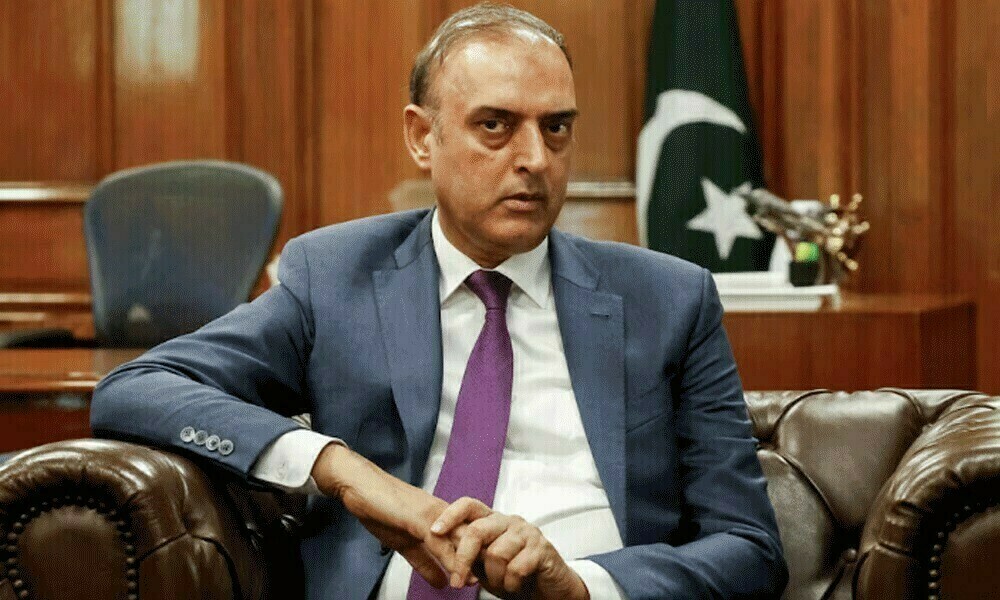

KARACHI/SINGAPORE: State Bank of Pakistan (SBP) is preparing to launch a pilot for a digital currency and is finalising legislation to regulate virtual assets, Governor Jameel Ahmad said on Wednesday, as the country ramps up efforts to modernise its financial system.
SBP globally are exploring the use of digital currencies as interest in blockchain-based payments grows. Pakistan’s move follows similar steps by regulators in China, India, Nigeria and several Gulf states to test or issue digital currencies through controlled pilot programmes.
Speaking at the Reuters NEXT Asia summit in Singapore, Ahmad said Pakistan was “building up our capacity on the SBP digital currency” and hoped to roll out a pilot soon.
He was speaking on a panel alongside Sri Lanka’s central bank governor, P. Nandalal Weerasinghe, with both discussing monetary policy challenges in South Asia.
Ahmad added that a new law would “lay down the foundations for the licensing and regulation” of the virtual assets sector and that the SBP was already in touch with some tech partners.
President Zardari gives assent to Virtual Assets Act, 2025
The move builds on efforts by the government-backed Pakistan Crypto Council, set up in March to drive virtual asset adoption. The PCC is exploring bitcoin mining using surplus energy, has appointed Binance founder Changpeng Zhao as a strategic adviser and plans to establish a state-run bitcoin reserve.
It has also held talks with US-based crypto firms, including the Trump-linked World Liberty Financial.
In May, the State Bank of Pakistan clarified that virtual assets were not illegal. However, it advised financial institutions not to engage with them until a formal licensing framework was in place.
“There are risks associated, and at the same time, there are opportunities in this new emerging field. So we have to evaluate and manage the risk very carefully, and at the same time not allow to let go the opportunity,” he said on the panel.
Pakistan receives record $38.3bn in remittances in FY25
Tight grip, falling rates
On the monetary policy front, Ahmad said the central bank would continue to maintain a tight policy stance to stabilize inflation within its 5–7% medium-term target.
Pakistan has cut its benchmark rate from a peak of 22% to 11% over the past year, as inflation fell sharply from 38% in May 2023 to 3.2% in June, averaging 4.5% in the 2025 fiscal year just ended, a nine-year low.
“We are now seeing the results of this tight monetary policy transfer, both on our inflation as well as on the external account,” he said.
Ahmad also said Pakistan was not overly exposed to dollar weakness, noting that the country’s foreign debt was mostly dollar-denominated and only 13% comprised Eurobonds or commercial loans.
“We don’t see any major impact,” he said, adding that reserves had risen to $14.5 billion from under $3 billion two years ago.
Ahmad said Pakistan’s current three-year $7 billion IMF programme, which runs through September 2027, was on track and had already resulted in reforms in fiscal policy, energy pricing and the foreign exchange market.
“We are confident that after that (IMF programme), maybe we will not require an immediate (follow-up).”
SBP governor was asked during the panel whether Pakistan had financing plans lined up for upcoming military equipment purchases, particularly imports from China.
He responded that he was not aware of such plans, and said the central bank’s mandate remained ensuring smooth interbank market functioning and maintaining ample foreign exchange “so that there is no problem as far as trade financing is concerned”.















Comments
Comments are closed for this article.