


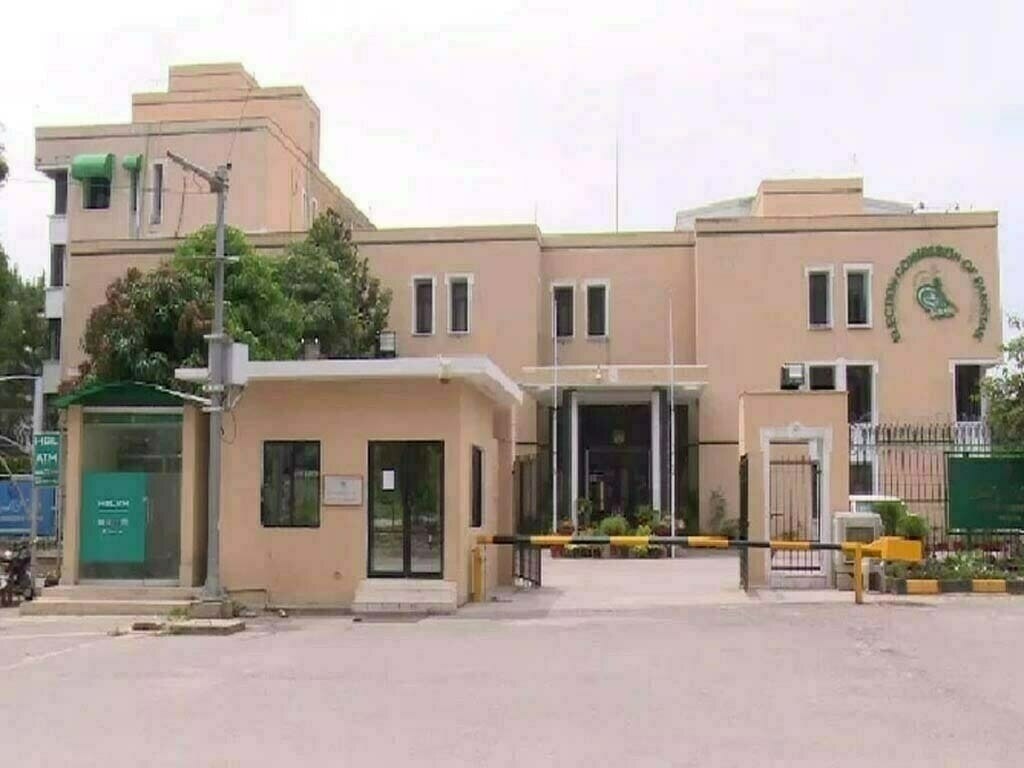
EDITORIAL: That it has taken months of silence and a court petition to move the conversation forward says everything about the political dysfunction that continues to cloud even basic constitutional procedures.
Still, the prime minister’s invitation to the opposition leader for consultations over the new chief election commissioner (CEC) and two ECP members; months after their terms expired, is a step in the right direction. And for once, both sides appear ready to engage.
That in itself is no small thing. Given the scale of acrimony surrounding the outgoing CEC’s tenure — marked by repeated PTI accusations of bias and perceived executive capture — this next round of appointments is going to be that much more important. The process must not just follow the letter of Article 213 and 218; it must be seen as a credible, transparent and bipartisan reset of the Election Commission’s leadership.
The political temperature remains far from ideal. The opposition has been openly hostile toward the electoral architecture ever since it was forced out of office, with the former ruling party’s leadership portraying the ECP as complicit in its ouster. The government, for its part, has been in no hurry to initiate a process that could alter a composition it may find favourable. In that context, this opening — however overdue — must not be wasted.
The parliamentary mechanism for these appointments is clear. The constitution mandates that the prime minister and opposition leader jointly propose three names for each vacant post. In case of disagreement, they may send separate lists to a parliamentary committee, which will make the final decision. The law, in other words, does not demand perfect consensus — it demands good-faith engagement.
The challenge now is twofold. First: to ensure that this process does not become yet another political blame game disguised as negotiation; and second: to insulate it from the perception that the current officeholders are being kept in place by design. There may be legal cover under Article 215, but that does not address the democratic discomfort of continuing with an expired commission.
The optics of inordinate delay has already cast a long shadow. The fact that the Islamabad High Court was moved in March over this issue should have embarrassed all involved. The court petition made a straightforward point: that the constitutional scheme demands timely appointments and that the government and key parliamentary actors failed to deliver. That the letter from the PM surfaced only after being quietly sent weeks earlier did little to dispel those concerns.
To avoid repeating the same mistakes, the next steps must be unambiguous. A firm date for consultations should be announced immediately. The Speaker of the National Assembly must fast-track the formation of the parliamentary committee. And most importantly, the nominees — whoever they are — must be judged on competence and neutrality, not loyalty or usefulness.
A credible electoral system cannot function without a credible commission. And a credible commission cannot exist unless both sides of the aisle believe it will act without fear or favour. With the politics of the country and the region so out of equilibrium at the moment, Pakistan cannot afford another institutional credibility crisis.
This is not about optics or tokenism. It is about restoring the integrity of a constitutional body that underpins electoral democracy. If that task is approached with the same short-term thinking that has plagued so many previous appointments, it will only deepen public mistrust and trigger another cycle of political instability.
The door has been opened. It must now be walked through — deliberately, publicly, and with the seriousness this moment demands.
Copyright Business Recorder, 2025



















Comments
Comments are closed for this article.