


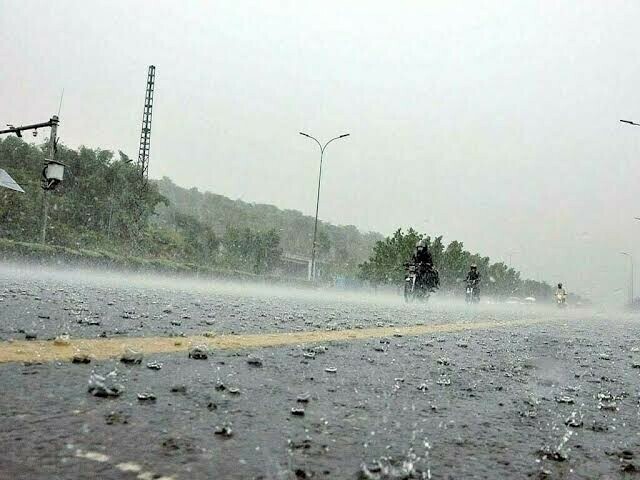
The National Disaster Management Authority (NDMA) on Monday issued an impact-based weather advisory warning of heavy rains, thunderstorms, strong winds, and potential hailstorms in various parts of Pakistan from May 27 to June 1, 2025.
According to the advisory, a strong western weather system is expected to enter the country, affecting several regions including Punjab, Khyber Pakhtunkhwa, Balochistan, Gilgit-Baltistan, and Azad Jammu & Kashmir.
In Islamabad, heavy rainfall and gusty winds are forecast.
Nine dead as rain lashes parts of Punjab
Northern and central Punjab, including cities such as Rawalpindi, Murree, Lahore, Gujranwala, Sialkot, Faisalabad, and Sargodha, are likely to experience severe weather. Southern Punjab districts including Multan, Bahawalpur, and Dera Ghazi Khan may see moderate rain and strong winds from May 27 to 29.
Khyber Pakhtunkhwa is also expected to face thunderstorms and windstorms in districts such as Swat, Mansehra, Abbottabad, Peshawar, and Waziristan over the same period.
In Balochistan, rain and thunderstorms may impact Quetta, Zhob, Khuzdar, and surrounding areas between May 27 and 29.
Authorities have also warned of potential landslides, heavy downpours, and hailstorms in Gilgit-Baltistan and Azad Jammu & Kashmir, including Skardu, Hunza, Neelum Valley, and Muzaffarabad, from May 27 to June 1.
Conversely, hot and dry conditions will persist in Sindh, where no significant rainfall is forecast during this period.
PMD forecasts more rains, winds across country
The NDMA has urged provincial and district authorities to ensure emergency preparedness, coordinate with local response units, and remain alert to mitigate risks.
The public has been advised to avoid unnecessary travel, especially in hilly and flood-prone areas, and secure vulnerable structures and equipment. Farmers are also advised to take preventive measures to protect crops from adverse weather.
Travelers and tourists are urged to stay updated on weather conditions and download the “Pak NDMA Alert App” for real-time alerts.
NDMA stated it will continue to monitor the evolving weather system and issue timely updates.





















Comments
Comments are closed for this article.