


Foreign investors jilt India as growth falters and China beckons
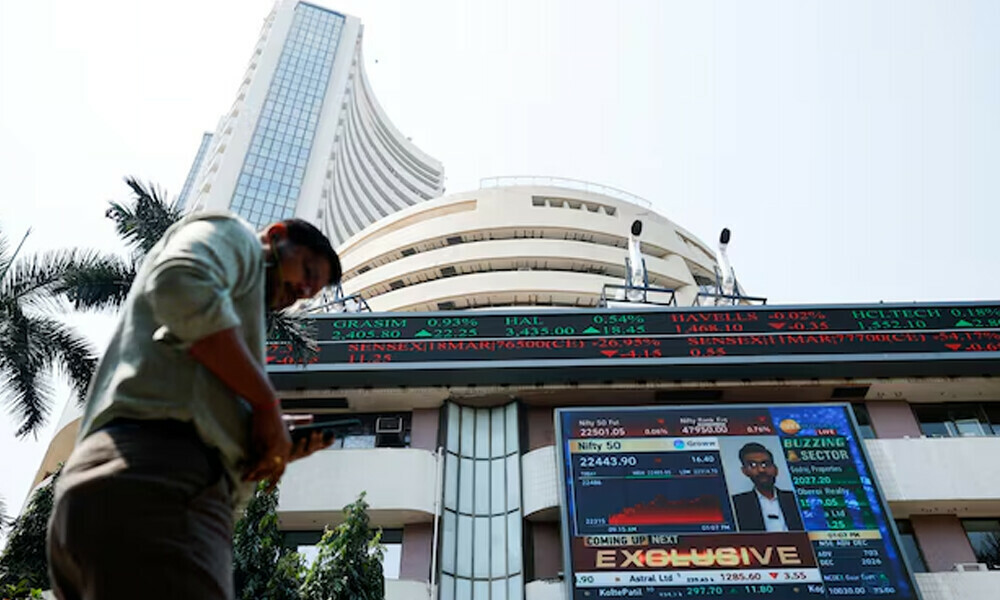

MUMBAI/SINGAPORE: Global investors are deserting India’s stock market, selling shares at a record pace to buy Chinese stocks instead, in a dramatic reversal of fortunes for the Asian giants over the last six months.
A hit to earnings from high inflation and interest rates have chipped 13% off Indian stocks from September’s record high, wiping out $1 trillion in market value, while China’s promise of stimulative policies lures investor interest.
“When China gets flows, India doesn’t,” said Jitania Kandhari, deputy chief investment officer of the solutions and multi-asset group at Morgan Stanley Investment Management.
Foreigners have pulled nearly $29 billion out of Indian stocks since October, the most in any six-month period, as they turn their backs on a market most investors had embraced for a couple of years.
That money has fled to China, where Hong Kong’s benchmark Hang Seng Index, home to many major Chinese companies, is up 36% since late September, drawn by bets on artificial intelligence spurred by Chinese startup DeepSeek.
India’s economic growth accelerates to 6.2% in October-December
For the first time in two years, China has a larger weight than India in the portfolio of Britain’s Aubrey Capital Management, which focuses on consumer companies.
Profits have been locked in from the last couple of years of strong performance by Indian stocks, said its portfolio manager, Rob Brewis, adding, “Some of that has gone to China, some to Southeast Asia and elsewhere.”
While asset managers such as Morgan Stanley and Fidelity International remain overweight on India, they have trimmed exposure over the last few months to add to bets in China.
Nitin Mathur, associate investment director at Fidelity International, said the firm has been more cautious on India than in the past, reducing its exposure “a little bit”.
China’s stock market has proved an unlikely sanctuary from the trade war unleashed by U.S. President Donald Trump, as it is relatively cheap and seen poised on the cusp of an economic recovery.
Priced for perfection
Before the steep selloff in Indian stocks over the past six months, investors had scrambling to keep up with the strong performance that carried its valuation to eye-watering levels.
But slowing corporate earnings and an economy seen growing in the current financial year at the slowest pace in four have hurt sentiment, investors say.
Earnings of companies in the blue-chip Nifty 50 index grew 5% in the quarter to December, which represented a third straight quarter of single-digit increases after two years of double-digit jumps, brokerage data show.
India’s equity market was “priced for perfection”, so a little bit of a wobble on earnings had set off a slide, said Anwiti Bahuguna, chief investment officer of global asset allocation at Chicago-based Northern Trust Asset Management.
Even after the selloff, India’s BSE Sensex is priced at 20 times its projected 12-month earnings, a common valuation metric, versus 7 times for the Hang Seng Index, LSEG data shows.
“There is still room for money to come out of India,” said Sammy Suzuki, head of emerging markets equities at AllianceBernstein in New York, pointing to the decline in earnings for such expensive stocks.
To be sure, not everyone is giving up on India.
“India has one of the best economic backdrops of the major markets, with plenty of economic drivers as well as stock market support,” said Ryan Dimas, portfolio specialist for William Blair’s global equity strategies.
Yet, Morgan Stanley’s Kandhari reckons that the “inflection point” at which foreign money stops leaving Indian stocks is likely only in the second half of 2025.


























Comments
Comments are closed for this article.