


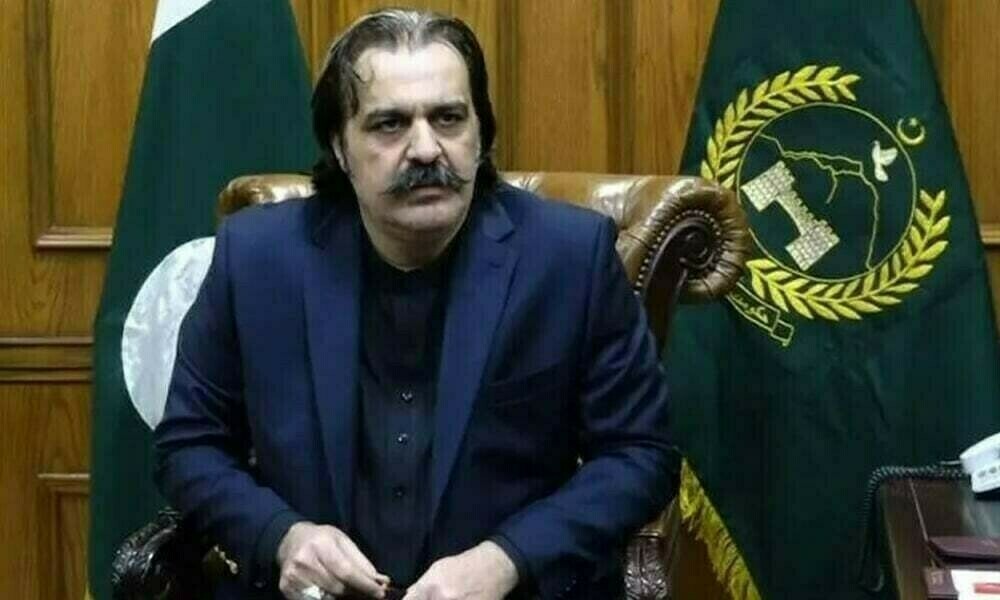
EDITORIAL: When last month Khyber Pakhtunkhwa Chief Minister Ali Amin Gandapur tendered his resignation as PTI’s provincial president and the party’s incarcerated founding chairman Imran Khan appointed MNA Junaid Akbar to that position, it was considered a move to keep him from alleged mistreatment of certain senior PTI members.
However, talking to reporters outside the Adiala Jail on Tuesday, PTI Secretary General Salman Akram Raja announced that Khan now wants all party leaders serving in KP government to relinquish their party positions so that Junaid Akbar could reorganise the PTI in the province.
That may well be to counter criticism that the PTI is speaking with different voices while Khan and almost all of the second-tier leaders are in jails. It remains to be seen if this is a short-term move to better disciple unruly elements or is a principled decision to separate party and government positions — a common practice in advanced democracies.
Unfortunately, our political culture encourages personality adoration rather than democratic representation. With the exception of Jamaat-e-Islami and MQM, top leadership positions are claimed as a hereditary right to rule.
There, of course, are many members of major parties both competent and able to step into the highest party positions, but they dare not stake such a claim for fear of getting thrown out.
Almost all political parties are run like personal fiefdoms. Two common arguments trotted out in defence of this sorry state of affairs are: first, the people want them; and second, he/she has a personal vote bank.
Familiarity may have some value, but the people need to have a choice to let their preferences be known. Still, the general trend, particularly in urban areas, is to vote on the basis of what the parties represent in terms of ideology and solutions to everyday problems.
A vital element of the democratic process is competition not only among political parties but also within them. In Western democracies, such as Britain, politicians contest intraparty leadership elections, set agendas for their respective parties to go into general elections, and step down after serving for a limited duration depending on the outcome of general elections.
Closer to home we have the example of India where current PM Narendra Modi’s party, the BJP, is headed by one J. P. Nadda, who holds a relatively insignificant portfolio of health and family welfare ministry.
All that matters seems to be what a political party stands for rather than who heads it. The PTI founder’s decision to separate party and government positions will strengthen the party in relation to individual leaders who may wish to use them for advancing personal ambitions. Hopefully, Imran Khan will make that process a tradition to be followed if and when he himself returns to the prime minister’s office.
Copyright Business Recorder, 2025

















Comments
Comments are closed for this article.