


China’s factory activity shrinks for 5th month, raises pressure for more stimulus
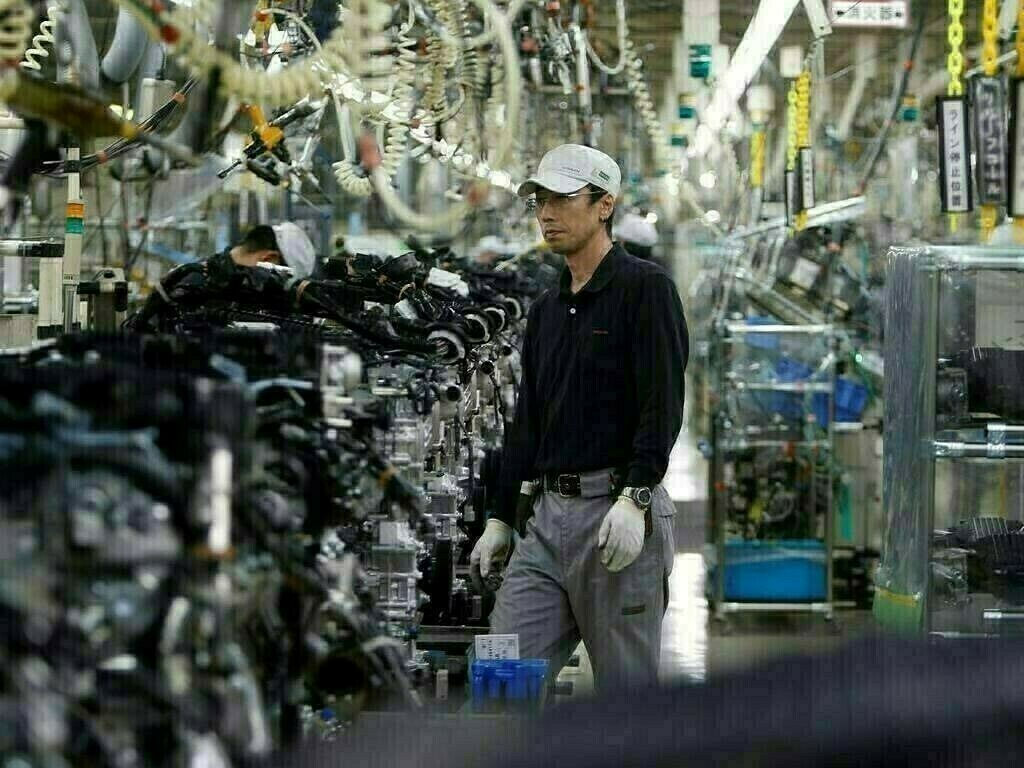

BEIJING: China’s manufacturing activity in February shrank for a fifth straight month, an official survey showed on Friday, raising pressure on Beijing to roll out more stimulus measures as the parliament prepares for a key annual meeting next week.
The official manufacturing purchasing managers’ index (PMI), compiled by the National Bureau of Statistics (NBS), fell to 49.1 in February from 49.2 in January with a sizeable drop in the output component.
It was below the 50-mark separating growth from contraction and in line with a median forecast of 49.1 in a Reuters poll.
Seasonal factors contributed to some of the weakness as the Lunar New Year (LNY) fell on Feb. 10 this year and saw factories shut as workers returned home for the holiday.
However, a survey by the Caixin/S&P Global released just after the official PMI showed manufacturing activity expanded steadily as both production and new orders grew faster.
Taken together, the PMIs highlighted an uneven economic recovery, maintaining pressure on authorities as markets clamour for bolder stimulus measures and reforms to safeguard China’s long-term growth potential.
China Dec factory contraction deepens, more stimulus on the cards
With the exception of September last year, China’s official manufacturing PMI has remained in contraction since March 2023.
“We expect the weak growth momentum to extend into March,” said Ting Lu, chief China economist at Nomura, forecasting China’s first quarter GDP growth to be 4.0% year-on-year, much slower than the 5.2% pace clocked in the fourth quarter of last year.
China won’t release its 2024 full-year growth target till next Tuesday at the rubber-stamp parliamentary meeting, but policy insiders expect Beijing will maintain a similar growth target to last year of around 5%.
China’s disappointing post-COVID recovery has cast doubts about the foundations of its economic model, raising the stakes for government action at the parliament meeting of senior policymakers.
The world’s second-biggest economy has been grappling with sub-par growth over the past year amid a property crisis and as consumers hold off spending, foreign firms divest, manufacturers struggle for buyers, and local governments contend with huge debt burdens.
China is also facing external challenges, as wars in Ukraine and the Middle East hamper global growth with Japan unexpectedly slipping into a recession at the end of last year and eurozone narrowly escaped it.
New export orders have shrunk for 11 consecutive months in the NBS manufacturing PMI, while a year-long contraction in employment in the factory sector pointed to persistent strain on businesses.
On the brighter side, the official non-manufacturing PMI, which includes services and construction, rose to 51.4 from 50.7 in January, marking the highest reading since September last year, thanks to robust activity during the LNY holidays.
However, construction activity nudged down by 0.4 percentage points with property-related activity still in contraction, an NBS statement said.
“Although the survey readings remain below historical averages, this is likely distorted by sentiment effects - survey-based measures have underperformed the hard data recently,” said Zichun Huang, China economist at Capital Economics.
Policymakers have pledged to roll out further measures to help shore up growth after the steps implemented since June had only a modest effect.
The People’s Bank of China cut the reserve requirement ratio (RRR) for banks by 50-basis points on Feb. 5, the biggest in two years, releasing 1 trillion yuan ($139.03 billion) in long-term liquidity.
Looking beyond the short-to-medium term, Huang cautions that structural issues will undermine China’s longer term growth potential.
“We expect a modest recovery in China’s growth momentum thanks to policy support, although this rebound appears fragile and may not last once policy support is scaled back.”




















Comments
Comments are closed for this article.