


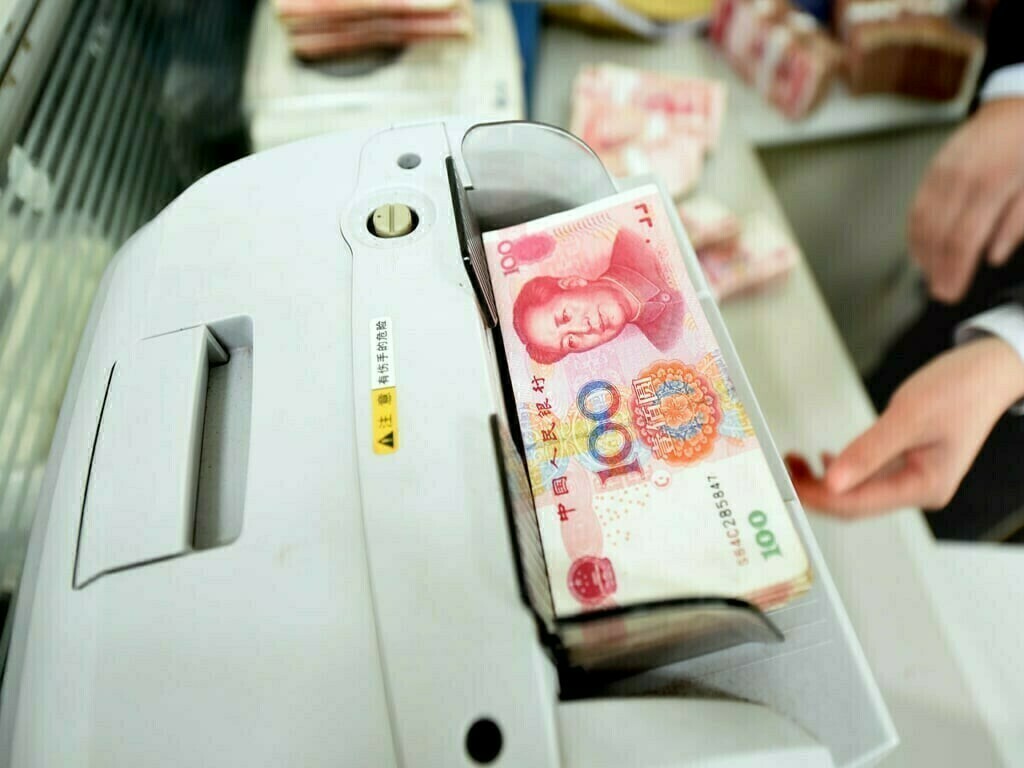
SHANGHAI: China’s yuan weakened to a three-week low against the firmer dollar on Monday, as signs of deflation raised investor doubts over the health of the world’s second largest economy and weighed down the currency.
However, the losses were capped by the central bank’s continued support through its daily fixing, signaling a strengthening bias, traders and analysts said.
China’s consumer prices fell the fastest in three years in November while factory-gate deflation deepened, indicating rising deflationary pressures as weak domestic demand casts doubt over the economic recovery.
Win Thin, global head of currency strategy at Brown Brothers Harriman, said the falling consumer prices highlighted “growing deflation risks.”
“More stimulus is likely but will do little to address the underlying problem of the huge debt overhang,” he said.
Prior to market opening, the People’s Bank of China (PBOC) set the midpoint rate, around which the yuan is allowed to trade in a 2% band, at 7.1163 per dollar, 40 pips weaker than the previous fix of 7.1123.
The central bank continued its months-long trend of setting daily guidance at levels firmer than market projections, with traders and analysts interpreting it as an official attempt to keep the currency stable.
Monday’s official midpoint was 527 pips stronger than Reuters’ estimate of 7.1690, the biggest such discrepancy since late November.
China’s yuan to break 3-week rising streak after Moody’s outlook downgrade
“The strong fix is almost unwavering at the 7.11-figure, regardless of broader market forces that have driven the USD higher,” Maybank analysts said in a note.
In the spot market, the onshore yuan opened at 7.1718 per dollar and eased to a low of 7.1888 at one point, the softest level since Nov. 20. At midday, it was changing hands at 7.1876, 177 pips weaker than the previous late session close.
Its offshore counterpart followed the weakening trend to hit a three-week low before trading at 7.1975 per dollar around midday.
Currency traders said the downbeat inflation data hurt market sentiment, and investors now awaited more guidance from the upcoming Central Economic Work Conference (CEWC) following the December Politburo meeting.
“Markets will look for more cues on next year’s GDP target and policy directions in the annual meeting, although the official growth target will not be unveiled until the March National People’s Congress (NPC),” analysts at Barclays said in a note.
China’s leader pledged to spur domestic demand and consolidate and enhance the economic recovery in 2024, the Politburo, a top decision-making body of the ruling Communist Party, was quoted by state media as saying last week.
Separately, market participants will also switch their attention to a flurry of economic data due this week, including November credit lending, retail sales and industrial production data, for more clues on the broad economy.




















Comments
Comments are closed for this article.