


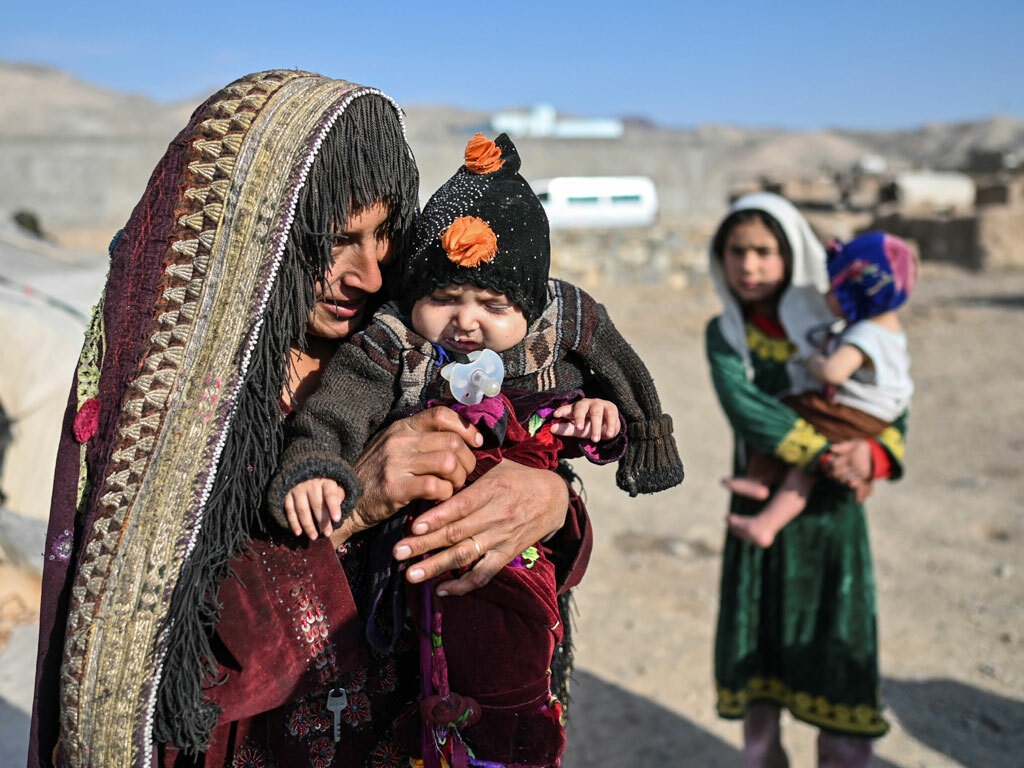

KABUL: Afghanistan's GDP could contract 20 percent within a year, the UN predicted in a new report on Wednesday, saying that the withdrawal of international aid after the Taliban's return to power is an "unprecedented fiscal shock."
For decades now Afghanistan's economy has been undermined by war and drought.
But it was propped up by billions in international aid -- much of which was frozen when US-led international forces withdrew and the Taliban returned to power in August.
"The sudden dramatic withdrawal of international aid is an unprecedented fiscal shock," United Nations Development Programme (UNDP) Asia Director Kanni Wignaraja told AFP on Wednesday, as the agency released its Afghanistan Socio-Economic Outlook 2021-2022.
The report predicts an economic contraction of around 20 percent of GDP "within a year, a decline that could reach 30 percent in following years."
"It took more than five years of war for the Syrian economy to experience a comparable contraction. This has happened in five months in Afghanistan," Wignaraja said.
Another UN source said that, "in terms of population needs and weakness of institutions, it is a situation never seen before. Even... Yemen, Syria, Venezuela don't come close."
Afghanistan's economic collapse could prompt refugee crisis: IMF
Previously, international aid represented 40 percent of Afghanistan's GDP and financed 80 percent of its budget.
But even reinstating aid now, while crucial, would be a "palliative" move, Wignaraja said, adding that what Afghans need are "jobs, being able to learn, be able to earn and to be able to live with dignity and safety."
No work for women
The report also warned that depriving women of paid work in Afghanistan could fuel a GDP drop of up to five percent, representing a loss of wealth of $600 million to $1 billion.
The Taliban have allowed only a portion of female civil servants -- those working in education and health -- to return to work, and have been vague on what the rules will be in the future.
In the past they banned women from working.
"Women constitute 20 percent of formal employment, and their jobs are vital to mitigate the economic catastrophe in Afghanistan," Wignaraja told AFP.
The damage "will be determined by the extent of enforcement or the delay", the report notes.
Afghan women rally in support of the Taliban
In addition, there is a loss in consumption -- women who no longer work no longer have a salary and can no longer buy as much as before to feed or equip their homes - which could reach $500 million per year, according to the UNDP.
Afghanistan "cannot afford to forfeit this", Wignaraja said.
Young Afghan women must also be able to continue post-secondary education, Wignaraja said.
That means any education that "will help them ... to contribute as they can and wish as doctors, nurses, teachers, engineers, civil servants or to run their businesses and build back the country."


























Comments
Comments are closed for this article.