


India's COVID-19 infection rate edges up, with second wave yet to abate
- The pilgrims could act as "super spreaders" and set off a third wave of infections, a top medical body has warned.
- "We must guard ourselves against complacency and laxity, which creep in as positivity declines."
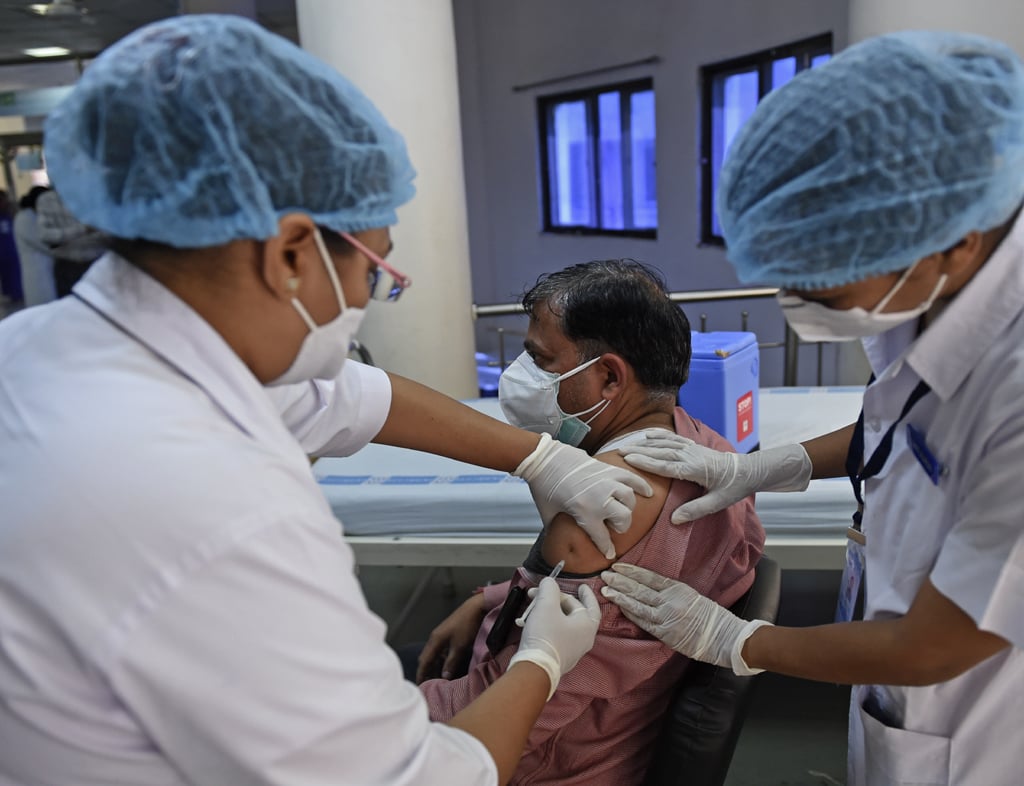
NEW DELHI: A rise in India's COVID-19 infection rate is worrying authorities who are concerned that pilgrimages and tourism could prove to be "superspreader" events in the battle to douse a devastating second wave of infections that has killed thousands.
In a pilgrimage this month, thousands of Hindus are set to walk hundreds of miles across northern cities, carrying pitchers of water from the Ganges, a river they consider sacred.
The pilgrims could act as "super spreaders" and set off a third wave of infections, a top medical body has warned.
The Supreme Court this week questioned federal and state authorities in the most populous state of Uttar Pradesh why the mass religious gathering should be allowed.
Virus strikes twice for India's first Covid patient
The home ministry flagged the increase in the infective rate as a cause for concern in some states, urging officials nationwide to enforce social distancing and clamp down on overcrowding at tourist sites.
"We must guard ourselves against complacency and laxity, which creep in as positivity declines," Home Secretary Ajay Bhalla told them in a letter on Wednesday, at a time when most cities have lifted strict lockdowns.
INFECTIVITY JUMPS
The effective reproduction rate of the disease, which health experts call the "R" factor, now stands at 0.86 in the world's second most populous nation, online publication Our World in Data shows, a jump of more than 25% in a month.
Bhalla warned of the risk of a faster spread of infection when the rate exceeds 1.
"You may be aware that any increase in 'R' factor above 1.0 is an indicator of spread of COVID-19," he added.
India medical body says no to reopening tourism due to COVID-19 threat
Still, the website showed the 0.86 figure is off an April 9 peak of 1.47.
By May, that had propelled India's daily cases to a staggering 400,000, leaving thousands in cities, including the capital New Delhi, scrambling for oxygen, hospital beds, ambulances and ultimately, morgues.
Bodies washed up on the banks of the Ganges.
States had largely lifted curbs as infections slowed, but the second wave has not yet ended, top officials have warned.
India's tally of 30.99 million infections is second only to the United States, with 411,989 deaths.
Prime Minister Narendra Modi has warned against overcrowding and called for vigilance against new variants, saying vaccination efforts needed to be sped up.
India is trying to inoculate all 950 million adults by year-end, but vaccine shortages and logistics hurdles have meant just 8% have received both doses.



















Comments
Comments are closed for this article.