


Dubai index leads most of Gulf lower; Egypt extends gains
- In Dubai, the main share index dropped 0.8%, with sharia-compliant lender Dubai Islamic Bank sliding 4.2%, its biggest intraday fall since mid-December, as the stock went ex-dividend.
- Dubai's economy, which is the region's most diversified, was one of the hardest hit by the pandemic. S&P estimated that GDP contracted 10.8% last year.
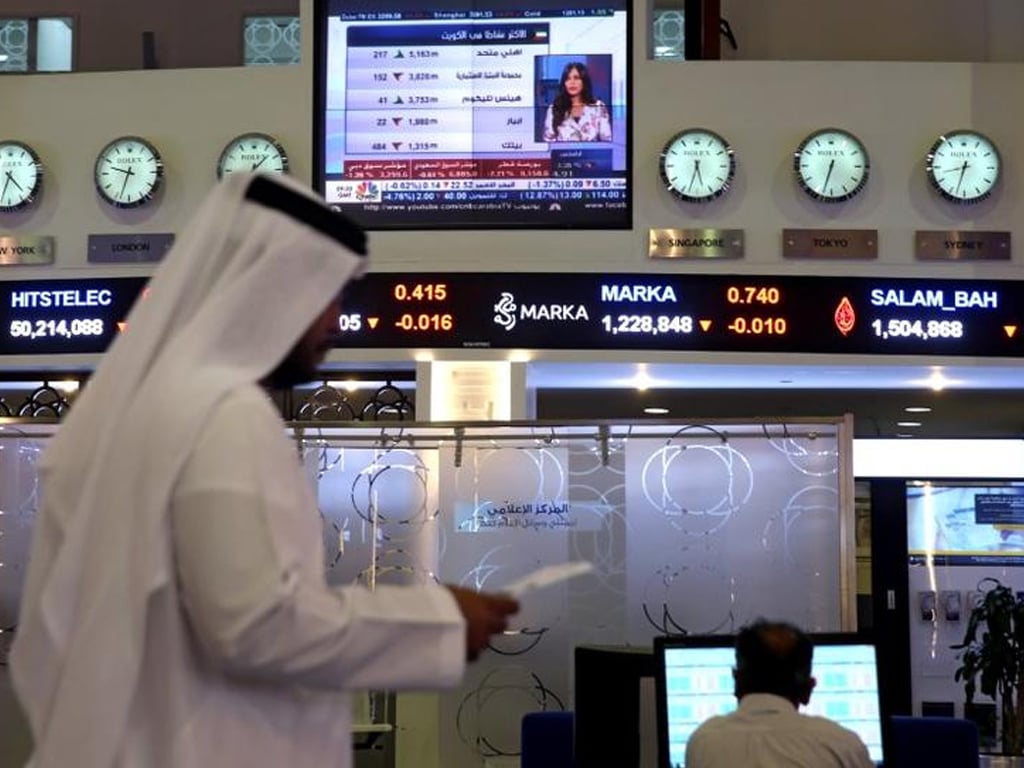

Most Gulf markets ended lower on Thursday as new coronavirus restrictions in Europe revived worries about demand for oil products, while stocks trading ex-dividend hit bourses in United Arab Emirates.
In Dubai, the main share index dropped 0.8%, with sharia-compliant lender Dubai Islamic Bank sliding 4.2%, its biggest intraday fall since mid-December, as the stock went ex-dividend.
The index snapped three consecutive weekly gains, shedding 4.2% during the week.
Dubai's economy, which is the region's most diversified, was one of the hardest hit by the pandemic. S&P estimated that GDP contracted 10.8% last year.
The Abu Dhabi index fell 0.3%, weakened by a 2.7% decline in telecoms firm Etisalat trading ex-dividend.
UAE bourses face a challenge as local firms increasingly seek fast-track listings in New York through mergers with special purpose acquisition companies (SPACs).
The UAE over recent months has introduced reforms, such as cutting trading fees, to try to make its equity markets more attractive.
But such measures may not be enough. SPAC mergers have become more attractive to Gulf companies that find traditional IPOs more complicated and expensive, but they are uncertain to succeed as investors are cautious.
Saudi Arabia's benchmark index concluded 0.5% lower, with Al Rajhi Bank losing 0.5%, while National Commercial Bank was down over 1%.
The index also logged a weekly loss of 0.7%, declining in three of the last five trading days.
In Qatar, the index lost 0.4%, driven down by a 1.1% fall in petrochemical firm Industries Qatar and 1.9% decrease in Mesaieed Petrochemical, which traded ex-dividend.
Outside the Gulf, Egypt's blue-chip index advanced 1.6%, extending gains from the previous session, as most of the stocks on the index were in positive territory.
The index, however, logged a weekly loss of 0.4%, its fourth weekly loss in a row.



















Comments
Comments are closed for this article.