



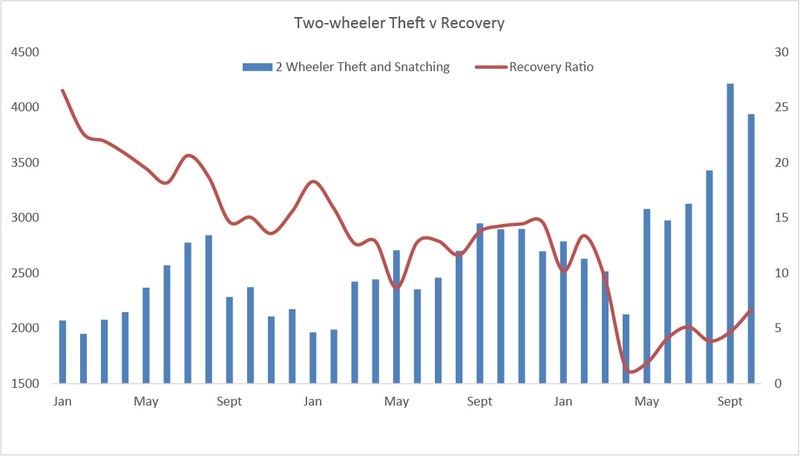
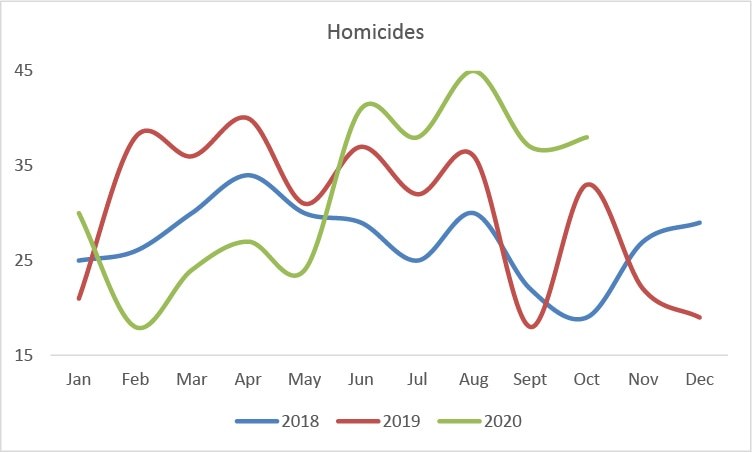
A second wave of the coronavirus pandemic is disrupting lives and businesses all over the world. In Pakistan’s most populous city, it appears to be accompanied by a crime wave. Reported cases of mobile phone snatchings, car thefts and homicides have all spiked since May, according to data maintained by the Citizen Police Liaison Committee (CPLC). Those who own motorcycles may be the most at-risk due to the resurgence of crime in Karachi. Snatchings and thefts of two-wheelers hit consecutive record highs from June, to September, and remain at multi-year highs. To make matters worse, the rate of recovery for motorcycles has also plummeted. Back in June 2018 police were recovering one out of four stolen motorcycles. In April of this year, only two out of 100 motor bikes were returned to their rightful owners. Violent crime is also up, including homicides which have spiked since May.
Over the past few months, the city’s law enforcement has been stretched thin. They have been the primary force deployed to impose lockdowns and other social restrictions. They have also been taking part in eviction operations in many parts of the city. There may also be other factors driving crime, like the economic slump and a political vacuum in the metropolis. Whatever the reason behind it, stopping this surge is the responsibility of the police and the government.
Karachi has come a long way from the lawlessness of yester years. Not long ago, factory owners and shop keepers in the city had gotten so used to paying extortion money, they would admit to keeping funds aside preemptively. And murders of political rivals were so commonplace that a new term, ‘target killing’ was coined to describe them. Karachi had risen to the unenviable rank of the world’s sixth most dangerous city in 2014. Since then, the collective efforts of law enforcement and paramilitary forces have brought about a significant reduction in such crimes. Speaking at an event in last month, Sindh’s top cop said there are now more than one hundred cities around the world that are considered more dangerous. He was referring to statistics from a perceptions survey which has since been quoted by a number of newspapers.
Perceptions can be molded by influences like mainstream media and word of mouth. The former often differentiates between crime. Some murders are news worthy, others are not. It’s not fair, but that’s how headlines are written. With a fall in fear inducing crimes like target killings, kidnapping and extortion, news about crime has also faded from bulletins. The fact remains, more people are being deprived of their vehicles, phones, money and other belongings. It’s threatening the law and order achieved through so much hard work and many sacrifices by law enforcers.



















Comments
Comments are closed for this article.