


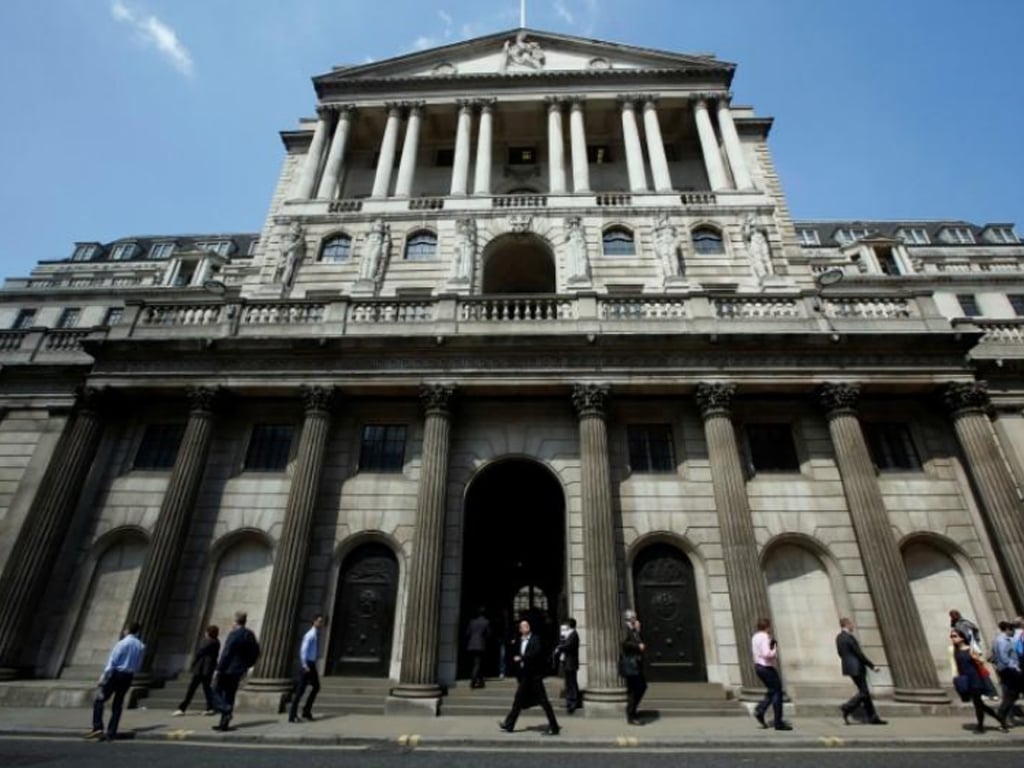

LONDON: The Bank of England increased its already huge bond-buying stimulus by a larger-than-expected 150 billion pounds ($195 billion) as it braced for more economic damage from new coronavirus lockdowns and damage from Brexit, too.
On the day England began a four-week lockdown to curb a second wave of COVID-19, which is killing as many Britons each day as in May, the BoE said it was still looking into the pros and cons of taking interest rates negative, but gave no update on the process.
"If the outlook for inflation weakens, the Committee stands ready to take whatever additional action is necessary to achieve its remit," the BoE said as it cut its growth forecasts.
Britain's economy was set to shrink by a record 11% in 2020 overall, more than the 9.5% it had forecast in March, and it cut its estimate for next year's recovery.
"The outlook for the economy remains unusually uncertain," the BoE said, pointing to the COVID-19 crisis and the still unresolved trading relationship between Britain and its closest trading partners in the European Union after Jan. 1.
Britain's economy has been supported by a surge in debt-fuelled spending by the government, and the BoE is buying up many of those bonds. Finance minister Rishi Sunak is due to speak in parliament later on Thursday. His emergency spending and tax cuts have saddled Britain with its biggest budget deficit since World War Two.
The BoE kept its benchmark Bank Rate at 0.1%, as expected in a Reuters poll. It made little mention of negative rates while a consultation with banks over the practicalities is underway.
Sterling rose against the dollar and the euro after the announcements and bond yields fell. The increase in the size of the BoE's asset-purchase programme took it to 895 billion pounds, 50 billion pounds more than expected by most economists.
The central bank said that would give it enough firepower to stretch its buying of government bonds through to the end of 2021, but the purchases could be sped up if needed.
SLOWER RECOVERY, HIGHER UNEMPLOYMENT
The central bank now expects Britain's economy to shrink by 2% during the fourth quarter and only exceed its size before the COVID-19 pandemic in the first quarter of 2022. Previously, it had predicted the end of next year.
Unemployment was set to peak 7.75% in the second quarter of next year, much higher than its most recent reading of 4.5%. Gross domestic product was likely to grow by 7.25% in 2021, weaker than a previous forecast of 9%. But its two-year inflation forecast remained unchanged at 2%, the central bank's target.



















Comments
Comments are closed for this article.