



KARACHI: K-Electric's outstanding receivables from the federal and provincial government entities have ballooned to a massive Rs 170 billion, making the country's sole vertically integrated power provider financially unviable, and affecting its future investment plans, said KE's Chief Financial Officer (CFO) Muhammad Aamir Ghaziani. The company has declared a close to Rs 2.96 billion loss in FY-2020 primarily due to soaring receivables and higher debt servicing cost.
"Financial viability is critical for continued investment. If KE is rendered financially unviable, sustainable investments may be constrained," he said.
To a query, he said the KE's total receivables from government entities including KW&SB, NTDC and SSGC are close to Rs 170 billion. KE owes a principal amount Rs 13.7 billion to SSGC while the remaining is markup which is still awaiting final adjudication by the court. He said KE has honored its payment obligations to SSGC, PSO and IPPs, although it has declared a Rs 2.96 billion loss for FY20.
He said KE's net receivables mainly on account of Tariff Differential Claims and Karachi Water and Sewerage Board (KWSB) energy dues remain unpaid as yet. Linking KWSB's Rs30 billion outstanding payments to this issue, he claimed "If KWSB dues had been released to KE in time; K-Electric would have been able to ensure timely payments to SSGC.
"If the long-standing receivables issue continue to remain unresolved, KE's ability to serve Karachi's exponentially growing power needs would be constrained with serious implications for citizens and industries in Karachi", he warned, citing the company's FY20 financial statements that showed the company had been driven back into financial losses after 8 years of profitable operations on account of a 166% increase in financing cost and a big surge in borrowing to bridge working capital requirements in the wake of unpaid dues.
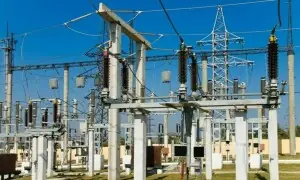
He contended that with KE's 900 MW power plant upcoming and transmission upgrades to evacuate additional power supply from the national grid under way, addressing investment roadblocks including payment delays and pending approvals was a critical pre-requisite. He concluded: "We look forward to working closely with both the federal and provincial government entities for a swift and equitable resolution of these issues so that our vision to move Karachi into a power surplus position may be realized by 2022."
When contacted, SSGC's PRO Safdar said KE has to pay around Rs116 billions to SSGC, which includes markup amount as well. This issue is long pending, he added. He said a meeting was between the KE and SSGC officials was held at the Sindh Governor's House during the tenure of last PML-N government, wherein it was decided to settle the issue through a third-party audit. SSGC has already shared ToRs with KE in this regard, while the power company has not shared its ToRs with SSGC, he added.
Copyright Business Recorder, 2020













Comments
Comments are closed for this article.