


Euro-V petrol: No negative effect on BoP expected, says Petroleum Div

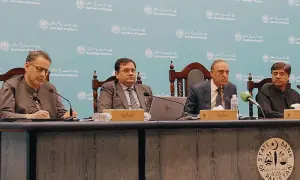
ISLAMABAD: The Petroleum Division has claimed that in a recent tender results for Euro-V petrol, the Pakistan State Oil (PSO) received prices either equal to or even below than the current deliveries of Euro-II petrol prices.
In a statement, it has been said that the PSO tender participation has also improved due to introduction of better fuels in the country.
Accordingly, no huge financial impact on general consumer or any negative effect on balance of payment is expected.
The division stated that some media reports based on a think tank presumed that the recent government decision for introduction of Euro-V petrol and diesel in the country was premature owing to limitations of the existing retail network and up-country storages, improperly defined Euro-V specifications, inadequate product testing capacity, the absence of Euro-V compliant engines and the burden on lower-middle income consumers. This is neither factually true nor an accurate representation of the facts. The government is not introducing any new main grade for diesel and petrol, rather; it has simply altered the product specifications in relation to sulfur contents, which will now be conforming to Euro-V standards instead of Euro-II.
Therefore, the notion of the limitations of existing retail network and storages is irrelevant and out of context, as no special arrangements at outlets and storages are needed.
The Euro-V specifications have been finalised in consultation with all the stakeholders especially the oil industry and it is incorrect to call them improper. Imported products are tested at discharge ports by the Hydrocarbon Institute of Pakistan (HDIP), which has updated its infrastructure by investing million of rupees, besides PSO has also updated its testing infrastructure conforming to Euro-V standards. Eventually, the HDIP and its testing capacity are in sync with the requirements for shifting towards Euro-V fuels.
As regards the absence of Euro-V compliant engines, it needs to be clarified that ultra low levels of sulfur contents result in reduction of lubricity and conductivity, which increases wear and tear of older engines and damages fuel pumps.
However, addition of appropriate additives allows older engines to operate efficiently.
Accordingly, the two additives have been appropriately incorporated in the government approved specifications.
This will ensure better performance by the vehicles of lesser standards. The relevant stakeholders in the automobile sector have also admired the government decision.
Copyright Business Recorder, 2020


















Comments
Comments are closed for this article.