


China betrayed signs of spluttering domestic demand on Friday as imports crumbling to their lowest in more than two years and weaker-than-forecast bank lending signalled to investors that policymakers would soon make a fresh bid to bolster growth. China's economic expansion struck a 2-1/2 year low of 8.9 percent in the last three months of 2011, extending a steady slowdown that had prompted the government in the autumn to switch policy settings to support growth. It has gently eased monetary and fiscal conditions since.
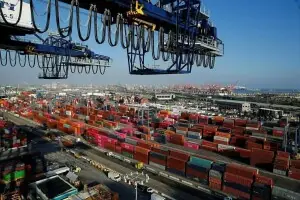
Now more is needed. "I think that liquidity conditions are too restrictive. The economy is slowing down and liquidity conditions are restrictive," said Yao Wei, China economist at Societe Generale in Hong Kong. A fall of 15.3 percent in imports in January compared with January 2011 was the lowest reading since August 2009, while exports fell 0.5 percent over the same period, the worst showing since November 2009, customs data showed on Friday.
That was followed by data from the People's Bank of China showing that new lending was less than 75 percent of the level expected - a big surprise for a financial system that typically sees its biggest lending splurge of the year in January. The combination of data points raises numerous worries even though Lunar New Year holidays fell in January, which can make it difficult to interpret economic figures.
First, that the domestic demand which has shielded the world's second-largest economy from slackening exports is not as resilient as thought. Second, that China's ability to support a frail global economy by absorbing more imports is undermined. And third, that weaker-than-expected lending is a function of banks being at their limit of credit creation, meaning the central bank will need to expand the range of policy tools beyond cuts in the reserve requirement ratio and use of open market operations if it is to effectively boost the supply of credit.
Lunar New Year distortions will make policymakers wary of any hasty reaction. Most analysts expect them to assess January and February data combined before deciding whether the current policy of gentle easing should be intensified. The week-long Lunar New Year holiday, which fell in January this year and in February last year, typically sees factories shut or run at half speed during the period.
But seasonal factors alone do not convince every economist that January is a one-off distortion, especially for trade. Exports to the European Union, China's top export market, fell 3.2 percent in January from a year earlier, the first decline since February last year, the data shows. Exports to the United States rose 5.5 percent in January from a year earlier, slowing from December's 11.9 percent rise and marking the weakest pace since February last year.
The big imports drop combined with a smaller exports drop left China with a trade surplus of $27.3 billion in January, its biggest in six months and confounding expectations of a further narrowing. Realisation that January would produce a bigger trade surplus may well have held the central bank back from reducing the RRR that month, when many economists had expected a cut.
It cut bank reserves by 50 basis points to 21 percent on December 5, a move economists believe was a response to rare capital outflows from China in the fourth quarter of 2011. Other figures on Friday showed China's current account surplus shrank in 2011, offering Beijing fresh evidence to show critics of its currency policy that it is relying less on external demand.
Chinese leaders can point to the figures next week at a summit with European Union officials in Beijing, as can Vice-President Xi Jinping, widely expected to be China's next leader, who visits Washington on Tuesday. China's economic growth slowed steadily throughout 2011. But the slope of the slowdown was shallow enough for the consensus to emerge that a hard economic landing will be avoided, even though many private-sector economists forecast that 2012 will see the slowest pace of expansion in a decade.
--- Imports, exports fall to lowest in more than two years The first quarter of 2012 is widely expected to mark the bottom of China's economic downswing. Signs from the most recent purchasing managers index survey showed a slight expansion of the factory sector in January.























Comments
Comments are closed for this article.