


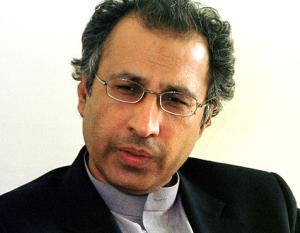
 Federal Finance Minister Dr Hafeez Sheikh, subsequent to chairing a meeting of the governing council of the newly constituted Pakistan Bureau of Statistics (PBS) comprising of a merger between the Federal Bureau of Statistics (FBS), the Population Census Organisation (PCO) and the Agriculture Census Organisation (ACO) stated that the decision was taken with the objective of bringing transparency and confidence in the economic data collected in the country. This step must be lauded as Pakistani governments, past as well as present, have been frequently accused of blatant data manipulation for what are clearly political compulsions. This accounts for the general lack of credibility in our statistics both within the Pakistani public (that has its own yardstick for measuring indicators that are important to quality of life notably inflation and unemployment) and bilateral and multilateral donors who require accurate macroeconomic statistics in an effort to streamline their loan conditions. However a merger of the three existing departments would obviously not guarantee transparency and accuracy. In order to achieve the stipulated goals of the PBS, the Federal Finance Minister revealed that the governing council would consist of 10 members and he cited six categories from which selections for the members would be made: economists, high profile professionals, academics, representatives from the business community and policymakers. These specific categories were in all likelihood selected because they would not be government functionaries and thus, in theory, their assessment would be independent and credible. Fair enough! However, the Finance Minister added that the chief statistician would be selected through an advertisement and report to the governing council of which he, as the Finance Minister, would be the chair. It is this condition that may render the PBS subject to abuse for two reasons. First, the Finance Minister whether elected or selected, is susceptible to political compulsions as this country has been made painfully aware and, secondly, there is no mechanism in place to ensure that an advertisement would necessarily ensure that merit is the only determinant in senior appointments. A model to emulate in this regard would be the UK model. Gordon Brown as the Chancellor of the Exchequer proposed legislation in November 2005 with the objective of giving the Office for National Statistics (ONS) the same independence as the Monetary Policy Committee of the Bank of England. On the first of April 1996, the Central Statistical Office (CSO) and the Office of Population Censuses and Surveys (OPCS) were merged. Details of the plans for independence were considered in the Parliament during the 2006/2007 session and resulted in the Statistics and Registration Service Act 2007. Following the Act the United Kingdom Statistics Authority became a non-ministerial department on 1st April 2008. Gordon Brown also announced new constitutional arrangements for public appointments inclusive of the chief statistician. In short, the department was delinked from the government and made accountable to the parliament. The appointment of the chief statistician thus was to be through a rigorous selection process that had to be approved by the parliament. Today the ONS has achieved its objective: public trust in statistics has been considerably enhanced. Dr Sheikh's proposals do not even come close to the UK model, with the exception of the merger of the three existing data gathering entities to form the PBS, and it is rather disturbing that he seeks to keep control over the governing council by keeping the chairmanship with the office of the Minister of Finance. As matters stand today, there is little if any confidence in the data routinely released by the statistics office and while Dr Sheikh's proposals do go to some length to render the PBS independent and credible yet he does not remove critical ingredients in the proposed system that may allow abuse. The government, its critics argue, is simply not ready to cede control that would be in the long-term economic interests of this country in terms of a truly independent State Bank of Pakistan or an independent PBS. Copyright Business Recorder, 2012























Comments
Comments are closed for this article.