


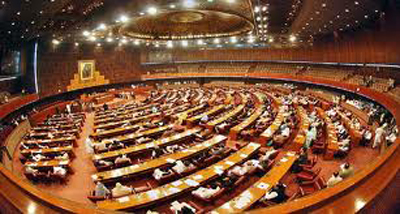
 Although the ANP-sponsored tribal jirga's demand for the merger of Fata with Khyber-Pakhtunkhwa may appear to be in conflict with the prevailing political debate in support of more provinces, but they do share a commonality. However, the challenge is how to go about it. Is it as simple as just making a statement from a political platform, as is mostly the case? The MQM has gone beyond that and submitted a bill in parliament for according the status to southern Punjab and Hazara. Is mustering a two-thirds parliamentary majority support required in the federal and provincial legislatures under the Constitution a done thing that the demands are being churned out on an almost daily basis? Immeasurable challenges confront the process both inside the assemblies and outside in the streets. A mere change in the name of NWFP to Khyber-Pakhtunkhwa triggered a vigorous movement for a separate Hazara Province; one would realise the enormity of the task to create new provinces. Perhaps, the call emanating from within the Fata for a separate provincial identity is much louder and legally more convincing than the one made in Peshawar on Sunday from the ANP platform. And some homework seems to have been done by the Fata leaders also, as reflected from a recent op-ed by eminent scholar and former diplomat Ayaz Wazir. "The best way to begin with would be to give Fata the status of a province on the pattern of Gilgit and Baltistan and let the people govern themselves to bring that area at par with rest of the country. If that is not possible for some obscure or unknown reason, the post of governor of Khyber-Pakhtunkhwa should be given to a tribesman. If even that is not acceptable, then a separate governor should be appointed for Fata who should have a council of three to five members from each tribal agency to look after the day-to-day affairs of that area." That is the kind of realism and forbearance required for advocacy of a case which given Fata's separate constitutional identity should have been the easiest to do. Do we have that kind of clarity in other cases? No. The truth is, that the demand for new provinces is essentially a political issue unless it is given a deep, thorough consideration - a need all the more compelling as we move towards elections. Almost all the main political players - of late the PML (N) too has joined the race after initial hesitation - are demanding a separate province in southern Punjab. The demand for Hazara Province too is gaining popular acceptability. And, one can detect early contours of demands for separate provincial status for Southern Pakhtunkhwa, restoration of Bahawalpur as separate province, a new province comprising Hindco areas of KP and Punjab, Thal Province carved with Mianwali as centre and of course division of Sindh into more provinces as these demands progress. What is the real motivation behind demands for new provinces; is it ethnicity or linguistic élan or is it administrative need that justifies them, we have no clear answer to that yet. Then, there is a critical issue of boundaries for the proposed provinces. Is there any census to determine where the common provincial borders should be drawn? And an equally critical, and dangerously provocative, issue is the ground situation if and when demands for new provinces become part of the electoral campaigns. Won't it play into the hands of forces cashing in on ethnic and linguistic imbalances in certain areas of Pakistan? The issues of new provinces, mergers of provinces and new borders are very explosive, with in-built potential to mushroom even in very normal circumstances, which in the present Pakistan are not. But it is also a fact that our political leaderships have played up this issue so very often that it cannot be now overlooked and put on the backburner. A lot of serious thinking backed by expert advice is warranted to find a way out of this situation. For that the government needs to set up a high-level parliamentary committee or a commission comprising parliamentarians and people from civil society, especially retired civil servants with a mandate to dig deep into the demand and justification of more provinces. This would be a time-consuming task, warranting patience and calmness on the part of the political leaders till there is some thing substantive before them as to the demarcation of the new units. At the same time, the only consideration, to the exclusion of all others particularly ethnic and linguistic, that should form the basis for the need of new provinces should be administrative - in terms of how the new entities would help the life of the common man. In its present condition, it's a dicey question. Copyright Business Recorder, 2012






















Comments
Comments are closed for this article.