


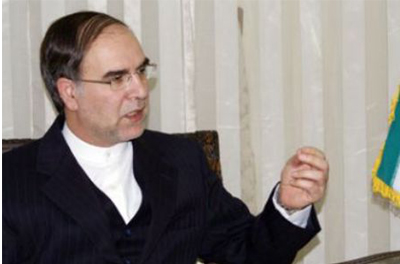
 It is heartening to see Pak-Iran economic relations warming up. Speaking at the Lahore Chamber of Commerce and Industry the other day, Iranian Ambassador Mashallah Shakeri said that his country would provide technical and other assistance to Pakistan to overcome its energy crisis. The much-delayed Iran-Pakistan gas pipeline project, he noted, is near completion on the Iranian side. The Ambassador also mentioned a number of other areas in which the two countries can have a mutually beneficial collaboration such as joint ventures in coal-fired energy generation projects, dairy farming as well as enhanced trade and commerce. This, though, is not the first time Iran has sought a closer economic relationship with this country. An oil pipeline and a refinery have been on offer for at least four years. This time though is different, as Pakistan seems to have decided to withstand outside pressure and act in self-interest. The two neighbours have no bilateral dispute. Pakistan therefore has no good reason to hold back form mutually beneficial ties. As for the issue of US sanctions, it needs to be noted that despite these, India has continued to buy Iranian oil. China and Russia are pursuing their respective economic interests in the country. In the recent months, both President Zardari and Prime Minister Gilani have made several trips to Iran. Reports say during these visits, Iran made generous offers to help Pakistan meet its energy crisis. Aside from the under-construction gas pipeline and an electricity supply project, Tehran is reported to have proposed oil supplies on deferred payments basis. For the longer-term, the two countries have quietly signed a memorandum of understanding and formed working groups to actualize the pipeline that is to bring Iranian crude to Gwadar, where Iran is to set up a refinery for processing its crude. The existing refineries are said to lack the ability to process 100 percent Iranian crude. Experts point out that an added advantage in Iranian oil is its high content of furnace oil, which Pakistan needs badly to meet its power sector's fast growing demand. Importing oil from Iran, of course, will also result in significant price reduction, helping ease pressure on Pakistan's scant forex reserves. Aside from energy projects, Pakistan and Iran have a lot to gain in other areas of co-operation. As the LCCI president noted, bilateral trade at present is barely above one billion dollars, which is way below the real potential. No wonder, a lot of illicit trade is going on between the two sides. According to the Chamber president, improved environment could easily raise it to $5 billion in another four-year's time, ie, at the rate of one billion dollar increase per annum. Towards that end, he had two important suggestions to make. One, he said, use of the two countries' local currencies can be instrumental in enhancing trade. China and Russia have since long been applying that practice in certain instances. Second, the two countries should allow barter trade, which again, is a much tried and tested mode of selling and buying of goods and products. The commerce ministry needs to pay attention to these suggestions, and do the needful to concretize them in consultation with its Iranian counterpart. Copyright Business Recorder, 2011















Comments
Comments are closed for this article.