


The All Pakistan Textile Mills Association (Aptma) has proposed investment, growth and employment-friendly budgetary measures to the government as way forward for the textile industry to achieve economic growth and prosperity.
Aptma Chairman Gohar Ejaz put forward the budgetary measures to Federal Finance Minister Dr Hafeez Sheikh who visited Aptma Punjab office on Sunday afternoon. Planning Commission Deputy Chairman Dr Nadeem-ul-Haq was also with him on this occasion.
Aptma Chairman acknowledged the business environment extended to the textile industry. He said implementation of free market mechanism, zero rating regime and doing away of refund culture had yielded phenomenal results including a record $14 billion textile exports and transferring of Rs 350 billion to the cotton growers during 2010-11.
He listed future challenges of the government and said the energy security, energy affordability and globally competitive interest rate and availability of raw materials to attract industrial investment for achieving growth and creating employment are fundamental requirements of the industry ahead.
Gohar said the textile industry is prepared to undertake $1 billion investment per annum, textile exports to $25 billion and one million employment generations by 2015.
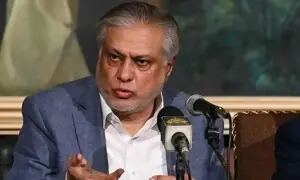
Dr Hafeez Sheikh said the government is introducing a judicious tax system and the exempted ones are being brought into the tax net. He said the government had frozen expenditures last year and is not likely to be increased this year as well. He said the only way to reduce dependency on foreign debts is through mobilising taxes locally to fill the fiscal gap. It will also reduce government dependency on loans from the State Bank of Pakistan.
Hafeez said the government was doing utmost to control inflation by controlling fiscal deficit. He said high interest rate is due to huge gap between revenue and expenditure, pushing prices up for private sector.
He said the energy crisis is not due to present government policies. He said the government allocated Rs 300 billion last year for circular debt, besides adding another Rs 120 billion last week. This hit the budget heavily. He said the government extended Rs 140 billion subsidy to Pepco, which was Rs 260 billion last year. He said the government has also got a hit of Rs 50 billion by reducing taxes on petroleum prices.
On gas price parity, the finance minister said that there are a few decisions which are out of the domain of federal government. Some decisions can only be taken in Council of Common Interests, he added.
He said gas is the much sought-after commodity right now, as everyone including fertiliser, power industry, textile industry rural areas, and the areas where gas was found want gas.
He hinted that the government would have to take difficult decisions and the government is going to take them, which may not be acceptable to a few.
Meanwhile, a large number of Aptma members present in the meeting raised issues pertaining to the industrial development including continuity of policy, policy-implementation gap and zero rating of raw materials for diversification of textile products. Majority of the members were upbeat about further investment provided the government would ensure environment conducive to it.



















Comments
Comments are closed for this article.