


Former Advisor to the ministry of finance and Dean NUST Business School, Dr Ishfaque Hasan Khan on Thursday said the Federal Board of Revenue should not fix revenue collection target beyond Rs 1,765 to Rs 1,775 for the next budget (2011-12), as any figure higher than the projected one would be unrealistic.
Addressing a pre-budget seminar to the Association of Chartered Certified Accountant (ACCA) here on Thursday, he said the FBR target should not be fixed beyond Rs 1,765 to Rs 1,775 for the next budget as the fixation of target over and above this range would indicate slippage from day one. It is very important that the revenue collection target for the FBR should be kept realistic for 2011-12.
He also recommended selling eight rotten public sector enterprises even at Rs one because these were eating nearly Rs 300 billion precious taxpayers money per annum. He said the reconstitution of Boards of PSEs would not solve problem as was planned by the incumbent regime to turnaround these loss-making entities.
He criticised the government for using the flawed methodology to finalise budgetary numbers. He made startling revelations that expenditures were finalised first and then adjusted the fiscal deficit target for reaching on the conclusion of required revenues for making the budget by the ministry of finance. He asked the ministry of finance to bring major shift by treating expenditures as residual number and not by the revenues on the name of unveiling reform oriented budget in fiscal year 2011-12.
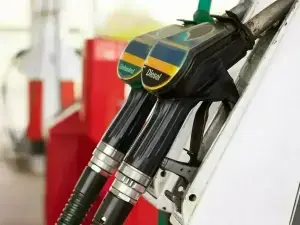
He also asked the government to constitute a committee to review taxation over taxation on petroleum products. The POL is the major revenue spinner and contribute maximum in revenue collection of the FBR. The POL products are subjected to a number of taxes including customs duty, sales tax (imports and domestic stages), federal excise duty, PDL, commission, charges, etc. The FBR has generated a major chunk of revenue from this sole sector in the last financial year. Keeping in view the rising trend of oil prices in international market that could touch around $180 to $200 per barrel.
Keeping in view the rising oil prices in international market, there would be higher collection of Petroleum Levy and this should not be used for containing budget deficit and must be used for retiring circular debt.
He said that it is the golden opportunity for the government to introduce the agricultural income tax.He was suspired that the government is still unable to convince the general public about the inflationary impact of the RGST. When the rate of sales tax would be brought down from 17 to 15 percent, how the RGST would be inflationary for the general public. The government should interact with the stakeholders and conduct some kind of authentic study to inform the general public that the RGST would not have any kind of inflationary impact.
Dr Ishfaque highlighted the weaknesses in budget preparation in Pakistan and said that basic flaw is that government doesn't assess its revenues first. At first the government opts for finalising its expenditure and than calculate budget deficit in accordance with the deficit target agreed with the International Monetary Fund afterwards it finalises revenue projections for the next fiscal year that always stands on lower side.
He warned that budget deficit target for the next fiscal year 2011-12 should be set at 4 percent of the GDP. Provinces keeping in view the proposed tax target of Rs 1952 billion for the next fiscal year 2011-12 would plan their expenditures with higher spending and with less realisation of revenues hardly at Rs 1775 billion in next fiscal year their plans would have great set back.




















Comments
Comments are closed for this article.