


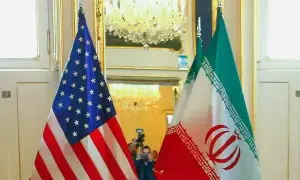
Upgraded in terms of participation and expanded in terms of scope, the Pak-US strategic dialogue in Washington, next week, will contend with an enormous agenda, with issues on the table ranging from giving a last big push to their co-operative effort against the Taliban, to removing bilateral mistrust to deepening American involvement in people-focused programmes.
Departing from past practice, the Washington meeting would be held at the level of foreign ministers and its participants would include forces' chiefs, heads of their intelligence establishments, in addition to representatives from non-military ministries and departments.
Headed by Foreign Minister Shah Mehmud Qureshi, the Pakistani team will include Pakistani Army chief General Kayani, accompanied by the ISI chief Lieutenant General Shuja Pasha, and some ministers, particularly the one dealing with energy, Raja Pervaiz Ashraf. For quite sometime Pakistan has been trying to convince the US government, albeit with limited success, it's not the military alliance against the Taliban alone that can provide a durable basis for a productive relationship.
No wonder, the press release, issued after a high-profile conclave in Islamabad over the weekend, underscored the need to place Pak-US relations in a "concrete and endeavouring framework", for people-to-people co-operation relating to economic, defence, security and social sectors. Of course, there are a few responsive moves, like the offer to help Pakistan's energy sector.
If the vibes from Washington are any guide, President Obama is almost exclusively fixated on military victory against the Taliban and that it should come before the end of year, when the US Congress goes for elections. But in the meanwhile, developments on various warfronts have been taking turns. These developments are quite propitious for the forthcoming strategic dialogue.
For one, the American generals directly connected with war in the region have come to realise that without taking Pakistan on board, the war against Taliban cannot be won. So, this American move to keep India out of the war theatre. Secondly, the Americans are also coming round to the Pakistani position that it is for the Pakistan government to decide, if and when to launch the operation in North Waziristan or anywhere else.
Not surprisingly then Richard Holborn, the US special envoy to the region and President Obama's point man, now says that it is for General Kayani to decide, if and when, to launch military offensive in North Waziristan or any other restive area. That is a big U-turn from the position US officials would often take last year and before.
Another factor that seems to have cleared the ground for a closer co-operative outlook between the United States and Pakistan is the arrest of some important Afghan Taliban leaders in Pakistan, prompting Holborn to claim that the al Qaeda is under "fantastic pressure", although it remains to be seen if the captured leaders were still effective and constituted the core of their militancy networks.
From the Pakistani perspective, the forthcoming strategic dialogue in Washington has the potential to become a make-or-break event, having a serious impact on the future of the Pak-US relationship. Pakistan has made enormous sacrifices and suffered immensely in this war, and, possibly, it cannot go beyond what it has in aligning with the international community in general and the United States in particular.
Its losses far outweigh others', and, ironically, it would remain a national moot point if Islamabad really wanted the Afghan Taliban to be ousted, surrendering the space to its potential enemies. However, in the situation as it evolves, Pakistan seems to have decided to accept the new reality of the situation.
But to keep Pakistan steadfast, it needs to be assured by its western allies of better understanding and co-operation. For one, Pakistan would like to be assured that the post-war Afghanistan doesn't become a den of Indian intrigues against it. Two, Pakistan should be adequately compensated for the losses it has suffered due to this war; otherwise its beleaguered economy is bound to breed discontent and anger that, in turn, will produce more suicide bombers.
The kind of 'compensation' now being offered is too miserly and tends to become more an issue of ridicule and contention than of friendship and camaraderie. The Washington should go beyond all this and break fresh ground - because that may be the last chance.














Comments
Comments are closed for this article.