



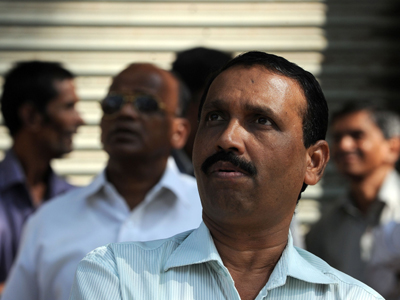
 MUMBAI: India's leading share index of blue-chip companies tumbled to a two-year low on Wednesday on growing investor concerns about high inflation, slowing growth and signs of political deadlock.
India's Finance Minister Pranab Mukherjee blamed the slide on selling by foreign institutional investors (FIIs) and a falling rupee against a backdrop of the eurozone debt crisis and worries about slowing domestic expansion.
The Bombay Stock Exchange's 30-share Sensex ended the day down 365.45 points or 2.27 percent at 15,699.97 -- its lowest closing level since November 3, 2009 -- with telecoms, banking and engineering shares suffering the most.
The fall was the ninth in the past 10 trading sessions. Indian equities are among the worst-performing in the world this year with the Sensex down by nearly 25 percent since the start of 2011.
"Markets have crashed because of the continuous withdrawal of (funds by) FIIs," Mukherjee told reporters in the capital New Delhi.
"There is still uncertainty prevailing in the eurozone. The rupee's depreciation also has an adverse impact. All these cumulative effects are there."
Overseas funds have bought Indian stocks worth around $414 million so far in 2011 while buying for the same period a year earlier totalled $29 billion.
Investor confidence has also been weakened by the rupee's slide against the dollar, which raises import costs and fuels inflation, already at near double-digits.
The unit, the worst performing major Asian currency, dropped to a record low of 52.73 rupees to the dollar on Tuesday but firmed slightly to 52.11 by mid-afternoon on Wednesday.
Hemen Kapadia, chief executive of investment advisory firm Chart Pundit in Mumbai, blamed government inaction for investor unhappiness.
"The market's in a disaster zone," he told AFP. "There is no second-round of (economic) reform and rising interest rates and slowing growth are pulling the market down. The government has failed on all fronts."
India's parliament, which opened for its winter session on Tuesday adjourned for a second day in disarray, disappointing investors who have been hoping the government could reinvigorate its pro-business legislative agenda.
Only 15 laws have been passed by parliament in the past year due to disruptions by the opposition who have been protesting against a slew of corruption scandals and high inflation.
Other analysts said bleak local conditions were affecting economic growth.
"The long-term negative impact of rising inflation on growth, due to reducing investment and productivity growth, is likely to meaningfully impact GDP growth," said Deepali Bhargava.
Bhargava, an economist at Espirito Santo Securities, forecast 7.2 percent growth in the 12 months to March 2012 and 7.0 percent next year. The central bank expects growth of 7.6 percent this year and has made no forecast for next.
Growth has been slowing in recent months as industrial activity has been hit by 13 interest rate hikes since March 2010 aimed at curbing inflation.



















Comments
Comments are closed for this article.