



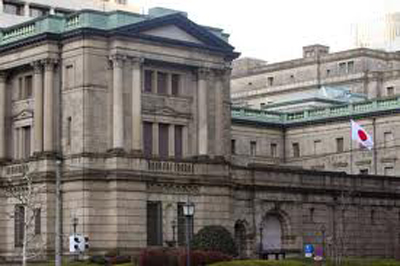
 KOFU: Bank of Japan board member Sayuri Shirai warned that global financial markets are likely to remain under intense strain as there is little chance that Europe's debt problems will be resolved soon.
Shirai said she was particularly mindful of the risk that Europe's deepening debt woes would hurt Japan's economy by spurring further gains in the yen and falls in stock prices as global investors flee to safer assets.
"As domestic and overseas markets become increasingly interconnected, prices of equity and other risk assets may fall globally as investors seek safer assets," she said in a speech to business leaders on Wednesday.
"That may lead to falls in Japanese stocks or push up the yen -- regarded as a safe haven -- further against the dollar and emerging currencies.
"As a result, the economy could underperform our forecasts as business and household sentiment deteriorate."
"A fresh flare-up in Europe's debt crisis following Greece's surprise call for a referendum on an EU bailout plan caused Japan's Nikkei share average to fall as much as 2 percent on Wednesday after overseas shares skidded.
Shirai warned that risk aversion by global investors is already heightening and that the global economy faces a more pronounced slowdown than before.
But she also said that, despite heightened strains in Europe, Japan's financial markets were relatively stable and maintained the BoJ's official view that the world's No. 3 economy is set to resume a moderate recovery, driven by efforts to rebuild from the March earthquake.
"We are in the process of stepping up monetary easing, and the effects will continue to emerge," Shirai added, suggesting that risks have not heightened enough to warrant additional moves.
The central bank last week eased monetary policy by boosting its fund for asset purchases to 20 trillion yen ($255 billion), spurred by the yen's rises to record highs, the global economic slowdown and Europe's debt woes.
The BoJ next meets for a rate review on Nov. 15-16. It will likely prefer to stand pat after easing policy in October, unless a renewed yen spike heightens fears of a severe downturn in the Japanese economy.
ON EDGE
Japan has kept markets on edge since it sold nearly $100 billion worth of yen -- a record amount -- on Monday to tame its high-flying currency, which has been hurting the export-reliant economy.
The BoJ will refrain from draining the funds that entered the market through the government's yen-selling intervention, a central bank source said, the fourth time it has done so in as many rounds of intervention since September.
The so-called "unsterilised" money is likely to substantially increase banks' current account deposits with the central bank, which have been steady around 30 trillion yen, effectively expanding monetary easing at least in the short term.
But analysts say its effect on curbing yen strength and supporting the economy will be limited because policy rates are so low.
Shirai, a former IMF economist, said Greece was in a negative spiral as it was urged to take additional steps to reform its public finances at the cost of further cooling its economy, which is already in recession.
Greek Prime Minister George Papandreou said on Wednesday he would push ahead with the referendum on the EU bailout, defying demands from lawmakers of his own party that he quit for jeopardising Greek membership in the euro.
Papandreou said the referendum would make clear that the country belongs in the euro. He urged the meeting of G20 leaders this week in Cannes, France, to agree to policies that "make sure democracy is above market appetites".
Shirai joined the BoJ board in April as its only female member. Shirai, previously a professor of economics and policy at Tokyo's Keio University, is considered one of the board's more pessimistic members with regard to Japan's economic outlook, arguing that it is very uncertain.






















Comments
Comments are closed for this article.