



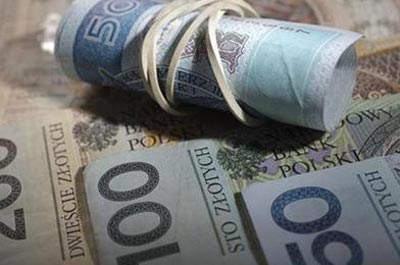
 BUDAPEST/WARSAW: The zloty rebounded from a one-month low against the euro on Thursday after Polish and Czech manufacturing indices (PMIs) showed some pick-up in economic activity in August.
Poland's index picked up to 51.5 from 50.3 in August and the Czech index rose to 50.1 from 49.3.
The zloty firmed 0.1 percent to 4.3565 against the euro by 0749 GMT, after touching a one-month low at 4.369 before the PMI figures were released.
The currency has hit multi-week lows in afternoon trade, when US markets open, in each of the past five sessions, and market participants said its slide may not have ended yet.
"For now nothing seems to play in favor of the zloty - neither the expectations for a hawkish Fed, nor the risk aversion, nor local factors such as (Moody's) rating review," mBank analysts said in a note.
Moody's will review Poland's ratings on Sept. 9 and some investors fear a downgrade after the agency warned last week over tension with Brussels over Warsaw's constitutional tribunal crisis.
The forint, meanwhile, eased 0.1 percent, after Hungary's PMI slowed to 51.3 from 53.9.
Trading at 309.9 the forint was still near its strongest levels since early March. Final June Hungarian trade balance figures, also published on Thursday, showed the biggest monthly surplus since at least 2012, at 1.11 billion euros.
Investors will focus on US payroll figures due on Friday, which, if they are strong, can boost expectations for the Federal Reserve to lift rates soon in a move which would curb demand for assets in emerging markets, traders said.
That risk could put pressure on the risky zloty again and reduce demand for long-term bonds, traders said.
Hungary, Romania, and Poland hold government bond auctions on Thursday.
The price of Poland's 10-year government bonds extended the past three weeks' losses, with their yield rising 3 basis points to 2.79 percent.
Hungary's corresponding yield rose 5 basis points from Wednesday's fixing, to 2.9 percent.
"The Hungarian central bank's monetary policy (liquidity boosting measures) helps shorter bonds," one Budapest-based fixed income trader said.
"I see better secondary-market demand for the 3- and 5-year bonds (offered at today's auction) and weaker demand for the 10-year papers," the trader added.

























Comments
Comments are closed for this article.