


Yen slides past 163, raising intervention alert
- On Tuesday, in New York trade, the yen hit 163.24 per dollar, its weakest since late 1986, and it sat at 163.21 early in the Asia session
The yen is near a four-decade low against the dollar, driven by rising oil prices and U.S. Treasury yields, sparking speculation about potential Japanese intervention.
- Yen's depreciation to a near four-decade low.
- Factors driving the dollar's broad strength.
- Prospects for Japanese currency intervention.
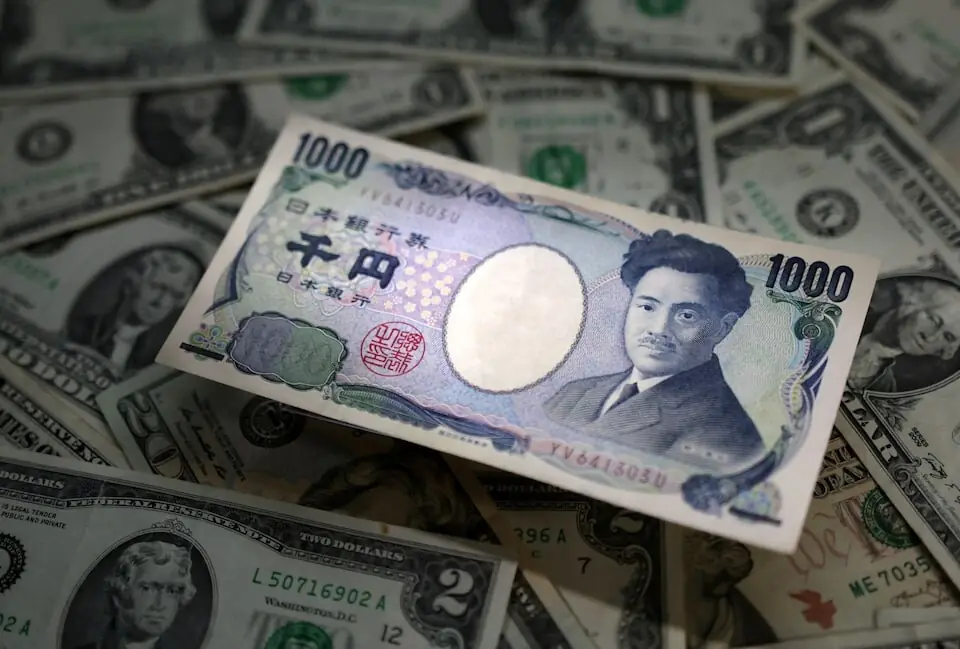

SINGAPORE: The yen was pinned near an almost four-decade low on Wednesday as rising oil prices and U.S. Treasury yields hoisted the dollar and left traders on edge about possible Japanese intervention.
On Tuesday, in New York trade, the yen hit 163.24 per dollar, its weakest since late 1986, and it sat at 163.21 early in the Asia session.
The dollar gained broadly overnight, briefly pushing the euro just below $1.14, and it was holding its ground as US forces began an 11th straight night of strikes on Iran.
“A continuation of the Middle East conflict should support the dollar because of its safe-haven status and typically positive correlation with oil prices,” said Commonwealth Bank of Australia currency strategist Samara Hammoud.
The euro was last at $1.1401, while the Australian dollar clung to the 70 cent level and the New Zealand dollar sat on support just above its 200-day moving average of $0.5825.
Sterling is also testing support, and fell through its 200-day moving average to $1.3385 with traders weighing how new UK finance minister John Healey plans to fund spending.
Brent crude futures touched a six-week peak of $91.99 a barrel on Tuesday, while US yields were up along the curve pushing the 30-year yield to a two-month high of 5.15%.
Whenever the 30-year yield breaches 5% it tends to ripple through global markets, raising the bar for riskier investments and supporting the dollar.
A 20-year Treasury auction will be in focus later on Wednesday.
Benchmark 10-year yields touched their highest since May overnight at 4.64% and were steady around that level in early Asia trade, putting pressure on the yen.
Yen intervention watch
Low rates and lately worries about Japan’s finances have pushed the yen relentlessly lower for years.
Japan engaged in record intervention in April and May after the dollar/yen rate crossed above 160.
But the impact has worn off and officials have backed off on intervention threats in favour of ambush tactics designed to keep markets on edge, which could bring them out if the yen moves suddenly — or even steadily — to new lows.
A boost from Japan’s finance minister floating the idea that the country’s government pension fund could shift some of its foreign investments into domestic markets has also worn off, turning the focus back to the risk of official yen buying.
“We think (Japan) may soon intervene again,” HSBC analysts, led by global head of foreign exchange research Paul Mackel, said in an outlook report last week.
Though, they said, it’s unlikely to have a lasting impact unless the Bank of Japan makes several hawkish hikes, the US Federal Reserve returns to a rate-cut bias or the market mood shifts on Japan’s fiscal health.
“Our base case is for dollar/yen to be trapped in a new and higher range, mainly 160-165, capped by periodic intervention but supported by negative real rates in Japan.”






















Comments